
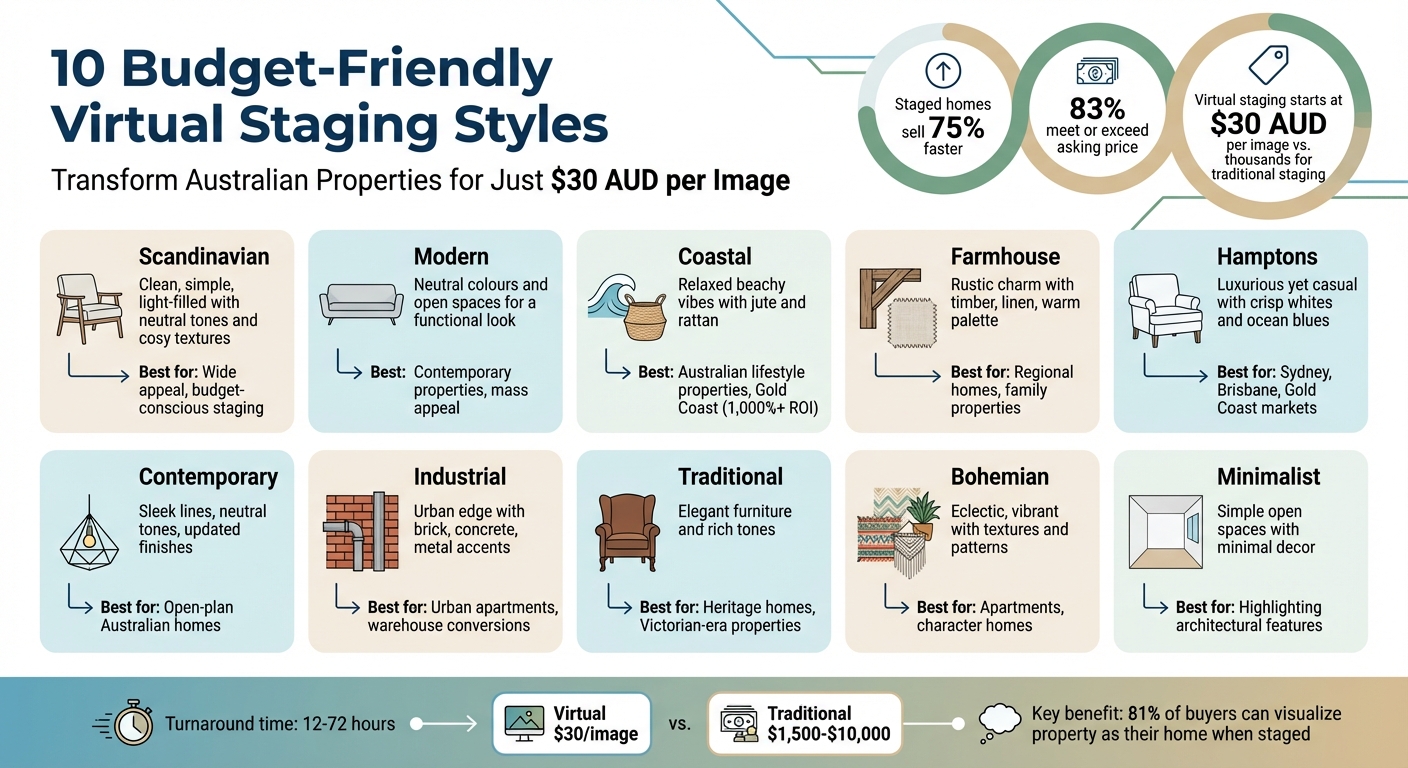
Virtual staging is an affordable way to make empty properties more appealing to buyers. While traditional staging can cost thousands, virtual options start at just $30 AUD per image. Staged homes sell 75% faster, with 83% meeting or exceeding the asking price. Here are 10 cost-effective design styles perfect for Australian property listings:
- Scandinavian: Clean, simple, and light-filled, using neutral tones and cosy textures.
- Modern: Neutral colours and open spaces create a sleek, functional look.
- Coastal: Relaxed, beachy vibes with natural materials like jute and rattan.
- Farmhouse: Rustic charm with timber, linen, and a warm palette.
- Hamptons: Luxurious yet casual, featuring crisp whites and ocean blues.
- Contemporary: Sleek lines, neutral tones, and updated finishes.
- Industrial: Urban edge with exposed brick, concrete, and metal accents.
- Traditional: Elegant furniture and rich tones, ideal for heritage homes.
- Bohemian: Eclectic, vibrant, and layered with textures and patterns.
- Minimalist: Simple, open spaces with neutral tones and minimal decor.
Virtual staging services like Fast Virtual Staging offer quick turnarounds (12–72 hours) and affordable pricing, making it easy to customise these styles for any property.
10 Budget-Friendly Virtual Staging Design Styles for Australian Properties
1. Scandinavian
Emerging in the 1950s and spreading from Sweden to Iceland, Scandinavian design has become synonymous with simplicity and affordability. Its focus on minimalism over extravagance makes it a great choice for cost-effective virtual staging. Interior designer Kerena Berry highlights this by saying, "due to its minimalism, a Scandinavian makeover is probably one of the most affordable". This streamlined approach not only saves money but also creates a clean, inviting aesthetic.
Affordability
At the heart of Scandinavian design is the Swedish concept of lagom – a philosophy of balance and moderation. This translates into pared-down decor and timeless furniture that prioritises durability and simplicity over fleeting trends. The neutral colour palette, featuring soft whites, beiges, and light tones, is budget-friendly and has the added benefit of appealing to a wide audience by creating a depersonalised, universally attractive space.
Visual Appeal for Property Listings
Scandinavian design does more than just save money – it makes spaces look effortlessly inviting. Its open, airy feel and minimal window treatments are perfectly suited to Australia’s bright interiors and love for natural light. Although minimalist, the style introduces warmth through the Danish concept of hygge, which incorporates cosy textures like wool, linen, and jute. As writer Tanisha Angel puts it, "the Scandinavian interior design style has risen in popularity in Australia due to the country’s penchant for uncluttered, minimalist interiors, as well as for the style’s influence on the mid-century modern movement".
Ease of Implementation in Virtual Staging
Scandinavian design is easy to replicate in virtual staging. Opt for furniture with slim legs to create the illusion of more space, allowing the floor to remain visible in listing photos. To add depth, layer textures like sheepskin rugs and woven knits. Functional yet stylish storage solutions, such as bar carts or ladder shelves, can enhance both practicality and aesthetics. Keeping window treatments minimal is another key feature, as it maximises natural light – an essential element of this design style.
For real estate professionals in Australia, virtual staging services like Fast Virtual Staging can effortlessly incorporate Scandinavian elements into property listings, helping transform spaces into warm, inviting environments without breaking the budget.
2. Modern
Modern design has become a popular choice for budget-friendly virtual staging in Australia. Its neutral colour schemes – think whites, greys, and earthy tones – are not only economical to create digitally but also help potential buyers picture themselves in the space. The clean, mass-produced aesthetic of modern furniture also simplifies the process of sourcing digital assets.
This streamlined design approach keeps costs low while delivering a polished and impactful digital transformation.
Affordability
Minimalism plays a big role in keeping the costs of modern staging manageable. By focusing on open spaces and avoiding clutter, fewer virtual elements are needed, which makes rooms feel more spacious and functional. Even small changes, like swapping out brass fixtures for stainless steel, can modernise a property instantly. Nadija Saluwadana from Homebuyers Centre offers this practical tip:
Invest in a quality dining table and couch; they make a world of difference.
The focus here is on selecting a few standout furniture pieces while keeping decorative elements to a minimum, achieving a chic yet cost-effective result.
Visual Appeal for Property Listings
Modern design works wonders for property listings. According to statistics, 81% of realtors say staging helps buyers visualise a property as their future home. By using clean lines and neutral tones, modern staging eliminates distractions and appeals to a wide audience. For example, a Melbourne property staged in a modern style sold for 10% above its asking price within just one week. This approach highlights key features like open-plan living spaces and master bedrooms, drawing attention to what really matters.
Ease of Implementation in Virtual Staging
One of the biggest advantages of modern design is how easy it is to implement in virtual staging. Focusing on high-impact areas like the living room, kitchen, and master bedroom creates the most visual impact. Affordable digital art from platforms like Etsy or Desenio can replace costly custom pieces, while stylish accessories like pebble- or arch-shaped mirrors enhance natural light. For Australian real estate professionals, services like Fast Virtual Staging offer modern design solutions with a quick 12–24 hour turnaround at just $30 per image. This makes it simple to create listings that showcase a move-in ready lifestyle.
The modern aesthetic, combined with Fast Virtual Staging’s efficiency, proves that virtual staging can be a smart and budget-conscious way to make properties stand out.
3. Coastal
Coastal design is a natural fit for Australian homes, offering a budget-friendly choice for virtual staging. Home decor expert Tonya Lee sums it up well:
Decorating in a coastal style is one of the most budget-friendly ways to go.
This style embraces the "less is more" philosophy, focusing on a few carefully selected elements rather than overwhelming spaces with decor. Natural accents like shells, driftwood, and sea glass are easy to replicate as simple 3D models, making them quick and affordable to render digitally. This streamlined approach makes coastal design a practical and cost-effective option.
Affordability
Coastal design leans on inexpensive materials like jute, rattan, wicker, and cotton, which are straightforward to incorporate into virtual staging. Many retailers offer affordable coastal-inspired pieces, making it easy to create this look without breaking the bank. The neutral base of white walls and soft tones like beige, cream, and grey simplifies digital editing, reducing the need for complex colour adjustments. Even existing furniture models can be updated virtually with slipcovers to achieve a relaxed, beachy vibe.
Visual Appeal for Property Listings
Sabrina Rogers-Anderson highlights the emotional draw of this style:
Coastal style has taken Australia by storm with its elegant beachside charm. More than an interior design trend, coastal style is characterised by an indoor-outdoor living aesthetic that embodies the Australian way of life.
This connection resonates with buyers, as evidenced by Gold Coast properties styled with a coastal theme reporting an average ROI of over 1,000%, with all properties selling within two years. The emphasis on light and openness – achieved through white walls such as Dulux Vivid White – creates a sense of spaciousness and warmth. Natural textures like jute rugs, linen sofas, and rattan chairs complete the look, evoking an atmosphere of effortless, year-round relaxation.
Suitability for Australian Property Markets
Coastal design is particularly well-suited to Australia’s lifestyle and climate. Its focus on seamless indoor-outdoor living – using features like bi-fold or sliding doors – aligns perfectly with the preferences of Australian buyers. Modern coastal design steers clear of outdated motifs like anchors and fishing nets, opting instead for a "Coastal Luxe" aesthetic. This includes soft ocean-inspired hues like teal, aqua, and muted emerald, paired with oversized feature plants like Monstera or Fiddle Leaf Figs to add a tropical touch to neutral settings.
Ease of Implementation in Virtual Staging
The simplicity of coastal style makes it an excellent choice for virtual staging. Its reliance on clean textures and a bright, airy feel ensures it translates well into digital formats. Crisp white walls that reflect natural light serve as an ideal canvas, instantly brightening listing photos. Mixing timber finishes, such as whitewashed buffets paired with darker floors, adds authenticity to the design. Services like Fast Virtual Staging streamline this process, delivering coastal-inspired spaces that perfectly capture the essence of Australian homes.
4. Farmhouse
Building on familiar aesthetics like Scandinavian and Modern, the farmhouse style introduces a rustic, cosy charm to virtual staging. This approach brings warmth and personality to empty properties by incorporating natural materials and highlighting existing architectural features. As Laura Gaskill from Houzz puts it:
"Farmhouse style, as it’s expressed today, nods to the satisfying simplicity of regional, rural architecture and design while embracing modern comforts."
This style’s flexibility makes it ideal for transforming plain, vacant spaces into inviting homes, using digital textures and a straightforward colour palette.
Affordability
Farmhouse design benefits from a timeless black-and-white foundation that complements most architectural styles. Stephen Mutton, National Head of Network Development at LJ Hooker, emphasises the financial advantage:
"The cost of traditional staging means that it can fall out of people’s budgets and it simply doesn’t get done… digital styling ability is a more cost-effective solution."
With elements like timber, linen, and woven textures, farmhouse styling adapts seamlessly to digital renders. This eliminates the costs associated with sourcing and transporting heavy rustic furniture, making it a budget-friendly option for property staging.
Visual Appeal for Property Listings
Farmhouse styling captivates buyers with its warm, inviting atmosphere. Its neutral palette – featuring whites, earthy browns, and soft blues – combined with textures like timber and linen, creates a homely feel . This visual charm is crucial, especially when over 90% of property searches start online. First impressions matter, and professionally staged homes often sell or rent 75% faster and can achieve 5% to 10% higher sale prices .
Suitability for Australian Property Markets
The farmhouse aesthetic naturally resonates with Australia’s regional and rural property markets, making it an excellent choice for family homes and semi-rural properties. The growing popularity of the Modern Country trend in areas like the Blue Mountains reflects a desire for a simpler, slower-paced lifestyle. Practical and versatile, this style balances traditional and contemporary elements, appealing to a broad range of potential buyers.
Ease of Implementation in Virtual Staging
Farmhouse design is easy to incorporate into virtual staging, using signature features like apron-front sinks, open shelving, and shiplap walls . A neutral base of warm creams and wheats creates a blank canvas, allowing buyers to visualise their own lives in the space . Services like Fast Virtual Staging can deliver farmhouse-themed renders in just 48 to 72 hours, compared to the week or more needed for physical staging . Key elements such as Windsor chairs, industrial stools, and timber farm tables are simple to render digitally, bringing authentic farmhouse charm to life in a cost-effective way.
5. Hamptons
The Hamptons style has become a go-to choice for many Australian homes. This design approach is all about crisp whites, ocean blues, and natural textures like jute and rattan. Interior designer Natalee Bowen sums it up perfectly:
The appeal of the classic Hamptons style is its refined balance between sophistication, relaxation and indulgent luxury.
When it comes to virtual staging, this style delivers a polished, market-ready aesthetic without the steep costs of traditional staging.
Affordability
Cost is a big factor here. Traditional Hamptons staging can involve pricey furniture and materials, running anywhere from $1,500 to $10,000. Virtual staging, on the other hand, is far more budget-friendly, with prices ranging from $30 to $120 per image. The neutral colour palette of the Hamptons style makes it easy to recreate using standard digital furniture libraries, offering a high-end look at a fraction of the cost.
Visual Appeal for Property Listings
The Hamptons aesthetic has a clean, coastal charm that resonates with buyers. Think overstuffed linen sofas, rattan armchairs, and blue-and-white ceramics layered to create a sense of relaxed luxury. With over 90% of property searches starting online, and staged homes selling or renting 75% faster than unstaged ones, this style is a smart choice for digital listings. Adding details like weathered timber accents enhances the seaside vibe, helping properties make a lasting first impression.
Suitability for Australian Property Markets
This style’s holiday-inspired, coastal aesthetic is a natural fit for Australian markets, particularly in areas like Sydney, Brisbane, and the Gold Coast. Its timeless appeal works just as well for beachside apartments as it does for suburban family homes. Buyers are drawn to its relaxed yet luxurious feel, making it a reliable option for a broad audience.
Ease of Implementation in Virtual Staging
Hamptons design is also incredibly easy to implement in virtual staging. Most vacant properties already feature neutral or white walls, providing the perfect backdrop for this look. Digital libraries are filled with key elements like shaker-style cabinetry, pendant lighting, and natural fibre rugs, making it simple to create photo-realistic renders. Providers like Fast Virtual Staging can deliver these renders in just 48 to 72 hours, compared to the week or more required for physical staging. Focus on high-impact areas like kitchens and living rooms by incorporating white shaker-style cabinetry, blue-accented furnishings, and accessories like jute rugs and coastal-themed cushions to complete the look.
6. Contemporary
Building on the classic Hamptons aesthetic, contemporary design brings a sleek, modern touch that’s perfectly suited to Australia’s open-plan homes. This style has become a go-to choice for virtual staging in the country, thanks to its neutral colour schemes – think whites, creams, and light greys – that make it easier for 81% of buyers to imagine themselves living in the space. As interior designer Nadija Saluwadana puts it:
"I always say to invest in a really good dining table and couch, as these make the world of difference to the aesthetics of your space."
Affordability
Contemporary design offers a cost-effective way to elevate property listings. Professional virtual staging services start at around $54 per image, while AI-generated options can be as affordable as 10–30 cents per image. Compare this to traditional physical staging, which typically costs between $5,000 and $10,000. Additionally, many virtual staging platforms come equipped with extensive contemporary furniture libraries, keeping custom rendering costs low.
Visual Appeal for Property Listings
This design style creates a polished, "magazine-worthy" look that helps online listings stand out. By incorporating popular features like abstract art, terrazzo surfaces, and updated stainless steel hardware, contemporary staging ensures properties feel fresh and upscale. In Australia, staged homes sell about 75% faster, and 83% of them achieve or exceed the asking price. With 90% of buyers beginning their property search online, first impressions are crucial.
Suitability for Australian Property Markets
Contemporary design is especially effective in modern Australian homes with open-plan layouts. Its clean lines and neutral tones emphasise the flow and flexibility of these spaces. Research shows that 92% of Australian real estate agents believe styling can increase the sale price by about 2.5% or lead to quicker sales. Moreover, the style’s alignment with affordable retail trends – featuring pieces from retailers like Kmart, Target, and IKEA – makes it feel both accessible and desirable to potential buyers.
Ease of Implementation in Virtual Staging
One of the biggest advantages of contemporary design in virtual staging is its simplicity. Neutral walls in vacant properties provide an ideal backdrop for this style, and virtual staging providers often have extensive libraries of contemporary furniture, allowing for quick turnaround times – usually within 48 to 72 hours. Focus on high-impact areas such as the living room and master bedroom, and consider updating hardware to sleek silver or stainless steel finishes for a modern touch. Services like Fast Virtual Staging even offer customisable contemporary designs with unlimited revisions to ensure the final result aligns with your vision.
sbb-itb-f3f2f9e
7. Industrial
Industrial design brings a raw, urban edge to property styling, making it a sought-after choice for modern Australian urban markets. With its exposed brick walls, concrete floors, and metal fixtures, this style captures the essence of warehouse conversions and trendy city apartments, particularly in hubs like Sydney and Melbourne. The neutral colour scheme – think greys, whites, and blacks – creates a versatile backdrop, helping potential buyers picture their own lives in the space. It’s a cost-effective and visually impactful option that resonates with the vibrant, contemporary lifestyle many buyers desire.
Affordability
Virtual staging with an industrial aesthetic is one of the more budget-conscious choices in Australia. Prices start at around $45 per image, with AI-generated options available for as little as 10–30 cents. Compared to the hefty costs of physical staging, industrial virtual staging offers a wallet-friendly alternative. The emphasis on raw, unfinished textures makes it easier to replicate these elements digitally, eliminating the need for pricey renovations or physical alterations.
Visual Appeal for Property Listings
The industrial look delivers a sleek, modern vibe that works equally well for residential and commercial properties. Virtual staging tools can enhance features like exposed brick or concrete with digital overlays, amplifying the style’s rugged, authentic charm. This is especially effective for fixer-upper properties or warehouse conversions, where the industrial aesthetic can transform raw spaces into polished, market-ready listings.
Suitability for Australian Property Markets
Industrial design aligns perfectly with the preferences of buyers in major Australian cities. It’s particularly popular in areas known for warehouse conversions and urban apartments, such as Richmond. The style’s gender-neutral appeal widens its audience, and in competitive markets, staged homes can sell for up to 10% above the asking price. Additionally, the industrial vibe pairs well with affordable updates, like swapping out outdated hardware for sleek stainless steel finishes, adding a modern touch without breaking the bank.
Ease of Implementation in Virtual Staging
Industrial design is a staple feature in virtual staging platforms, offering pre-designed furniture sets that simplify the process. Digital tools can render materials like wood and metal with striking realism, making it easy to incorporate elements such as large metal tables or factory-style lighting – items that would be challenging to stage physically. By focusing on key areas like the living room and kitchen and ensuring furniture proportions are accurate, virtual staging achieves a polished, realistic result. Services like Fast Virtual Staging provide customisable industrial designs with a quick turnaround of 48 to 72 hours, allowing you to showcase properties with a professional, urban flair.
8. Traditional
Traditional styling brings a touch of classic charm to the urban edge of industrial design, offering a timeless aesthetic that celebrates the heritage features often found in Australian homes. This approach leans on elegant furniture, rich wood tones, and intricate detailing to create a warm and inviting atmosphere. It’s particularly suited to homes with historic character – like Melbourne’s Victorian-era houses or Federation-style properties – where ornate ceilings, decorative finishes, and period fireplaces can take centre stage. This style resonates with families, helping them imagine a cosy, lived-in home rather than a series of empty rooms.
Affordability
Traditional virtual staging is a budget-friendly option compared to physical staging. In Australia, the cost typically ranges from $45 to $54 per image, a fraction of what physical staging demands, which involves expenses for furniture hire, sourcing, and transport. Many virtual staging providers include unlimited revisions in their fixed-price packages, allowing you to refine the traditional look until it’s just right.
Visual Appeal for Property Listings
This style excels at showcasing period features like crown moulding and fireplaces. Virtual staging ensures these elements are complemented by accurately scaled traditional furniture, removing the guesswork of physical arrangements. The cosy, homey vibe appeals strongly to family buyers, helping them visualise their life in the space. To make the biggest impact, focus on key rooms such as the living area and master bedroom.
Suitability for Australian Property Markets
Traditional design enhances the appeal of properties in Australia’s competitive housing markets, just like contemporary and industrial styles. Staged homes tend to perform better, with 83% selling or renting at or above the asking price. The neutral tones and classic aesthetic of this style work well across Australia’s diverse buyer demographic, while also spotlighting the sought-after Victorian-era details in cities like Melbourne.
Ease of Implementation in Virtual Staging
Traditional design is easy to integrate into virtual staging. Most Australian providers can deliver results within 48 to 72 hours. The digital format allows for experimenting with layouts and high-end furnishings that might be out of reach in physical staging due to budget constraints. Services like Fast Virtual Staging offer customisable traditional designs with quick turnarounds, ensuring heritage properties are beautifully presented with realistic furniture that complements their architectural charm.
9. Bohemian
Bohemian design is all about infusing spaces with vibrant personality and a mix of eclectic elements. This style thrives on bold colours, intricate patterns, and a layering of textures, fabrics, and global influences. Interior designer Kerena Berry sums it up beautifully:
"The bohemian look at home is all about embracing bright colours, intricate patterns and a carefree mixture of styles. It’s the look for bold characters who love creating beauty from well-organised chaos."
This aesthetic is particularly suited to smaller Australian homes, like apartments and townhouses, where hanging plants such as devil’s ivy and ferns can bring a lush, garden-like vibe indoors. It’s also a fantastic match for older homes with character, as Moroccan textiles, rattan furniture, and carefully selected decor seamlessly blend with architectural features. Beyond its visual appeal, Bohemian style offers a budget-friendly approach to creating inviting and dynamic spaces.
Affordability
Bohemian virtual staging stands out for its cost-effectiveness. Instead of relying on expensive designer furniture or matching sets, it leans on flea market treasures, oversized cushions, and throw rugs. AI-generated Boho staging typically costs between $0.10 and $0.30 per image, while manual staging ranges from $15 to $30 per image. Compare that to traditional physical staging, which can start at $3,800 just for a small bedroom, and the savings become clear.
Visual Appeal for Property Listings
The Bohemian style’s layered textures and vibrant colours make property listings pop. Natural elements like macrame pot holders and trailing plants create a warm, inviting atmosphere, helping potential buyers imagine themselves living in the space. This emotional connection is powerful – 81% of real estate agents agree that staged homes help buyers see the property as their future home.
Ease of Implementation in Virtual Staging
Bohemian design translates seamlessly into virtual staging. Its use of varied textures – linen, fringing, faux leather – and globally inspired elements is easily replicated with virtual furniture libraries. Services like Fast Virtual Staging can create custom Boho designs with quick turnaround times, allowing you to experiment with patterns, greenery, and lighting digitally. This flexibility eliminates the hassle of physical rearrangements while giving you the freedom to refine the look as needed.
10. Minimalist
Minimalist design focuses on simplicity, removing excess to create clean, open spaces that let a property’s best features take centre stage. Neutral colour schemes – think whites, creams, and light greys – combine with simple furniture arrangements and strategic use of empty space to craft a calm, polished look that enhances a property’s natural appeal.
Affordability
For budget-conscious agents, minimalist virtual staging offers a cost-effective solution. Using AI, staging can cost as little as $0.28 per image, while manual virtual staging typically ranges from $16 to $35 per image. Compare this to traditional physical staging, which can run up to $3,000 for a $300,000 home. By cutting out expenses like furniture rental and moving services, virtual staging is about 97% cheaper. This affordability doesn’t compromise on quality, delivering visually striking results at a fraction of the cost.
Visual Appeal for Property Listings
Minimalist staging creates a strong first impression, especially in online property listings, where 90% of buyers begin their search. By removing clutter and sticking to neutral tones, this style provides a blank canvas that helps potential buyers envision their ideal lifestyle. Minimal furniture placement draws attention to standout architectural details – such as polished timber floors, ornate ceilings, or expansive windows – that might otherwise go unnoticed. The result is a clean and elegant presentation that resonates with online viewers.
Suitability for Australian Property Markets
This style is particularly well-suited to the Australian market, where it complements the design trends of cities like Sydney, Melbourne, and Perth. It works exceptionally well in apartments and terrace homes, where maximising space and showcasing storage opportunities are key. Minimalist staging achieves this while staying within budget, aligning perfectly with the needs of Australian buyers. As Rachel Preston-Bidwell from REIWA notes:
Potential buyers will judge your home and form their opinions before they even attend a home open through the online advertisement, so it’s important to make a good first impression.
Ease of Implementation in Virtual Staging
Minimalist staging also stands out for its ease and efficiency in virtual staging. Its straightforward design – neutral furniture, clean lines, and minimal accessories – fits seamlessly into digital workflows. Services like Fast Virtual Staging can deliver results within 24–48 hours, with unlimited revisions to ensure the final look aligns with your target audience. This combination of speed and simplicity ensures consistently high-quality outcomes across multiple properties.
Conclusion
Affordable virtual staging design styles offer Australian real estate professionals an effective way to elevate property listings without breaking the bank. Whether it’s the clean lines of Scandinavian design or the timeless appeal of Hamptons decor, these ten styles provide the versatility to suit any property type or buyer demographic. From a sleek Gold Coast apartment to a charming heritage terrace in Melbourne, there’s a staging style to match every market need.
The benefits of staging are clear: properties that are staged tend to sell quicker and for higher prices compared to those left unstaged. Virtual staging achieves these same results at a fraction of the cost, helping to create that all-important first impression for online buyers.
Cost-effectiveness and adaptability make virtual staging a standout choice. For just AUD $30 per image, you can style a property in multiple ways to appeal to a variety of buyers. Whether you’re showcasing architectural highlights with a minimalist approach or adding a cosy feel with farmhouse-inspired decor, virtual staging can be tailored to your marketing goals.
Fast Virtual Staging offers photo-realistic renders with a quick 12–24 hour turnaround and includes two complimentary revisions. They serve all major Australian cities as well as regional areas, ensuring your property looks its best no matter where it’s located.
FAQs
What makes virtual staging a better option than traditional staging?
Virtual staging comes with some clear perks over the traditional approach. Because furniture and decor are added digitally, you skip the costs tied to moving, storing, or renting physical items. A digitally staged image can cost as little as A$30–A$100, compared to the hefty A$2,000–A$8,000 price tag for physically staging a room. On top of that, virtual staging is lightning fast – high-quality images can be ready in just 12–48 hours, while traditional staging often takes over a week to organise.
Another big advantage is its flexibility. Virtual staging lets you try out multiple design styles to appeal to different buyers, all without buying or storing furniture. It also removes logistical headaches, reduces the risk of property damage, and allows for unlimited tweaks to get the perfect look. And let’s not forget the visual impact – beautifully staged images make listings shine online, drawing more interest and often leading to quicker sales and better offers. For real estate professionals, it’s a budget-friendly, time-saving option that delivers real results.
How does virtual staging make property listings more appealing?
Virtual staging breathes life into empty or sparsely furnished spaces, turning them into stunning, photo-realistic rooms. This approach helps buyers imagine how a property could look and feel as their future home. With nearly 90% of Australian homebuyers beginning their search online and relying heavily on listing photos to form their first impressions, well-staged images can make a property shine, draw more interest, and prompt quicker enquiries.
In Australia, staged homes often sell up to 73% faster – sometimes within just 28 days compared to the typical 60–90 days – and can fetch 5%–20% higher sale prices. Virtual staging is also budget-friendly, with costs ranging from $100 to $300 AUD per photo, a fraction of the price of traditional staging. Plus, it offers the flexibility to tailor designs to a property’s target market, whether that’s sleek and modern interiors or warm, family-oriented layouts. This customisation highlights a home’s best features, making it easier for buyers to connect with the space.
What is the most affordable design style for virtual staging in Australia?
Virtual staging in Australia offers budget-friendly options regardless of the design style you choose. Services like Fast Virtual Staging provide a wide range of styles – modern, Scandinavian, urban-industrial, farmhouse, and more – all for a flat rate of A$30 per image. This means you can pick the style that best complements your property and appeals to potential buyers without worrying about extra costs.
Compared to traditional staging, virtual staging is a much more cost-effective solution. It allows you to create a polished, professional look for your property while staying within budget. Simply select the style that aligns with your target audience, knowing the pricing remains consistent and affordable.