
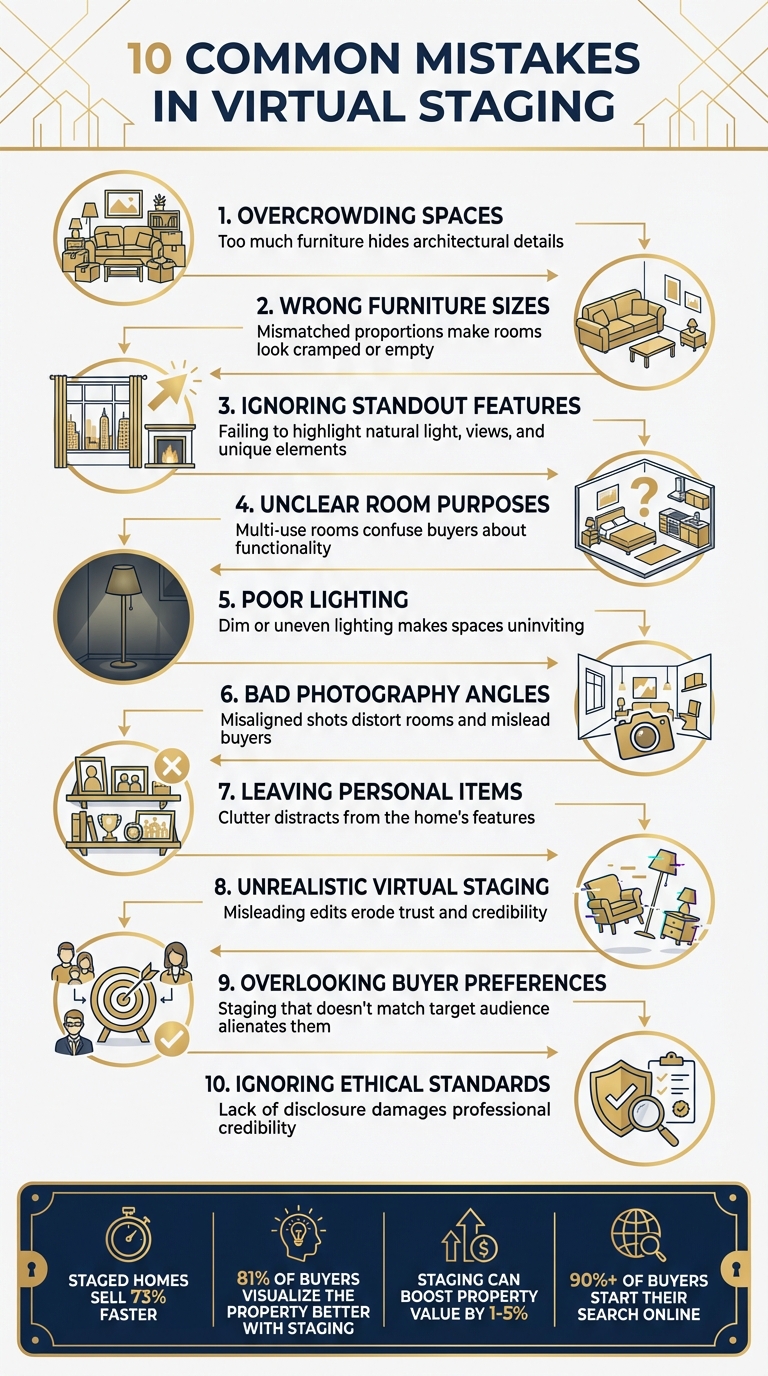
Virtual staging can boost property listings, but it’s easy to make errors that turn buyers away. Here’s a quick rundown of the top mistakes:
- Overcrowding spaces: Too much furniture hides architectural details.
- Wrong furniture sizes: Oversized or tiny pieces distort room proportions.
- Ignoring standout features: Failing to highlight unique elements like natural light or views.
- Unclear room purposes: Multi-use rooms confuse buyers.
- Poor lighting: Dim or uneven lighting makes spaces look uninviting.
- Bad photography angles: Misaligned shots distort rooms and mislead buyers.
- Leaving personal items: Clutter distracts from the home’s features.
- Unrealistic virtual staging: Misleading edits erode trust.
- Overlooking buyer preferences: Staging that doesn’t match the target audience alienates them.
Key takeaway: Successful staging highlights a home’s strengths while staying honest and tailored to the likely buyer. Avoid these missteps to attract serious interest and maintain credibility.
10 Common Virtual Staging Mistakes to Avoid in Real Estate
NEVER Stage Your Home Like This!!
1. Overstaging Rooms and Hiding Architectural Details
Going overboard with staging can obscure a property’s standout features. For instance, placing an oversized bed beneath low windows can block natural light and make the room feel smaller than it is. Similarly, overloading surfaces with props like books, food items, or an overabundance of cushions can distract from the room’s architecture and layout.
Impact on Property Presentation
Too much staging can create unnecessary clutter, making rooms feel cramped and chaotic. This is particularly problematic in spaces with natural focal points – like a fireplace or a striking window – where excessive decor can dilute their impact. A clean, well-thought-out presentation allows these standout features to shine, drawing attention to the elements that make the property special.
Ability to Highlight Key Features
Good staging highlights a room’s best assets without overwhelming the space. Shital Gohil, Co-Founder and COO of Styldod, explains:
"Each item should serve a purpose, whether it’s defining a space or adding a bit of warmth. Leave enough open space to allow the room’s size and layout to shine through".
Focus on a few well-chosen items that enhance the room’s focal point. Make sure doorways, windows, and pathways are unobstructed and functional. This open, uncluttered approach allows buyers to see the room’s potential and imagine how they might use the space.
Realism and Ethical Considerations in Staging
A minimalist approach to staging ensures transparency. Stick to neutral tones and classic designs that appeal to a wide range of buyers, without overshadowing the home’s natural features. Avoid creating multiple competing focal points or using heavy seasonal decorations that could hide key selling points. Keeping things simple and honest helps build trust and ensures buyers won’t feel let down when they visit in person.
2. Using Furniture That Doesn’t Match the Room Size
Furniture that doesn’t suit the size of a room can throw off its proportions entirely. Large pieces can overwhelm the space, creating a cramped and cluttered feel, while furniture that’s too small can leave the room looking sparse and unfinished. As Shital Gohil, Co-Founder and COO of Styldod, puts it:
"Using items that are too small or too large for the room can also throw off proportions, making rooms look either cramped or empty".
This mismatch not only misguides potential buyers but also detracts from the property’s overall appeal.
Impact on Property Presentation
When furniture is out of sync with the room’s scale, it skews how buyers perceive the available space. For instance, placing a massive sectional sofa in a small studio can make the area feel much smaller than it actually is. On the flip side, a tiny two-seater couch in a spacious family living room fails to communicate the home’s true potential. These visual missteps can leave buyers with a negative impression, potentially reducing their interest in the property.
Highlighting Key Features
Appropriately scaled furniture helps emphasise a room’s best features while maintaining clear sightlines to windows, doorways, and other focal points. In smaller spaces, avoid oversized furniture to keep the area open and visually appealing. Ensuring the furniture aligns with the room’s dimensions allows buyers to better visualise the space as their own.
To achieve this, reference floor plans and use measurement tools to ensure accuracy. For example, pulling sofas 30–90 cm away from walls can create depth, while scaling seating arrangements to match the number of bedrooms adds to the home’s realistic charm. By carefully considering furniture proportions, you can create a balanced and credible staging environment.
Realism and Ethical Staging Practices
Using improperly scaled furniture in virtual staging can raise suspicions and damage a seller’s credibility. BluEntCAD highlights this concern:
"If the scale and proportions of the virtually staged elements… fail to align with the real-world dimensions, it raises red flags. This can tarnish the credibility of the seller and create an untrustworthy impression".
When buyers feel misled by staged photos, they’re likely to be disappointed during in-person viewings, which could jeopardise a potential sale. Accurate furniture scaling ensures transparency and helps build trust with prospective buyers. Just as highlighting the home’s key features is essential, maintaining realistic proportions is crucial for a seamless and honest presentation.
3. Ignoring the Property’s Best Features
When it comes to virtual staging, overlooking a property’s standout features can seriously diminish its appeal. Every home has unique elements – like soaring ceilings, natural light pouring through large windows, or breathtaking views – that make it special. If these elements aren’t emphasised in staged images, the property risks blending into the background and losing its competitive edge. Effective staging should always spotlight these highlights to grab buyer attention.
Impact on Property Presentation
Neglecting to showcase a property’s best attributes can create a confusing and underwhelming experience for potential buyers. For example, using sleek, modern furniture in a Mediterranean-style home can clash with its architectural charm, leaving buyers puzzled about the home’s identity. Similarly, poor lighting or cluttered virtual décor can mask key selling points, such as spacious layouts or high-end finishes, making it harder for buyers to see value in the asking price.
Mark Kentwell, Principal at PRD Nationwide Newcastle and Lake Macquarie, puts it plainly:
"Buyer disappointment on arrival at an opening is impossible to recover".
When staged photos misrepresent a property’s strengths, buyers may feel misled and lose interest entirely. This highlights the importance of staging that not only decorates but also draws attention to the home’s standout features.
Ability to Highlight Key Features
Effective virtual staging should guide the buyer’s focus to the property’s most impressive elements. For instance, if a home boasts water views, furniture placement and camera angles should frame and enhance the window view, not obstruct it. David Cromwell from Virtual Home Zen explains the goal perfectly:
"Virtual staging must serve as a backdrop that lets buyers envision their future."
To achieve this, furniture should complement the home’s architectural style and era, creating a cohesive and inviting atmosphere. Virtual lighting can also play a key role – bright daylight can emphasise a spacious living area, while soft, warm lighting can add a cosy feel to a bedroom suite. Removing digital clutter and depersonalising spaces ensures the property’s features truly shine.
Alignment with Target Buyer Preferences
Failing to consider the preferences of your target buyer can alienate the very audience you’re trying to attract. For example, staging a potential nursery as a stark home office might not connect with young families, one of the likely buyer groups. With 81% of buyers’ agents agreeing that staging helps buyers imagine the property as their future home, it’s essential to tailor the staging to their needs. This could mean highlighting a home office for remote workers or showcasing an outdoor entertaining area for families who enjoy alfresco dining.
4. Creating Unclear or Multi-Purpose Room Functions
Impact on Property Presentation
When a room tries to juggle too many roles, it can leave potential buyers scratching their heads. A space staged as a mix of home office, gym, and playroom can confuse buyers, making it hard for them to envision how they’d use the room themselves. Overloading a room with multiple purposes muddies its identity and diminishes its appeal.
Lauren Morley from AgentFire sums it up perfectly:
"If a room is staged as a combination of home office, gym and playroom, buyers will be confused about the purpose of the room. Tell your client to stick to one theme per room".
This lack of clarity can also mess with the way buyers perceive the space. Cramming too much into one room can obscure its size and features, while poorly arranged furniture might block pathways or hide appealing architectural details. Since over 90% of buyers begin their search online, unclear room functions in photos can lead to a quick loss of interest. Clear, purposeful staging is vital for connecting with your audience and making a lasting impression.
Alignment with Target Buyer Preferences
Staging should always consider the people most likely to buy the property. Shital Gohil, Co-Founder and COO at Styldod, highlights this point:
"Staging a second bedroom as an office might not appeal to families looking for kid-friendly homes. Understand your target audience and stage with their needs in mind".
Different buyers have different priorities. For instance, young professionals might be drawn to a sleek home office, while suburban families are more likely to appreciate a nursery or playroom. With 81% of buyers saying they can better imagine themselves living in a staged home, giving each room a clear, singular purpose makes it easier for them to picture their life there. Instead of trying to show off every potential use, focus on what your target audience values most.
5. Failing to Showcase Updated Appliances and Spacious Areas
Impact on Property Presentation
An empty room often fails to capture a buyer’s imagination. Without furniture, spaces can appear smaller and less inviting, making it harder for potential buyers to visualise their full potential. In fact, an empty room can feel more like a blank slate than an opportunity, leaving buyers uninspired. Furniture, on the other hand, provides scale and context, helping people understand the room’s actual dimensions.
Farrell Desselle, Listing Coordinator at Redfin Realty, puts it well:
"Some people walk in an empty house and that’s all they see – an empty house – and they can’t picture what it would look like staged, so this helps a lot".
The numbers back this up. Staged homes sell 73% faster than vacant ones, and 81% of buyers’ agents say staging helps buyers visualise a property as their future home. When a property’s spacious areas and features aren’t highlighted effectively, it could mean losing out on potential value – staging can boost a property’s worth by 1% to 5%. A well-presented home not only looks more appealing but also makes the most of its features.
Ability to Highlight Key Features
Updated appliances and spacious layouts are standout selling points, but they need to be showcased thoughtfully. Virtual staging can play a big role here. It can help define the purpose of a large room, illustrating how it could serve as both a lounge and a study area. It can also digitally replace outdated appliances or fixtures that might turn buyers off.
The choice of furniture matters too. Oversized pieces can make even a large room feel cramped, while furniture that’s too small can throw off the room’s proportions. To emphasise openness and flow, keep pathways, doorways, and windows unobstructed. It’s no surprise that 91% of agents prioritise staging living rooms, with 81% focusing on kitchens. These areas often set the tone for how buyers perceive the home.
Alignment with Target Buyer Preferences
With over 90% of buyers starting their search online, high-quality listing photos are crucial. They need to convey the property’s best features instantly. Highlighting updated appliances can create a "move-in ready" vibe, which is particularly appealing to buyers who want to avoid the hassle of renovations. Staging key areas like the kitchen, living room, and primary bedroom can make a lasting impression.
Realism and Ethical Considerations in Staging
While staging – especially virtual staging – is a powerful tool, it’s essential to maintain transparency. Buyers need to trust what they’re seeing. For example, if appliances have been digitally updated or rooms virtually renovated, these changes must be disclosed. Mark Kentwell, Principal at PRD Nationwide, offers a cautionary perspective:
"If the property has been over-enhanced by virtual styling, potential buyers will notice the gap between appearance and reality at the inspection. This gap can curtail engagement and commitment".
Overdoing it with digital enhancements, such as enlarging rooms beyond their actual size, risks creating unrealistic expectations. This not only disappoints buyers during inspections but can also damage trust. Striking a balance between showcasing potential and presenting reality is key to ethical and effective staging.
sbb-itb-f3f2f9e
6. Poor Lighting That Conceals Room Details
Impact on Property Presentation
Bad lighting can ruin a property listing by making rooms look dull and unappealing, pushing potential buyers away almost instantly. When lighting is too dim or uneven, important features like flooring textures, paint colours, and design elements fade into the background.
Problems like "blow out" – where one part of the room is overly bright while others are too dark – can make the photos look amateurish. If the artificial lighting doesn’t match the natural light in the room, the staging can come across as fake and unconvincing. Thao Dinh, Director of Content at Fotober, highlights this issue:
"Lighting is one of the most powerful tools in both photography and virtual staging, and yet, it’s often overlooked or mishandled".
This underscores the importance of precise lighting for creating a professional and inviting first impression.
Ability to Highlight Key Features
Proper lighting ensures that shadows and highlights align naturally with the room’s windows or light fixtures. This adds depth and realism, making the space feel authentic. Shital Gohil, Co-Founder and COO at Styldod, stresses this point:
"Virtual lighting should match the room’s real-world light sources so the final image feels natural and polished".
To make the most of natural light, open all blinds and curtains during the shoot. Also, ensure every light bulb is functional so that no corner of the property is left in darkness. Adjusting the white balance is another crucial step to prevent colours from looking overly yellow or blue. These small yet effective tweaks can make the property’s features stand out and feel more inviting.
Alignment with Target Buyer Preferences
With over 90% of buyers starting their property search online, lighting becomes a key factor in creating the right mood and atmosphere for your audience. Bright, minimalist lighting often appeals to young professionals, while families may gravitate towards warmer, cosier tones. The way you light a room can directly influence whether buyers can picture themselves living there.
7. Not Optimising for Photography Angles
Impact on Property Presentation
The way a property is photographed can make or break its presentation. Poor camera angles can undermine even the most carefully executed virtual staging. For instance, ignoring the horizon line creates challenges for CG artists, making it difficult to render furniture with accurate perspective. This often results in furniture that looks awkwardly pasted onto the image. Similarly, using overly wide or fisheye lenses distorts the room’s proportions, making walls appear stretched and furniture look out of scale. Incorrect camera positioning can also make rooms seem smaller or oddly proportioned. It’s no surprise that listings with professional photography receive 118% more online views and sell 32% faster.
Ability to Highlight Key Features
Getting the angles right is essential for showcasing a property’s best attributes. A good photographer knows how to position the camera to capture the full essence of a room. Standing in doorways or corners is a simple yet effective way to provide a comprehensive view of the space. For balanced shots, set the tripod at light switch height to avoid wasting space on excessive ceiling or floor areas. Stefan Young, a Real Estate Photographer and Director of Capture Real Estate, offers this advice:
"The wider the shot the better. You want to capture as much of a room as possible, so shooting wide angle from corner to corner works well".
Using an 18–22mm focal length on DSLR cameras helps minimise distortion. Angles should naturally guide the viewer’s eye through the room, avoiding obstructions like large furniture pieces that block key features.
Alignment with Target Buyer Preferences
Well-chosen angles can help potential buyers imagine themselves living in the space. Different buyers prioritise different aspects of a home – families may focus on open layouts and flow, while professionals might be drawn to a second bedroom’s potential as a home office. Capturing rooms from doorways or corners provides a complete view, allowing buyers to appreciate the layout. This is especially important since over 90% of home buyers start their search online. However, misleading angles that stretch or manipulate the image can lead to disappointment during in-person visits, damaging trust in the agent. To maintain accuracy, keep the camera level with the horizon so virtually staged furniture looks proportionate. For smartphone photography, hold the phone horizontally and enable the grid setting to keep lines straight.
8. Leaving Personal Items That Draw Attention Away from Features
Impact on Property Presentation
Leaving personal items around during a property showing can pull buyers’ attention away from the home’s best features. Items like family photos, clothing, or trophies make it harder for potential buyers to imagine themselves in the space. As Phixer puts it:
"Adding personal touches could make a client feel like he’s intruding in someone’s personal space".
Interestingly, staged homes tend to sell 31% faster than those that aren’t. This is particularly relevant for virtual staging, where the goal is to present a neutral, inviting space that highlights the property’s standout features.
Ability to Highlight Key Features
Personal belongings can make it difficult for buyers to focus on permanent aspects of the property. For example, artwork that sparks debate, religious symbols, or bold décor might overshadow architectural details like fireplaces, intricate mouldings, or unique layouts. Property expert Naomi Findlay explains:
"The only thing you want to leave for the buyer to imagine is themselves in the home".
By clearing out distractions, you allow the home’s defining features to take centre stage.
Alignment with Target Buyer Preferences
Creating a space where buyers can picture themselves is essential. Items like pet bowls, toys, or quirky décor can disrupt that connection. Research shows that strong pet odours and visible clutter can leave buyers with a negative impression. However, there’s a fine line – removing too many personal touches can make a home feel uninviting. Instead, aim to replace personal items with neutral, stylish furnishings that make the purpose of each room clear.
Realism and Ethical Considerations in Staging
When using virtual staging to remove personal items, honesty is key. Always include a disclaimer in your listing to inform buyers that the images have been digitally altered. This protects the seller’s privacy and ensures the agent’s credibility. Shital Gohil, Co-Founder and COO of Styldod, cautions:
"If virtual staging looks fake or overly edited, buyers immediately start to question whether the listing is honest… once that trust is gone, many buyers won’t even take the next step".
Virtual staging should enhance the property’s appeal by eliminating distractions while staying true to the home’s actual condition.
9. Overlooking Virtual Staging Accuracy and Ethical Standards
Impact on Property Presentation
Virtual staging can be an incredible tool, but when it’s done poorly, it can seriously hurt the credibility of your property listing. Imagine digital furniture that looks like it’s "floating", shadows that don’t align, or items that are out of proportion with the room. These visual inconsistencies stick out and can make potential buyers question the professionalism of the listing. Even worse, incorrect scaling can lead to disappointment when buyers see the property in person. As Mark Kentwell, Principal at PRD Nationwide, aptly puts it:
"Buyer disappointment on arrival at an opening is impossible to recover".
Getting the details right isn’t just about making the property look good – it’s about building trust.
Realism and Ethical Considerations in Staging
Accuracy in virtual staging isn’t just about aesthetics; it’s also about being honest with buyers. Misleading edits, like incorrect furniture scaling or unnatural lighting, can erode trust. Ethical virtual staging practices require transparency. For instance, any virtual alterations should be disclosed to comply with MLS standards. In New South Wales, failing to do so can result in steep penalties – up to AUD 220,000 for individuals and AUD 1.1 million for companies. Peter Schravemade, Strategic Manager at BoxBrownie, offers this critical advice:
"Do not remove anything that is materially attached to the property".
Stick to the facts. Avoid editing out permanent fixtures like power outlets, heating units, or sinks, and don’t add features that don’t exist, such as pools or scenic views. A good rule of thumb? Always pair virtually staged images with photos of the empty rooms. This way, buyers can see both the potential and the reality of the space. If you’re looking for a reliable option, Fast Virtual Staging provides photo-realistic results within 24 hours, helping you highlight a property’s possibilities while maintaining full transparency about what buyers can expect during an inspection.
10. Ignoring Target Buyer Preferences When Highlighting Features
Impact on Property Presentation
When your staging doesn’t match what potential buyers are looking for, you’re essentially wasting your efforts. Imagine presenting a suburban family home and turning the second bedroom into a minimalist office instead of a nursery – it could leave buyers confused about the space’s purpose. Justine Wilson, Director at Vault Interiors, puts it perfectly:
"The online photos are your dating profile. You don’t go onto Tinder in your pyjamas, you present yourself at your best. Properties must impress to secure inspections".
Aligning with Target Buyer Preferences
To truly connect with your audience, every design choice should reflect the lifestyle of your likely buyers. For instance, a beachside apartment might come alive with coastal tones and relaxed styling, while an inner-city unit could shine with sleek, industrial elements. Getting this wrong – like using farmhouse decor in a modern city apartment – can confuse buyers and even turn them away. The numbers back this up: 81% of buyers’ agents agree that staging helps buyers envision a property as their future home. Investigating successful local listings can also give you a sense of what resonates. If you’re working with virtual staging, services like Fast Virtual Staging offer customisable design styles tailored to your audience.
Highlighting Key Features
Once you’ve nailed the buyer’s preferences, use that insight to showcase the property’s best features. For example, young professionals working remotely might love seeing an under-stair nook transformed into a functional workspace. On the other hand, families might appreciate an open-plan living area designed for lounging, dining, and play. With more than 30% of properties photographed for real estate listings sitting vacant, staging becomes your chance to define the space and show its potential. Stick to neutral, aspirational designs that appeal broadly, avoiding decor that might alienate or polarise buyers. It’s all about helping them see themselves living there.
Conclusion
Virtual staging should emphasise a property’s best features while staying honest with potential buyers. The pitfalls we’ve discussed – like overstaging or ignoring your target audience – can create a disconnect between what buyers see online and what they encounter in person. As Mark Kentwell from PRD Nationwide Newcastle and Lake Macquarie puts it:
"Buyer disappointment on arrival at an opening is impossible to recover".
To steer clear of these issues, focus on a thoughtful and precise approach. Begin with high-quality base images and ensure that virtual furniture aligns with the room’s actual dimensions. Maintain consistent lighting, include clear disclaimers for transparency, and style the space to appeal to your target buyers. With nearly all buyers starting their search online, that first digital impression is critical.
Professional virtual staging services can make all the difference. For instance, Fast Virtual Staging delivers photorealistic renders tailored to the Australian market in just 12–24 hours. They also offer two complimentary revisions, all for $30 AUD per image – a budget-friendly way to elevate property listings. Their white-label solutions are a seamless fit for real estate photographers and platforms aiming to expand their service offerings.
When done right, virtual staging doesn’t replace reality – it enhances it. It helps buyers envision themselves in the space while staying true to what’s being offered. Well-executed staging, using advanced software for realistic lighting, accurate textures, and correctly scaled furniture, ensures your property makes a lasting impression. In fact, virtually staged homes can sell for 5% to 20% more than those that aren’t staged.
FAQs
How can I make virtual staging look realistic and comply with Australian ethical standards?
To make virtual staging look realistic and stay within ethical guidelines, begin with high-quality photos that truly reflect the property. Use well-lit, high-resolution images, and if needed, adjust brightness and contrast to match the room’s actual lighting conditions. Select furniture and decor that complement the room’s size, style, and colour palette – nothing should feel out of place or artificial. Pay close attention to details like shadows and reflections to keep the images natural and believable.
From an ethical perspective, it’s crucial to avoid misleading potential buyers about the property’s actual features. This includes being truthful about aspects like size, layout, and views. Always label staged images clearly as "virtually staged" and keep unedited photos available for reference. Never add features that don’t exist, such as a view that isn’t visible from the property. By following these steps and complying with Australian Consumer Law, you can ensure virtual staging remains both effective and trustworthy.
Fast Virtual Staging offers photo-realistic virtual staging services tailored specifically for Australian real estate professionals. They prioritise ethical practices and provide fast, reliable results.
What are the best ways to highlight a property’s standout features using virtual staging?
To showcase a property’s best features using virtual staging, start with high-quality, well-lit photographs. Make sure the space is tidy, free of clutter, and stripped of personal items. This allows potential buyers to imagine themselves living there. Opt for neutral colours and clean lines to emphasise architectural highlights like high ceilings, built-in wardrobes, or expansive windows.
When staging virtually, select furniture and décor that complement the property’s design and appeal to the target market. Accuracy in proportions is key – oversized or oddly placed furniture can disrupt the overall look. Incorporate lighting and shadows to create a natural appearance, and avoid overcrowding the space. A few thoughtfully chosen pieces can draw attention to standout features like a spacious living room or an open-plan kitchen.
For a polished and professional result, you might consider using a service like Fast Virtual Staging. They provide customisable, photo-realistic renders that enhance a property’s appeal, with quick turnarounds and pricing tailored to the Australian market.
How can I choose the right furniture size for virtual staging?
Choosing furniture that fits perfectly is key to making virtual staging look realistic and helping potential buyers imagine themselves in the space. Start by accurately measuring the room in metres. Take note of the length, width, ceiling height, and any fixed features like windows or doors. With these numbers, you can create a scaled floor plan, which will guide you in deciding how much space each furniture piece should occupy.
When picking furniture, keep the room’s proportions in mind. Aim for pieces that take up no more than 60–70% of the room’s width and depth. Stick to realistic dimensions, like sofa seats being around 0.45 m high. Make sure to leave at least 0.9 m of clear space between items, so the layout doesn’t feel cramped. To further ensure accuracy, compare the furniture scale to fixed elements in your photo, such as door heights or window sills. Getting the sizing right not only makes the space look polished but also helps it resonate with Australian buyers.