
Virtual staging has become a key tool in Australia’s real estate market. By digitally adding furniture, décor, and design elements to empty spaces, properties are presented in a way that resonates with buyers. Here’s why it’s more relevant than ever in 2025:
- Online-first property searches: Eye-catching visuals are crucial for standing out in competitive markets like Sydney and Melbourne.
- Cost-effective and fast: At just $30 AUD per image, services like Fast Virtual Staging offer quick, polished results within 24 hours.
- Customised appeal: Virtual staging allows properties to be styled for different buyer demographics, from modern professionals to families.
Buyers also value features like eco-friendly designs, flexible spaces for remote work, and outdoor living areas that reflect Australia’s lifestyle. Emerging technologies like AI and augmented reality are further transforming how properties are showcased, offering interactive and immersive experiences.
While virtual staging is efficient and flexible, it’s important to disclose its use to maintain buyer trust. Combining virtual and physical staging can maximise results, appealing both online and in-person.
Best AI Virtual Staging Tool for REALTORS 2025
Technology Changes Shaping Virtual Staging in 2025
Virtual staging is rapidly evolving, offering Australian real estate agents more engaging and professional tools than ever before. With new advancements, the way properties are presented is becoming more interactive and tailored to buyers’ needs.
AI-Powered Virtual Staging and Smart Automation
AI technology is reshaping how staging is done, meeting the fast-paced demands of Australia’s property market. By automating repetitive tasks, AI can produce multiple styling options in no time, making it easier to customise designs for different types of homes and buyer preferences.
Augmented Reality and Cloud-Based Tools
Augmented reality (AR) takes things a step further by creating more engaging buyer experiences. Combined with VR and cloud-based tools, AR allows for interactive property walkthroughs and seamless collaboration. Whether you’re in Sydney, Perth, or anywhere in between, these tools make it easier to explore and discuss properties in real time.
Better Video Tours and Immersive Experiences
Interactive 3D virtual tours are revolutionising property viewings. With AI-driven features, buyers can experiment with furniture arrangements, colour schemes, or finishes on the spot. These immersive tours give buyers a clearer vision of how a property could look, helping them connect with and personalise the space.
Design Trends for Australian Buyers
Connecting with the preferences of Australian buyers is key when it comes to effective virtual staging. Today, buyers across the country are gravitating toward designs that prioritise sustainability and wellness, reflecting the local way of life. Virtual staging offers a unique way to align with these shifting tastes, free from the constraints of physical staging. These trends work hand-in-hand with the cutting-edge technology behind virtual staging in Australia.
Eco-Friendly Design Elements
Sustainability has become a major priority for Australian property buyers, and virtual staging provides an environmentally conscious way to highlight eco-friendly design. By using digital furniture and décor, it eliminates the need for physical resources while showcasing sustainable choices. Think vintage furniture, locally crafted décor, and design elements that celebrate Australia’s natural beauty – perfect for capturing the attention of eco-conscious buyers.
Spaces for Modern Lifestyles
As lifestyles in Australia evolve, so do the demands on home design. Many buyers now look for properties that cater to remote work, wellness, and versatile living. Virtual staging can easily adapt to these needs, transforming spare rooms into multi-functional spaces with modular furniture or home offices that inspire productivity.
For wellness-minded buyers, biophilic design features are a big draw. Virtual staging can incorporate living walls, indoor water features, and native flora like eucalyptus and kangaroo paw to create serene, health-focused environments. These touches not only promote wellbeing but also reflect the Australian connection to nature.
Younger buyers, particularly those with an eye for design, are moving away from bland, neutral interiors. Virtual staging can showcase bold colour schemes, striking artwork, and standout furniture pieces to highlight a property’s creative potential. In competitive markets like Melbourne and Sydney, this approach can make all the difference. Additionally, outdoor spaces are becoming just as important as interiors, offering opportunities to reflect Australia’s love for outdoor living.
Outdoor Living Spaces and Local Design
Given Australia’s climate and lifestyle, outdoor spaces are a major selling point for many properties. Virtual staging can transform patios, balconies, and gardens into inviting extensions of the home, celebrating the seamless indoor-outdoor flow Australians value so highly.
For instance, alfresco dining areas can be styled with weather-resistant furniture and soft lighting to highlight year-round usability. Features like large sliding doors or retractable walls can be virtually added to enhance natural light and airflow, creating a sense of openness.
Colour palettes inspired by the Australian landscape – terracotta, eucalyptus green, and oceanic blue – can also be used to reinforce a sense of place. Adding Indigenous art and handcrafted elements brings depth and authenticity, helping buyers connect emotionally with a property.
Finally, integrating smart home features into the design can appeal to tech-savvy buyers. Virtual staging can highlight automated lighting, climate control, and security systems, blending modern convenience with sleek, open layouts that reflect contemporary Australian style.
Tools and Features for Australian Real Estate Professionals
In Australia’s bustling property market, selecting the right virtual staging platform can make all the difference. Fast Virtual Staging offers a range of features designed to streamline the staging process while maintaining top-notch quality. Let’s take a closer look at what sets this platform apart.
Features of Fast Virtual Staging
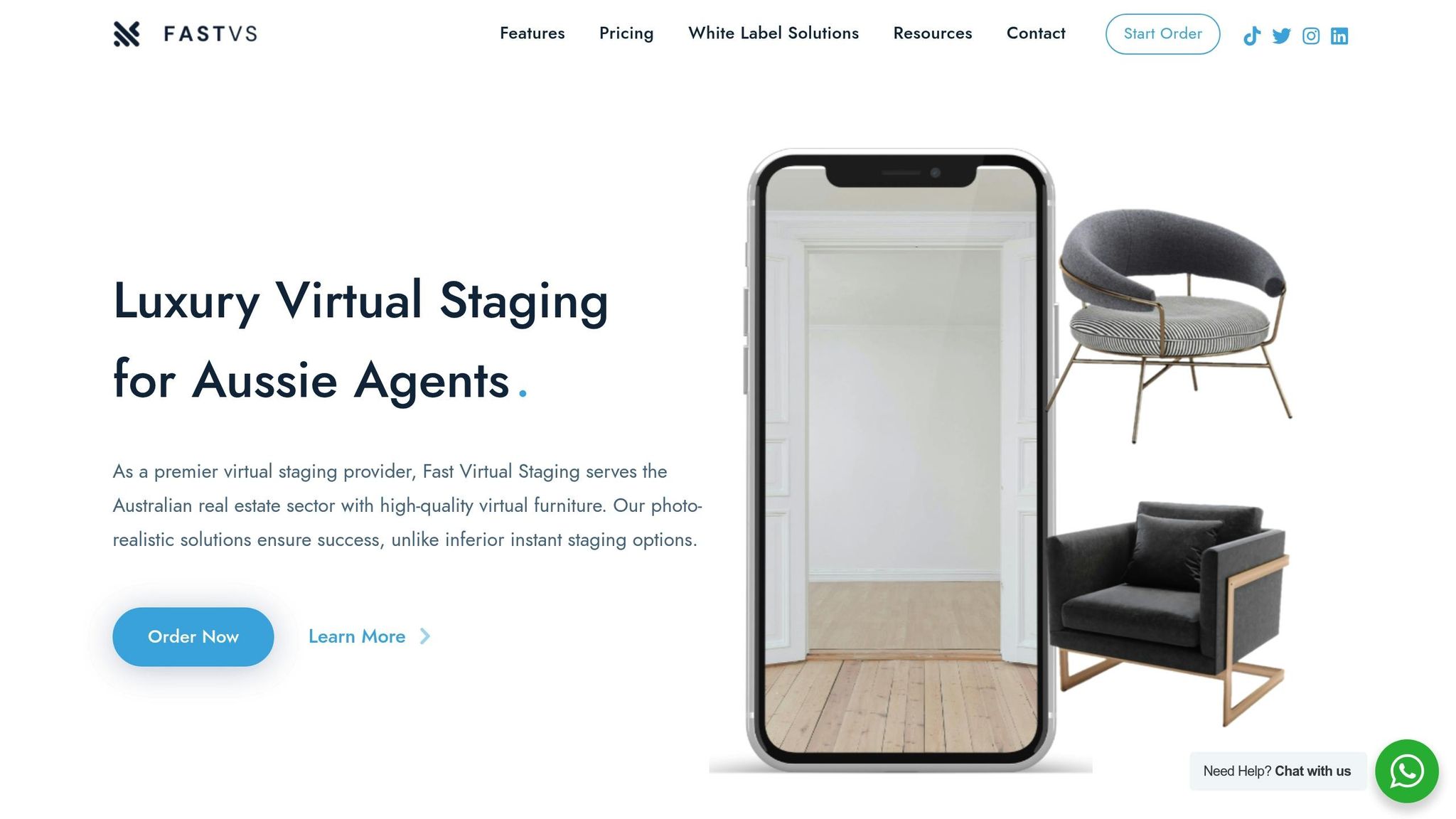
Fast Virtual Staging combines photo-realistic rendering with high-quality property photography to create warm, inviting spaces that resonate with potential buyers. At a flat rate of $30 AUD per image, it offers a transparent pricing structure, making it easier to manage your marketing budget.
With a 12–24-hour turnaround for residential properties, the platform ensures you can update listings quickly, keeping up with the fast-paced market. Each order includes two revisions, allowing you to refine the staging to meet your vision or address client feedback. To further enhance the experience, a dedicated account manager provides personalised support, ensuring consistent results.
For photographers and agencies, this service includes white-label solutions, enabling you to expand your offerings while maintaining your brand identity. Whether it’s a cosy home or a sprawling commercial property, the platform supports a variety of projects with customisable design styles that reflect local preferences.
Now, let’s explore how these tailored design options align with the diverse tastes of Australian buyers.
Matching Staging Styles to Local Demographics
Fast Virtual Staging’s design options are crafted to suit the wide array of buyer preferences found across Australia. Whether it’s the sleek lines of modern styling or the minimalist charm of Scandinavian aesthetics, the platform offers designs that can be tailored to fit each property and its target audience.
This adaptability ensures that properties are presented in a way that resonates with local buyers – whether they’re drawn to a chic, urban vibe or a more regionally inspired, cosy atmosphere. By aligning staging styles with buyer expectations, agents can create a stronger emotional connection, which is key to standing out in Australia’s competitive real estate market.
sbb-itb-f3f2f9e
Benefits and Drawbacks of Virtual Staging in 2025
Virtual staging in 2025 comes with a mix of advantages and challenges. For Australian real estate professionals, understanding these aspects is crucial for making informed decisions that align with their goals and market dynamics.
Pros and Cons of Virtual Staging
Virtual staging offers a range of benefits, but it’s not without its limitations. Knowing these trade-offs can help agents determine when and how to use this tool effectively.
| Advantages | Disadvantages |
|---|---|
| Cost-effective: Virtual staging is typically far cheaper than traditional physical staging, often requiring just a fraction of the expense involved in setting up a physical space. | Risk of buyer disappointment: Buyers may feel misled if they visit a property expecting the beautifully staged version they saw online, only to find an empty or less appealing space. |
| Quick updates: It allows for fast adjustments and updates to listings, making it easy to refresh a property’s look or respond to buyer feedback. | No tactile experience: Buyers can’t physically interact with or experience the furniture and décor depicted in virtual images. |
| Design flexibility: A single property can be presented in multiple styles to attract different buyer demographics, boosting its appeal. | Transparency requirements: Agents must clearly disclose when images are digitally enhanced to comply with consumer protection guidelines. |
| No storage hassle: It eliminates the need for coordinating furniture rentals, deliveries, or removals, saving time and effort. | Reliance on quality inputs: The effectiveness of virtual staging depends heavily on high-quality photography, which can be a challenge in poorly lit or awkwardly designed spaces. |
| Weather-proof: Unlike physical staging, virtual staging isn’t affected by weather or access issues, ensuring a consistent process. | Authenticity concerns: Some agents and buyers still prefer the tangible, realistic feel of physical staging. |
In Australia’s regulated property market, transparency is key. Industry guidelines often require agents to disclose when images have been digitally enhanced, ensuring buyers are fully aware of what they’re viewing.
These pros and cons highlight the need to carefully weigh virtual staging against traditional methods, depending on the property and target audience.
Virtual vs Physical Staging for Australian Agents
The decision between virtual and physical staging goes beyond the simple advantages and disadvantages. For Australian agents, factors like property type, budget, and market competition heavily influence the choice.
Virtual staging is a great fit when speed and cost efficiency are priorities. It’s particularly useful for properties that need to hit the market quickly or appeal to a broad online audience. On the other hand, high-end homes often benefit from the immersive experience of physical staging, where the sensory impact can justify the additional expense.
Market conditions also play a role. In areas where properties linger on the market, the ongoing costs of physical staging can become impractical. However, in highly competitive markets, a well-staged physical setup might be essential to stand out.
A growing trend among agents is to combine the two methods. Virtual staging is used to create visually compelling online listings, while selective physical staging is employed for inspections. This hybrid approach offers the best of both worlds – capturing attention online while providing a tangible experience for serious buyers.
Case Studies: Success Stories from the Australian Market
The Australian real estate market has seen clear benefits from virtual staging, with agents reporting a noticeable boost in buyer engagement. By using high-quality, photo-realistic virtual staging, agents can create listings that not only look more appealing online but also help potential buyers imagine the true potential of a property.
How Fast Virtual Staging Impacts Property Sales
Virtual staging has shown its value across various property types, transforming empty rooms into warm, inviting spaces. Real estate agents have found that visually appealing, well-staged images lead to increased interest, more property inspections, and faster sales.
According to data from Fast Virtual Staging, properties that feature virtual staging often spend less time on the market compared to those left unstaged. This quicker turnaround can result in better pricing outcomes while also cutting down on marketing costs. The combination of visually striking images and speedy delivery plays a key role in achieving these results.
Fast Virtual Staging provides a cost-effective way for real estate professionals to enhance their listings. The service’s ability to deliver stunning, realistic visuals quickly has consistently helped agents achieve stronger results in the competitive property market.
Future Outlook for Virtual Staging in Australia
The virtual staging market in Australia is on a steady rise as digital tools become more integral to property marketing. By 2025, virtual staging is expected to be a must-have for real estate professionals, offering a cost-effective and efficient way to showcase properties.
Key Insights for 2025
Fast Virtual Staging provides a standout option with its $30 AUD per image pricing and a guaranteed 24-hour turnaround for residential properties. This rapid delivery is a game-changer in fast-paced property markets, allowing agents to maintain momentum without sacrificing image quality.
Tailored design styles that resonate with local buyers are becoming increasingly important. For instance, a sleek Scandinavian minimalist style could appeal to inner-city Melbourne buyers, while a modern coastal aesthetic might attract attention in Queensland. These custom approaches help properties make a lasting impression in a competitive market.
These trends are shaping the future of virtual staging, paving the way for even more exciting developments.
The Next Phase of Virtual Staging
Virtual staging is set to become a core component of real estate marketing strategies. With ongoing technological advancements, it will integrate more seamlessly into broader marketing efforts. Fast Virtual Staging’s white-label solutions for real estate photographers illustrate this shift, simplifying the process for professionals to include virtual staging in their service offerings.
As buyer expectations evolve, photo-realism will take centre stage. People want visuals that feel authentic and relatable, and as digital engagement continues to grow, the combination of speed and realistic imagery will cement virtual staging as an essential tool for real estate professionals across Australia.
FAQs
How does virtual staging improve the online property search experience for Australian buyers?
Virtual staging transforms plain or outdated spaces into stylish, inviting interiors, making it easier for potential buyers to picture themselves living in the home. This added visual charm often sparks an emotional connection, boosting buyer interest and helping them make quicker decisions.
For buyers in Australia, virtual staging showcases a property’s possibilities without the hassle of traditional staging. By offering expertly designed, lifelike images, it ensures listings grab attention in a crowded market, drawing in more serious and motivated enquiries.
What are the advantages of using both virtual and physical staging when selling a property?
Combining virtual and physical staging offers a smart approach to boosting property sales by leveraging the strengths of both methods. Virtual staging lets you present a variety of design styles tailored to appeal to different buyer tastes, while physical staging delivers that all-important in-person experience, helping buyers imagine themselves living in the space.
This blend can lead to impressive results: properties can sell up to 73% faster and achieve sale prices that are 5–20% higher. It’s also a budget-friendly option, as virtual staging cuts down on the logistical costs tied to physical staging, all while allowing for easy updates to designs when needed. Together, these strategies form a flexible and effective marketing tool for Australia’s property market.
How can virtual staging be tailored to attract different types of buyers in Australia?
Virtual staging offers the flexibility to match different buyer preferences by tailoring elements like furniture styles, colour schemes, and décor. For example, incorporating sustainable designs can attract buyers who prioritise eco-conscious living, while sleek and minimalist interiors might catch the eye of young professionals.
It also enables the creation of multiple property versions, catering to diverse groups such as families, singles, or retirees. Local touches can make a big difference too – think coastal-inspired colours for beachside homes or modern, edgy designs for inner-city apartments. With advanced technology, these designs align closely with what local buyers are looking for, making properties more appealing and market-ready.