
Virtual staging is a game-changer for Australian real estate, with 90% of buyers starting their search online and staged properties selling 75% faster. This cost-effective ($30 per image) tool digitally transforms vacant spaces, helping buyers visualise their potential. Three popular styles stand out:
- Coastal: Relaxed and bright, ideal for beachside or suburban homes with an indoor-outdoor flow. Think wicker furniture, white walls, and ocean-inspired tones.
- Hamptons: Elegant yet comfortable, perfect for larger homes or upscale suburbs. Features include Shaker cabinetry, natural materials, and soft blues.
- Modern: Clean lines and minimalism, suited for urban apartments or new builds. Focuses on functionality with modular furniture and neutral tones.
Selecting the right style ensures your property connects with buyers. Coastal offers a breezy vibe, Hamptons adds sophistication, and Modern highlights practicality. Each style enhances a home’s appeal while reflecting Australia’s unique lifestyle.
1. Coastal
Design Aesthetic
Coastal style perfectly reflects Australia’s laid-back beach lifestyle, blending indoor and outdoor living seamlessly. As writer Sabrina Rogers-Anderson explains:
"Coastal style is characterised by an indoor-outdoor living aesthetic that embodies the Australian way of life."
This design celebrates bright, open spaces where natural light bounces off crisp white walls, creating an inviting and uncluttered feel. The relaxed atmosphere is further enhanced with thoughtful visual staging, helping buyers form emotional connections and increasing a property’s appeal. Features like bi-fold or sliding doors are often used to merge indoor spaces with outdoor areas like decks or gardens, reinforcing this free-flowing aesthetic.
Ideal Property Types
While coastal staging shines in beachside homes and holiday rentals, it’s equally effective in urban terrace houses, suburban family homes, and modern open-plan layouts. Any property that emphasises a strong indoor–outdoor connection – such as those with stacker doors opening to balconies or small gardens – can make the most of this style. The versatility of coastal design allows for furniture and décor choices that naturally enhance this seamless integration.
Key Furniture and Decor Elements
The coastal look revolves around natural materials like lightweight wicker, weathered timber, linen, and stone. Furniture often includes slipcovered sofas in neutral shades, whitewashed timber tables, and rattan chairs, all contributing to a warm and inviting vibe. Instead of overused nautical motifs like anchors or fishing nets, modern coastal design favours bold greenery, such as Monstera, Fiddle Leaf Fig, or Kentia palms, to add a tropical touch. Beach-inspired accents, like driftwood or shells, are used sparingly for subtle charm. To add depth and comfort, layering textures – like jute rugs paired with soft linen cushions and plush throws – creates a cosy yet stylish atmosphere.
Colour Palette
A coastal palette begins with crisp white walls, such as Dulux Vivid White, which amplify natural light and make neutral tones stand out. Soft sandy hues, warm beiges, and light greys form the foundation, complemented by ocean-inspired shades like teal, aqua, sky blue, and muted emerald. Instead of traditional navy stripes, these blues are introduced more subtly through items like cushions, rugs, or artwork. To give the space a distinctly Australian touch, you can incorporate native tones like eucalyptus green, golden wattle yellow, and hints of leafy green for a uniquely local flavour.
2. Hamptons
Design Aesthetic
The Hamptons style combines the charm of coastal landscapes with the elegance of farmhouse sophistication, creating a light, timeless look that resonates strongly in Australian property markets. This design embraces a seamless indoor-outdoor flow, a feature highly appealing to Australian homeowners. It strikes a balance between refined elegance and relaxed comfort, offering both aspiration and functionality. Unlike a casual coastal vibe, the Hamptons aesthetic enhances traditional farmhouse elements with polished details. As DreamPot highlights:
"Elegance and comfort go hand in hand when designing a kitchen in the Hamptons style. Light colors, natural materials, and careful details are the keys to creating a beautiful and practical room."
For virtual staging, the goal is to create an aspirational yet realistic look. This involves enhancing colours and lighting to make walls look fresh and timber floors appear warm, all while maintaining a believable, inviting atmosphere that appeals to buyers. This delicate blend of sophistication and comfort is reflected in the thoughtful selection of furnishings, as outlined below.
Ideal Property Types
Hamptons-style staging works beautifully in homes across Sydney, the Gold Coast, the Sunshine Coast, Brisbane, and Perth. It’s particularly effective in properties featuring large windows, bi-fold doors, and alfresco dining areas. This style excels at transforming empty or outdated interiors into visually stunning spaces, making it easier for potential buyers to imagine themselves living there. Its aesthetic is also highly photogenic, ensuring properties stand out in crowded online listings.
Key Furniture and Decor Elements
The Hamptons aesthetic revolves around Shaker-style cabinetry with clean lines and glass-front upper cabinets that showcase dishware. Polished nickel, chrome, or aged brass hardware adds a touch of sophistication, while nautical or classic pendant lights over kitchen islands serve as eye-catching focal points. Natural materials like timber floors, exposed beams, marble or quartz countertops, and subway tile backsplashes define the look, blending rustic charm with a polished finish. Coastal-inspired accessories – think driftwood, coral, or ocean-themed artwork – introduce character without overwhelming the space. Woven textures in bar stools or light fixtures add warmth and depth.
Colour Palette
The Hamptons colour palette starts with a base of whites and light neutrals, creating that signature bright, airy feel. These tones are complemented by soft greys, pale blues, and seafoam greens, reflecting a coastal influence while maintaining a refined look. Light-coloured countertops and cabinetry further enhance the open, welcoming vibe in listing photos. This attention to detail contributes to the 79% increase in enquiries generated by high-quality property images.
3. Modern
Design Aesthetic
The Modern style is all about simplicity and precision, with an emphasis on clean lines and balanced proportions. This approach, often described as "aspirational realism", combines minimalism with photorealistic finishes to create spaces that feel both polished and authentic. Tiffany Bowtell, CEO and Founder of PMVA, explains it perfectly:
"Proper colour correction… achieve[s] what I call ‘aspirational realism’, enhanced yet believable colours where walls appear fresh, timber floors look warm, and natural light feels inviting without artificiality."
The outcome? Spaces that are elegant yet welcoming, making this aesthetic adaptable to a variety of property layouts.
Ideal Property Types
Thanks to its clean lines and understated style, Modern staging fits effortlessly into a range of Australian properties. It works beautifully in urban terrace homes, apartments, and even high-end new builds. Suburban family homes also benefit from this style, as it can make spaces feel more open and functional. Modern staging is particularly transformative for vacant properties that might otherwise appear cold or uninviting in photographs. It’s also a go-to choice for smaller homes, like terrace houses and townhouses, helping them appear larger and more practical.
For off-the-plan developments, this style is a standout. Its minimalist designs resonate with younger, city-based buyers, and it allows developers to showcase properties before they’re even built.
Key Furniture and Decor Elements
Modern virtual staging leans heavily on contemporary and designer furniture, with an emphasis on space-saving and multi-functional pieces – perfect for maximising smaller properties. To maintain a natural and inviting look, real-furniture images are often favoured over CGI. The style is enhanced with curated elements like striking artworks, lush indoor plants, and functional outdoor settings, such as balcony dining sets. For terrace homes, there’s a focus on flow and practicality, with digitally scaled furniture that fits the room dimensions perfectly.
Colour Palette
The Modern aesthetic pairs its sleek furniture with a well-thought-out colour palette. Fresh wall tones and warm timber floors are key features, brought to life by natural light. Instead of sticking to a single colour scheme, designers use techniques like "strategic brightening" to make walls and ceilings appear more open and inviting. Many professionals also rely on "flambient" editing – a mix of flash and ambient light – to achieve a polished, magazine-ready look that retains the natural warmth Australians love.
sbb-itb-f3f2f9e
The Impact of Virtual Staging on Property Marketing – Insights from Sydney’s Top Realtor
Comparing the Three Styles
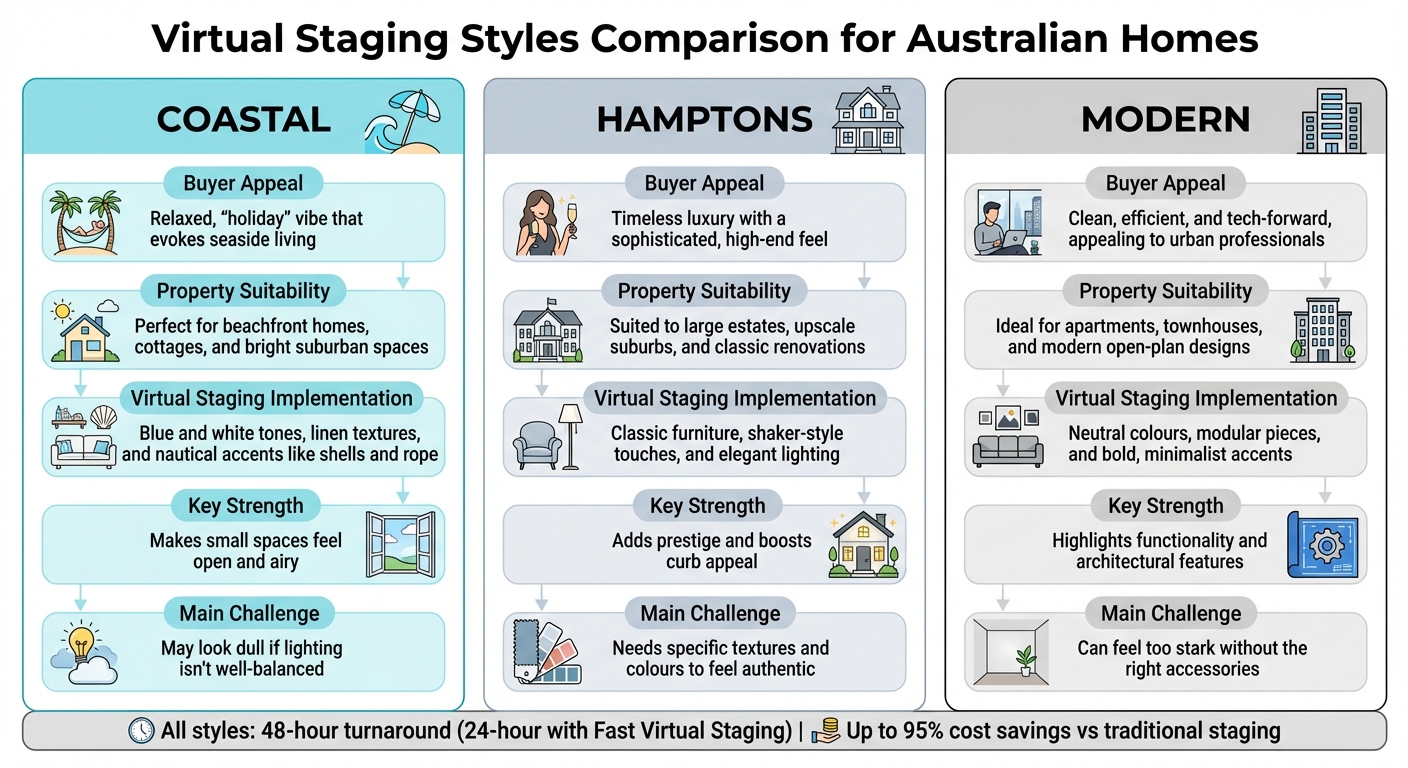
Coastal vs Hamptons vs Modern Virtual Staging Styles Comparison for Australian Homes
Picking the right virtual staging style isn’t just about how it looks – it’s about connecting the property with the right buyer. Each style offers something different, and understanding their strengths and challenges can help you make smarter choices for your listings.
Here’s a breakdown of how the Coastal, Hamptons, and Modern styles stack up when it comes to buyer appeal, property fit, implementation, and more:
| Factor | Coastal | Hamptons | Modern |
|---|---|---|---|
| Buyer Appeal | Relaxed, "holiday" vibe that evokes seaside living | Timeless luxury with a sophisticated, high-end feel | Clean, efficient, and tech-forward, appealing to urban professionals |
| Property Suitability | Perfect for beachfront homes, cottages, and bright suburban spaces | Suited to large estates, upscale suburbs, and classic renovations | Ideal for apartments, townhouses, and modern open-plan designs |
| Virtual Staging Implementation | Blue and white tones, linen textures, and nautical accents like shells and rope | Classic furniture, shaker-style touches, and elegant lighting | Neutral colours, modular pieces, and bold, minimalist accents |
| Key Strength | Makes small spaces feel open and airy | Adds prestige and boosts curb appeal | Highlights functionality and architectural features |
| Main Challenge | May look dull if lighting isn’t well-balanced | Needs specific textures and colours to feel authentic | Can feel too stark without the right accessories |
All three styles share a similar production timeline. Virtual staging typically takes about 48 hours, but Fast Virtual Staging offers a 24-hour turnaround, cutting costs by up to 95% compared to traditional staging. This makes it easier to experiment with different styles without breaking the bank.
With 90% of buyers starting their property search online, the virtual staging style you choose plays a critical role in making that all-important first impression. It could mean the difference between catching a buyer’s eye or having them scroll past.
Conclusion
Selecting the right virtual staging style can make a world of difference when presenting a property. It’s all about aligning the design with the property’s character, location, and the preferences of potential buyers. For instance, Coastal works beautifully for beachfront or suburban properties, creating a laid-back, holiday-like atmosphere. On the other hand, Hamptons exudes sophistication and suits upscale suburbs or estates, appealing to buyers who appreciate timeless elegance. For urban apartments or modern homes, Modern staging – with its sleek lines and minimalist approach – maximises space and functionality.
Location plays a key role in shaping buyer expectations. Coastal and Hamptons styles naturally fit beachfront and high-end neighbourhoods, while Modern staging appeals to younger, urban professionals. For suburban family homes, Hamptons-style staging offers a classic charm that highlights the home’s layout and versatility.
In Australia, these styles have been tailored to reflect local sensibilities. The Australian take on Hamptons, for example, is more understated than its American counterpart, often featuring larger verandahs and native plants like eucalyptus or banksia to blend seamlessly with the environment. Similarly, Coastal staging here incorporates materials like rattan and reclaimed timber, enhancing the relaxed, beachside aesthetic. These adaptations not only ground the designs in an Australian context but also increase their appeal to local buyers.
Virtual staging is a powerful tool, allowing sellers to experiment with styles and discover what resonates most with their audience. As Mark Kentwell from PRD Nationwide Newcastle and Lake Macquarie wisely notes:
Buyer disappointment on arrival at an opening is impossible to recover.
The key is to ensure virtual staging enhances the property’s online presence while accurately reflecting its features. This approach builds trust, highlights the home’s strengths, and ensures buyer expectations align with reality.
FAQs
What is the best virtual staging style for my Australian property?
Choosing the right virtual staging style for your Australian property involves considering its location, architectural design, and the preferences of potential buyers. For coastal properties, a Coastal style works beautifully. Light, breezy colours, natural textures, and relaxed decor reflect the seaside lifestyle that many Australians cherish.
If you’re after something more classic and sophisticated, the Hamptons style is a fantastic option. With its neutral tones, timeless furniture, and elegant details, it brings a touch of luxury that resonates well with buyers seeking a refined atmosphere.
For city apartments or modern homes, a Modern style is a smart choice. Sleek furniture, minimalist decor, and neutral colour schemes are especially appealing to younger buyers and professionals. To make your property stand out even more, consider incorporating features that align with Australian living, like eco-conscious materials or inviting outdoor spaces. Tailoring the staging style to your property’s strengths and your audience’s preferences can make all the difference in attracting the right buyers.
What sets Coastal, Hamptons, and Modern virtual staging styles apart for Australian homes?
The key differences between Coastal, Hamptons, and Modern styles come down to their inspirations and the atmosphere they create.
Coastal style captures the essence of seaside living. It’s all about light, breezy spaces with soft hues like blues, whites, and sandy tones. Think natural textures – rattan, linen, and driftwood – that bring a relaxed, casual charm.
Hamptons style takes a more refined approach, drawing from the elegance of luxury beachside homes. It combines whites, creams, and soft greys with timeless furniture, shiplap walls, and subtle coastal accents. The result? A balance of sophistication and warmth.
Modern style, on the other hand, is all about simplicity and functionality. With clean lines, neutral or monochrome palettes, and materials like glass and steel, it creates a sleek, uncluttered look that feels polished and spacious.
Whether you’re drawn to Coastal’s laid-back vibe, Hamptons’ classic elegance, or Modern’s streamlined design, each offers a distinct aesthetic to suit your taste.
Can virtual staging showcase Australian design styles?
Yes, virtual staging can absolutely be customised to showcase popular Australian design styles. This means you can highlight aesthetics that appeal to local buyers, including Coastal, Hamptons, and Modern themes – styles that naturally complement Australian homes and lifestyles.
Options for customisation include choosing furniture, colour schemes, and decor that reflect regional tastes. For example, light and breezy tones work beautifully for a coastal feel, while natural materials can emphasise a sleek, eco-conscious modern look. These tailored touches help property listings connect with Australian buyers, making them feel more relatable and visually engaging.