
Virtual staging is transforming the way properties are marketed in Australia. By digitally adding furniture and decor to photos of empty or outdated spaces, you can make listings stand out on platforms like Domain and realestate.com.au. Here’s why it works:
- Cost-effective: Virtual staging costs around $30 AUD per image, compared to $2,000–$12,000 AUD for physical staging.
- Faster turnaround: Get staged photos in 12–24 hours, versus days for traditional staging.
- Improves buyer interest: Listings with staged photos can attract 72% more online traffic and sell up to 73% faster.
- Customisable designs: Tailor the look to suit Australian tastes, whether it’s sleek, modern styles for city apartments or family-friendly layouts for suburban homes.
- Transparency compliance: NSW laws require clear labelling of digitally altered images to avoid misleading buyers.
Virtual staging helps buyers visualise a property’s potential, making it easier to sell faster and often at higher prices. For agents, it’s a low-cost, high-impact tool that delivers results.
How To Virtually Stage A Home
Key Benefits of Virtual Staging for Domain and realestate.com.au
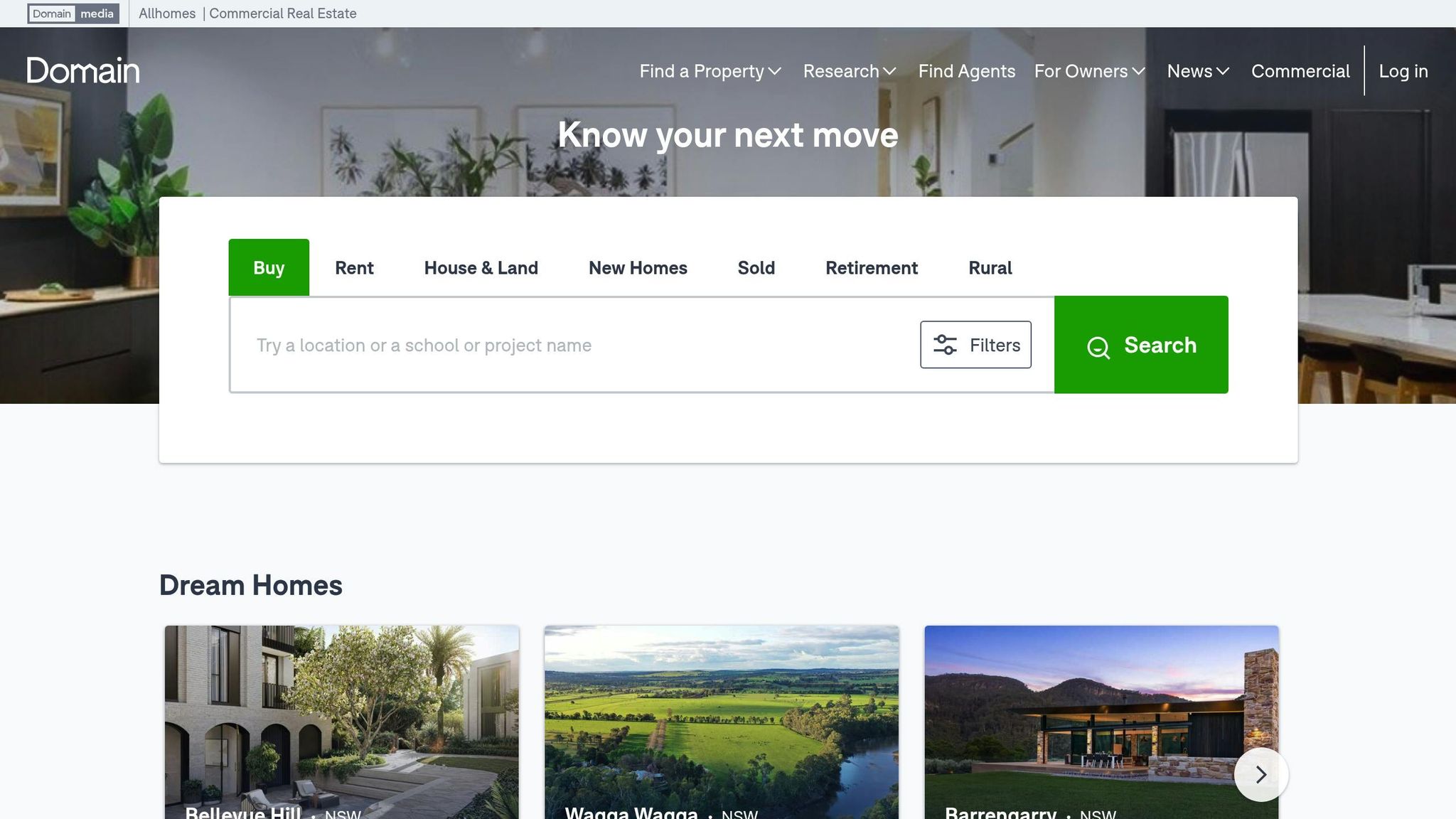
Virtual staging has become an invaluable tool for enhancing property listings on Domain and realestate.com.au, offering a range of advantages that make it a smart choice for agents and sellers alike.
Cost-Effective and Fast
The financial benefits of virtual staging are hard to ignore. In Australia, traditional staging can cost anywhere from $1,500 to $12,000 AUD per property, depending on factors like size and location. Sydney-based Reddit users, for example, report typical costs of $3,000 AUD for apartments and $5,000 AUD for houses. These expenses cover furniture rental, staging services, transportation, and labour.
Virtual staging, on the other hand, cuts those costs significantly. A package of 12 virtually staged photos typically ranges from $350 to $900 AUD, offering an 80-95% cost reduction compared to physical staging. At Fast Virtual Staging, individual images cost just $30 AUD, making it a budget-friendly option for agents of all levels.
| Staging Method | Cost Range (AUD) | Turnaround Time | Ongoing Costs |
|---|---|---|---|
| Traditional Staging | $1,500 – $12,000 | 3-7 days | $500-600/room/month |
| Virtual Staging | $350 – $900 (12 images) | 12-24 hours | None |
In addition to being more affordable, virtual staging is also faster. While traditional staging involves coordinating furniture delivery, setup, and styling over several days, virtual staging delivers polished images in just 12-24 hours. This speed allows listings to go live quickly, which is especially important in Australia’s dynamic property market.
Virtual staging also eliminates unexpected costs. There’s no risk of damaged or stolen furniture, no labour-related fees, and no monthly rental charges for furniture if a property stays on the market longer than expected. These savings free up resources, enabling agents to focus on creating listings that attract more interest.
Increasing Engagement and Buyer Interest
Virtual staging doesn’t just make listings look better – it makes them perform better. With 96% of potential buyers starting their property search online, high-quality photos are essential for making a strong first impression. Virtual staging transforms empty or underwhelming spaces into visually appealing rooms that grab attention.
Data backs up its effectiveness. Collov AI reports that listings with virtual staging see a 72% increase in online traffic and a 44% rise in qualified enquiries. Additionally, 77% of buyer’s agents say that virtually staged photos help their clients better visualise properties.
"Virtual staging is a tool that can amplify the listing’s digital presence, compelling casual browsers to pause, explore, and inquire." – VirtualStaging.com
The appeal goes beyond aesthetics. 82% of buyers believe staging helps them imagine a property as their future home. When buyers can picture themselves cooking in a stylish kitchen or relaxing in a cosy living room, they’re more likely to take the next step, like scheduling an inspection. This emotional connection is key to turning casual interest into serious intent.
Virtual staging also addresses common challenges with property listings. Empty rooms often appear smaller and less inviting, while staged images provide a sense of scale and functionality. By adding appropriately sized furniture, virtual staging helps buyers understand how a space can meet their needs.
The benefits don’t stop at initial impressions. Properties with professional visuals tend to sell 32% faster, and listings with video content generate 403% more enquiries. Combining virtually staged photos with other digital marketing tools creates a standout listing that attracts and engages buyers.
Tailored Designs for Australian Buyers
One of the standout features of virtual staging is its ability to cater to the preferences of Australian buyers. Our lifestyle, climate, and design tastes influence what resonates with different demographics, and virtual staging allows you to reflect these elements in your listings.
For young professionals in cities like Melbourne or Sydney, staging might feature sleek, minimalist furniture with multifunctional layouts that highlight modern urban living. A compact dining area or home office setup can demonstrate how the space supports their lifestyle. In contrast, for growing families in Brisbane or Perth, designs might emphasise practical layouts with kid-friendly furniture, outdoor entertaining areas, and flexible spaces that evolve with family needs.
Styles like Scandinavian and contemporary are particularly popular in Australia, reflecting a preference for light, open spaces that blend indoor and outdoor living. Virtual staging can highlight these elements by showcasing natural light, creating seamless flow between rooms, and emphasising relaxed yet elegant interiors.
Virtual staging also brings versatility to the table. A spare room can be staged as a guest bedroom, nursery, or home office, depending on the target audience. A basement might become a home gym for fitness enthusiasts or a game room for families who love to entertain. This adaptability helps buyers see the potential in spaces they might otherwise overlook.
It’s also a great way to address design challenges. Awkward layouts can be reimagined with smart furniture placement, small rooms can appear larger and more functional, and oversized areas can be divided into cosy, well-defined sections.
The key is knowing your audience and tailoring the staging to their needs. A luxury penthouse in the Gold Coast will require different styling than a family home in Adelaide. Virtual staging gives you the flexibility to adapt the design to the buyer, creating a connection that turns interest into action.
How to Use Virtual Staging for Listings on Domain and realestate.com.au
To make the most of virtual staging on Domain and realestate.com.au, start with high-quality photos, choose a reliable staging provider, and ensure correct image uploads. Here’s a step-by-step guide to help you integrate virtual staging effectively into your property listings.
Preparing Your Property Photos
The foundation of great virtual staging lies in the quality of your original photos. The better the base images, the more realistic and appealing the final staged results will be.
Start by thoroughly cleaning and decluttering the space. Remove personal items, furniture, and any unnecessary objects to create a neutral setting for adding digital furnishings later.
Schedule your photoshoot during daylight hours to take advantage of natural light. Use a camera mounted on a tripod or a steady smartphone in HDR mode for sharp, well-lit images. HDR mode is particularly useful for balancing light in spaces with large windows or tricky lighting conditions.
When framing your shots, aim to capture the room from a corner. This perspective maximises the visible space, giving virtual staging software more to work with. Wide-angle shots are especially effective, as they provide a natural and inviting view of both interior and exterior areas.
Choosing a Virtual Staging Provider
Selecting the right provider is crucial. Fast Virtual Staging is a popular choice among Australian real estate professionals. With a cost of $30 AUD per image, this service offers competitive pricing alongside a quick 12–24 hour turnaround, two free revisions, and a dedicated account manager. They also provide design styles tailored to Australian preferences, such as Scandinavian and Modern.
Before committing, review the provider’s portfolio to ensure their work is high-resolution and realistic, with furniture and decor that blend naturally into the space. Consider starting with a trial project to gauge their quality. Virtual staging can be a worthwhile investment – staged homes sell up to 73% faster than vacant ones and can boost a property’s value by 1% to 5%.
Once you receive your virtually staged images, follow these steps to update your online listings efficiently.
Uploading and Managing Virtually Staged Images
To add your virtually staged images, use the ‘Images and Copy’ tab in the Agent Admin section of realestate.com.au or the agent portal on Domain. If you rely on a third-party listing uploader, make the updates through that platform. Your staged images will then appear in the main image carousel and the Inspections section of your listing.
Both platforms allow multiple images per listing, so you can showcase various rooms and angles. Be sure to clearly label digitally enhanced images with a watermark or the term ‘virtually staged’ to maintain transparency and build buyer trust. Specify any changes made during the staging process, such as added furniture, decor, or altered colours. The goal is to highlight the space’s potential, not to mislead about features that aren’t there.
"Virtual staging shouldn’t be about creating a fantasy; it’s about inspiring possibilities within the existing space." – Bella Virtual Staging
You might also want to include before-and-after photos in your listing. This approach not only underscores the impact of virtual staging but also ensures full transparency. Keep in mind, even the most impressive virtual staging cannot fix poor original photography. When buyers can clearly see the potential of a space, they’re more likely to schedule inspections and make offers.
sbb-itb-f3f2f9e
Best Practices and Compliance for Virtual Staging in Australia
Virtual staging can elevate your property listings when done responsibly, both ethically and legally. For Australian real estate professionals, adhering to regulatory standards is essential. In New South Wales (NSW), for example, new laws require clear disclosure of altered images in rental advertisements.
Disclosing Virtual Staging in Listings
NSW legislation, introduced in June 2025, mandates that digitally altered images in property listings must be clearly labelled. Penalties for non-compliance are steep – up to $5,500 for individuals and $22,000 for businesses. The law aims to curb misleading practices, particularly those where digital edits mask flaws or create unrealistic impressions of a property.
"Uploading photography that didn’t accurately represent the property was a ‘false and misleading’ practice"
– Tim McKibbin, Chief Executive, Real Estate Institute of NSW
To comply, include a ‘virtually staged’ watermark or text overlay on altered images and add a disclaimer in the listing description. Fair Trading NSW emphasises that advertising images must truthfully reflect the property. Agents cannot shift responsibility to buyers by claiming they should conduct their own inspections.
Avoiding Misleading Representations
The line between enhancing a photo and misrepresenting a property is critical. NSW law explicitly prohibits edits that deceive, such as showing a double bed in a space that can only fit a single or digitally concealing property defects like cracks or water stains.
When adding virtual furniture, ensure that it reflects the room’s actual proportions. For instance, if a bedroom measures 3 metres by 3.5 metres, the furnishings in the staged image should be scaled accordingly. Avoid any modifications that might mislead potential buyers about the property’s condition or layout.
"Being misled into visiting a property that is not suitable is frustrating for prospective tenants and may mean they miss out on other properties"
– Leo Patterson Ross, President, Tenants’ Union of NSW
Providing a floor plan alongside virtually staged images is another effective way to ensure transparency. Floor plans confirm the property’s real dimensions and layout, helping prospective buyers or tenants make informed decisions.
Meeting Buyer Expectations
To build trust, consider showing both the original and virtually staged versions of a property. This approach not only demonstrates transparency but also highlights the home’s potential. Focus on realistic enhancements – use contemporary furniture and décor that reflect local tastes and trends, offering buyers a vision they can imagine achieving themselves.
When describing spaces, always use metric measurements, such as square metres, for clarity. This standard aligns with Australian advertising norms and helps avoid confusion. For outdoor areas like pools or patios, maintaining consistent measurement practices is equally important.
The Real Estate Institute of Australia advises agents against staging photos without clear disclaimers. Additionally, having all AI-generated content reviewed by a person before publication is becoming a common practice to maintain trust and minimise legal risks.
Virtual staging should showcase a property’s possibilities while staying honest about its current condition. By following these guidelines, you can create listings that inspire confidence and attract the right buyers.
Case Studies: Success Stories with Virtual Staging
Real-world examples from Domain and realestate.com.au highlight how virtual staging can significantly boost property engagement and sales. Staged homes have been shown to sell up to 73% faster and for as much as 17% more than their unstaged counterparts.
Before-and-After Results
The power of virtual staging is evident when comparing performance metrics for listings. One standout example involved a realtor who saw a staggering 1,800 views on a staged property, compared to just 200 views for similar unstaged listings over the same three-day period. This surge in online interest often leads to more enquiries and quicker sales.
Amy Bennett and Jodie Hedley-Ward from McGrath Estate Agents Australia have seen these benefits firsthand. Bennett shared that virtual staging costs her only $50 AUD per room, including printing staged images for display during inspections. This affordable investment consistently results in faster sales, thanks to the enhanced visual appeal.
The quick turnaround is another advantage. Realtor Barb Kutz, for instance, reintroduced a home to the market with virtually staged photos and secured an accepted offer within just 72 hours. Internationally, agent Nika achieved a similar success by selling a condo in only 12 hours after using virtual staging.
These examples not only highlight improved engagement but also provide valuable insights into strategies that maximise the effectiveness of virtual staging.
Lessons Learned from Successful Listings
Drawing from these experiences, agents have identified several strategies to optimise virtual staging. First, high-quality base photography is essential. Properties with professional images can attract up to 60% more views, making it a foundational step for successful staging.
Another effective approach is creatively dividing spaces to highlight usability. Michelle Schwartz, an agent with The Agency‘s Beverly Hills office, explained:
"With the staging tools, we divided it into two rooms and made them light and bright. We would never have been able to showcase the usability of that area and have buyers envision themselves in the house."
– Michelle Schwartz
Focusing on key areas is also crucial. Instead of staging every room, successful agents prioritise high-impact spaces like the kitchen, living room, master bedroom, main bathroom, and outdoor areas. This strategy maximises visual appeal while keeping costs reasonable.
A hybrid approach is becoming increasingly popular. By combining virtual staging for online listings with selective traditional staging during inspections, agents can balance cost-effectiveness with the tangible experience buyers value.
Creative presentation techniques further enhance the impact. For example, displaying printed virtually staged images on easels during open houses can help buyers connect the property’s current state with its potential, creating a lasting impression.
Finally, data underscores the effectiveness of virtual staging in online marketing. Listings with virtually staged photos see a 52% increase in clickthrough rates on MLS platforms, giving them a competitive advantage in capturing buyer attention. When paired with transparent disclosure and realistic representations, virtual staging becomes an indispensable tool for property marketing on Australia’s major platforms.
Conclusion: Improve Your Listings with Virtual Staging
Virtual staging has become a game-changer for property listings on platforms like Domain and realestate.com.au. It helps properties sell faster and captures the attention of potential buyers. In fact, staged homes sell 75% quicker than those left unstaged, with the Real Estate Institute of Australia confirming they spend far less time on the market.
The cost savings are undeniable. While traditional staging can rack up thousands of dollars, virtual staging with Fast Virtual Staging offers professional-quality images for just $30 AUD each, with a turnaround time of only 24 hours. This approach can save up to 97% compared to traditional methods. These savings, combined with the strong buyer interest, make virtual staging a smart investment.
Beyond the savings, the impact on buyer engagement is clear. Listings with high-quality photos can see up to 60% more views, and staged properties often sell for 6–20% higher prices. This makes virtual staging not just a cost-effective option but one that delivers a noticeable return on investment.
To make the most of virtual staging, focus on showcasing key rooms, ensure all digitally enhanced images are clearly disclosed, and work with experienced providers. As highlighted earlier, quality photography and transparency are essential to tapping into virtual staging’s full potential. With its affordability, speed, and proven results, virtual staging is an essential strategy for agents looking to elevate their listings on Australia’s top property platforms.
FAQs
How does virtual staging save time and money compared to traditional staging?
Virtual staging offers a budget-friendly and time-efficient alternative to traditional staging. While traditional staging can set you back anywhere from $1,000 to $3,500 per property, virtual staging typically costs between $30 and $150 per image. This makes it a much more economical choice for presenting properties.
When it comes to time, virtual staging is hard to beat. Most projects are completed within 24 to 48 hours, and sometimes even sooner. In contrast, traditional staging often takes several days to organise and execute, potentially delaying the listing process. For Australian real estate professionals aiming to elevate their property marketing without breaking the bank, virtual staging is a fast and cost-effective solution to showcase homes at their best.
What do I need to disclose about virtually staged images in Australian property listings?
In Australia, ensuring that property listings, including virtually staged images, are truthful and transparent is a must. Consumer protection laws demand honesty, which means you need to clearly state when images have been digitally altered. This helps potential buyers form realistic expectations about a property’s actual condition and appearance.
Starting in 2025, Queensland will implement specific rules requiring clear disclosure of virtually staged images in property listings. Meanwhile, in New South Wales, real estate agents are already obligated to ensure all advertising materials, including digitally enhanced photos, are accurate and comply with legal advertising standards.
To stay within the law and maintain buyer confidence, always label virtually staged images clearly. Make sure they reflect the property’s potential without overstating or misrepresenting its features.
How can virtual staging be tailored to attract different types of buyers in Australia?
Virtual staging offers a unique opportunity to cater to different buyer groups across Australia by tailoring designs to their tastes. For instance, young professionals might gravitate towards minimalist, modern interiors, while families may lean towards cosy, practical spaces with classic elements.
By thoughtfully choosing furniture, décor, and colour palettes that complement both the property’s character and the preferences of your target buyers, you can create a listing that truly connects with potential homeowners. Incorporating buyer insights and experimenting with various staging styles can help emphasise the features that matter most to your audience, giving your property an edge in Australia’s competitive real estate market.