
- Why It’s Important: Homes with professional photos sell 32% faster and can fetch up to 4% more in price.
- Key Equipment: Use wide-angle lenses, drones for aerial shots, and lighting tools to tackle Australia’s natural and architectural diversity.
- Techniques: Leverage natural light, HDR photography, and thoughtful composition to highlight spaces effectively.
- Virtual Staging: Affordable and fast, it transforms empty rooms into inviting spaces, boosting buyer interest by 87%.
- Editing & Delivery: Post-production ensures images meet platform standards (e.g., 1024px minimum width) and look polished across devices.
- Pricing: Standard packages range from $150–$350, with premium services like drone shots or twilight photography costing more.
- Trends: AI editing, 3D tours, and mobile-first optimisation are reshaping the industry.
Professional photography isn’t just about aesthetics – it’s a proven way to stand out in Australia’s property market.
Full Real Estate Photography Course
Equipment and Tools for Real Estate Photography
When it comes to real estate photography, having the right tools can make all the difference. In Australia, the unique conditions – ranging from intense sunlight to compact city spaces – demand equipment that can handle these challenges effectively.
Photography Gear Recommendations
Camera Bodies and Lenses
A high-quality camera paired with the right lens is the cornerstone of professional real estate photography. Wide-angle lenses are particularly valuable for Australian homes, especially in cities like Sydney and Melbourne, where space is often limited. These lenses allow you to capture more of a room in a single shot, making interiors feel spacious and welcoming.
"Lighting challenges, tight corners, and reflections can be significant obstacles when photographing interior spaces. Small spaces may require creative angles." – Dionel Lake, Owner of "The MittenTog"
Tilt-shift lenses are another excellent choice, especially for photographing heritage properties or modern apartments with tricky architectural angles. These lenses help correct distortions directly during the shoot, cutting down on the time spent editing later.
Tripods and Stability Equipment
A sturdy tripod is essential. Australian homes often require photos taken at eye level to match how potential buyers would view the space. Tripods ensure stability, keeping your shots sharp even in low-light conditions.
Drone Equipment for Aerial Photography
Drones have become a game-changer in Australian property marketing, offering stunning aerial views that highlight everything from sprawling rural estates to waterfront city apartments. Prices for drones range from $800 to $7,199, depending on features and capabilities.
| Drone Model | Best For | Price Range | Key Features |
|---|---|---|---|
| DJI Mini 2 | Indoor footage, beginners | $800–$1,200 | Lightweight; ideal for tight spaces |
| DJI Air 2S | High-detail outdoor photos | $1,500–$2,000 | Excellent image quality; weather-resistant |
| DJI Mavic 3 | All-around performance | $3,000–$4,500 | Portable with top-tier image quality |
| DJI Inspire 2 | Professional cinematic work | $5,000–$7,199 | Cinema-grade footage; advanced features |
Essential Accessories
To maximise drone performance, extras like spare batteries ($60–$150 each) and ND filters ($30–$60 per set) are indispensable. These accessories help manage harsh Australian sunlight and unpredictable weather, ensuring consistent results.
Lighting Equipment
Despite Australia’s abundant natural light, artificial lighting is often necessary for certain conditions. Off-camera flashes and portable studio lights can fill in shadows or brighten dim spaces. Tools like diffusers and reflectors help create soft, even lighting, enhancing the overall look of a property during shoots.
Legal Requirements for Drone Use
Before flying drones for real estate photography, it’s crucial to comply with Australian regulations. The Civil Aviation Safety Authority (CASA) requires commercial drone operators to have a Remote Pilot Licence (RePL) and an Operator’s Certificate (OC). Even drones under 2kg come with restrictions on where and how they can be used.
Editing and Virtual Staging Software
Post-production is where good photos become exceptional marketing materials. Virtual staging, in particular, has become a powerful tool in real estate, with the global market projected to grow significantly, reaching $5.98 billion by 2033.
The Power of Virtual Staging
Virtual staging can transform empty spaces into inviting, fully furnished rooms, making a big difference in buyer interest. Properties with virtual staging attract 87% more views and sell up to 75% faster than those without it. Additionally, 90% of buyers are more likely to view a listing with virtual staging, and 75% say it influences their decision to purchase.
The cost benefits are impressive too. Traditional staging can cost around 1% of a home’s sale price, while virtual staging often costs less than $300.
Fast Virtual Staging for Australian Properties
Fast Virtual Staging offers tailored solutions for Australian homes, providing digital furniture renders for $30 per image. Their service includes localised design styles, such as Scandinavian and Modern, a quick turnaround of 12–24 hours, and two free revisions to ensure satisfaction.
"Virtual staging is the savvy digital twist on traditional home staging…It’s an efficient and cost-effective way to present your property in its best light, captivating potential buyers and tenants." – Little Hinges
Software Costs and Options
Editing software typically costs around $10 per month, while optional insurance for expensive equipment ranges from $300 to $600 annually. These tools and protections ensure photographers can work efficiently and securely.
Technical Requirements
For real estate listings to stand out, images must meet specific technical standards to display properly across various platforms and devices.
Resolution and File Specifications
High-resolution images are a must for today’s property marketing. Most Australian platforms require images to be at least 1024 pixels wide, though many professionals shoot at much higher resolutions to allow for cropping and adjustments.
Aspect Ratios and Formatting
Different platforms, such as Domain and realestate.com.au, prefer specific aspect ratios. Knowing these requirements ensures your photos look professional, whether viewed on a desktop, mobile device, or social media.
File Preparation and Delivery
"Achieving the best perspective involves careful composition and using tools like tilt-shift lenses to correct distortions on-site." – Dionel Lake, Owner of "The MittenTog"
Efficient file organisation and delivery are key. With tight deadlines common in the Australian market, using cloud-based systems to share images ensures real estate agents can access them quickly, no matter where they are.
Investing in the right equipment, mastering editing techniques, and understanding platform requirements equips Australian real estate photographers to deliver exceptional results every time.
Techniques for Taking High-Quality Property Images
In Australia’s fast-paced property market, the quality of your property images can make or break a listing. Effective lighting and composition techniques can turn a simple photo into a powerful tool that grabs attention and sparks interest.
Lighting Strategies
"Light orchestrates the visual narrative in real estate photography, transforming ordinary spaces into compelling compositions." – Kodjo Somana
Maximising Natural Light
Natural light is the gold standard for property photography, but timing is everything. Australia’s varied climate means understanding how sunlight interacts with different property orientations is vital. For north-facing homes, midday shoots provide steady, even lighting. South-facing properties look best in the early morning or late evening when shadows are softer. West-facing homes shine in the afternoon, while east-facing properties benefit from morning light.
Before shooting, open blinds and curtains to let in as much natural light as possible. Turn off artificial lights to avoid unnatural colour casts that can make rooms feel less appealing. This simple adjustment can transform a dim room into a bright, inviting space.
HDR Photography for Balanced Exposure
High Dynamic Range (HDR) photography is a must for properties with large windows or tricky lighting conditions. This method blends multiple exposures to capture both bright outdoor views and interior details. It’s especially useful for spaces where light and shadow contrast sharply, ensuring every part of the room is well-lit and inviting.
Using Flash and Artificial Lighting Wisely
When natural light isn’t enough, bounce a flash off the ceiling or walls to diffuse the light and soften shadows. Avoid direct flash, which can create harsh lines and an unprofessional look.
For darker properties, continuous lighting can help you control the brightness in real time. Use tools like softboxes or umbrellas to spread light evenly, and choose adjustable lights to match the room’s ambient conditions.
Consistency is key. Stick to one lighting approach throughout the shoot to avoid mismatched colour tones or distracting casts. Proper lighting sets the stage for the next step: thoughtful composition.
Composition and Framing
Once lighting is sorted, composition takes centre stage. A well-composed shot can dramatically enhance how a property is perceived.
"Composition plays a pivotal role in real estate photography, significantly influencing how potential buyers perceive a property." – Kodjo Somana
Rule of Thirds and Leading Lines
The rule of thirds is a go-to technique for creating balanced, engaging images. Divide your frame into nine equal sections and place key elements along these lines or intersections to naturally draw the viewer’s eye.
Use features like hallways, benchtops, or timber floors as leading lines to guide viewers through the space and add depth to your photos.
Room-Specific Composition Tips
Different rooms require unique approaches to highlight their features:
- Living rooms and kitchens: Shoot from corners using a two-point perspective to emphasise depth. For kitchens, aim for a camera height of around 120cm to align with benchtops.
- Bathrooms: Focus on the vanity and mirror rather than the toilet. Capture the space from doorways or corners to make it feel larger.
- Bedrooms: Take two key shots – one looking into the room to show layout and another towards windows to highlight natural light and views. Ensure beds are neatly made and personal items are removed.
Straight vertical lines are non-negotiable. Use a tripod with a built-in level to ensure alignment, as tilted images can feel unprofessional and off-putting. While wide-angle lenses can enhance a space, use them sparingly to avoid distorting the room’s proportions.
Staging and Decluttering
Even the best photography skills can’t save a poorly prepared space. Proper staging and decluttering ensure the property looks its best before the camera clicks.
Decluttering and Cleaning
Start by removing personal items and unnecessary décor to create a clean, neutral canvas that allows potential buyers to imagine themselves in the space. Pay special attention to cleaning reflective surfaces like windows and mirrors, as smudges and dirt become glaringly obvious in high-resolution images.
Room-Specific Staging
- Clear countertops and polish surfaces.
- Use fresh, neutral-coloured bed linen and clear bedside tables.
- Remove items stored under beds to avoid shadows and distractions in photos.
Boosting Curb Appeal
The exterior matters just as much as the interior. Mow lawns, trim hedges, and arrange outdoor furniture to highlight the home’s outdoor potential. Clear driveways and walkways of vehicles, bins, and hoses to keep the focus on the property itself.
When Traditional Staging Isn’t Enough
If physical staging doesn’t quite deliver, virtual staging can step in. Services like Fast Virtual Staging can digitally enhance spaces, making them more appealing without the cost or effort of traditional staging. This is especially helpful for empty properties or those with challenging layouts. Virtual staging can add the final polish to ensure your listing stands out.
Editing, Virtual Staging, and Post-Production
Post-production is where raw images are transformed into polished marketing assets. In Australia’s highly competitive property market, professional editing and virtual staging can make the difference between a listing that lingers and one that sells quickly.
Basic Editing Techniques
Editing refines your images while staying true to the property’s actual appearance. The aim is to highlight the best features of the property without misleading potential buyers.
Colour and Lighting Adjustments
Start by correcting the white balance to ensure colours look natural and consistent. This is particularly important for showcasing the warm timber tones and neutral palettes common in Australian homes. For tricky lighting situations, techniques like HDR merging can balance highlights and shadows, ensuring both interior details and outdoor views are clearly visible.
Perspective and Structural Corrections
Straighten crooked horizons and adjust perspectives to ensure walls, windows, and doorways appear properly aligned. Lens correction tools can also fix distortions caused by wide-angle lenses, giving your images a more polished and professional look.
Advanced Enhancement Techniques
Advanced tools like sky replacement can swap out dull skies for vibrant ones, adding charm to exterior shots. Similarly, window masking can balance bright outdoor views with darker interiors, ensuring both are clearly visible.
"Be careful with the bracketing, capturing, and uploading of the final photographs. Imagen’s AI real estate photography editing tool is what helps us to have consistency across all photos." – Elina Liberta, Senior Photography & Editing Manager at Blueground
"Keep it real! Remember that while you’re always enhancing the tone, contrast, and saturation of photos to make them more alluring to your customer, it’s important to retain a touch of realism so that your client can still view an accurate representation of the location, without it seeming too fantastical or otherworldly." – Dmitry Koshutin, Owner of Moonpaint Creative LLC
Professional editing pays off. Listings with professional photos get 61% more views, and homes with high-quality images can sell for $934 to $116,076 more.
Virtual staging takes these enhancements a step further, adding even more appeal to your listings.
Virtual Staging with Fast Virtual Staging
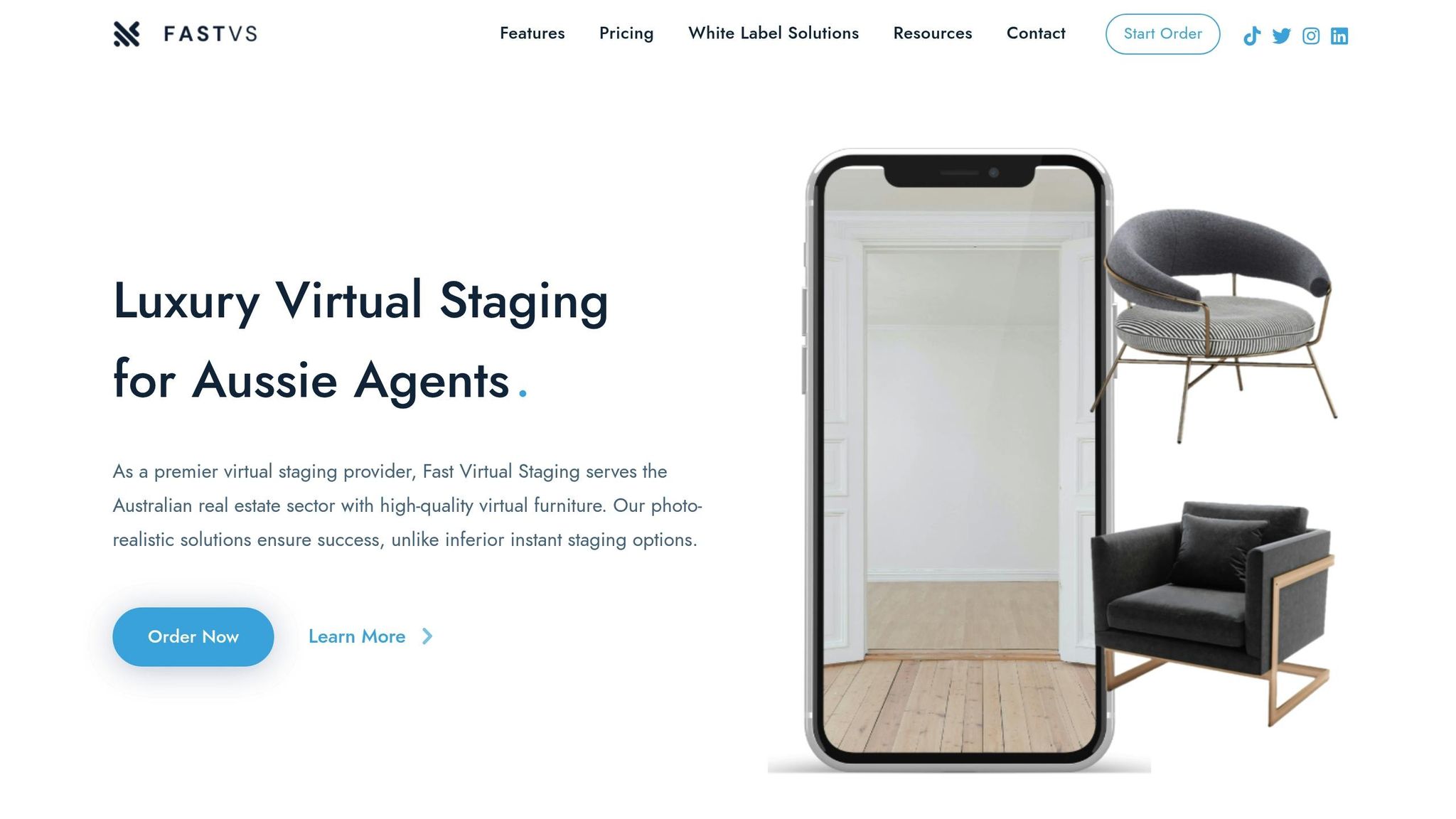
Virtual staging digitally transforms empty or sparsely furnished spaces into warm, inviting environments, helping buyers imagine their future lifestyle. This approach aligns perfectly with the Australian market’s demand for striking visuals.
The Power of Visualisation
Empty rooms can be hard for buyers to visualise. By digitally furnishing spaces with realistic furniture and décor, virtual staging creates an emotional connection. Staged homes sell 75% faster, 84% of them achieve or exceed the asking price, and 40% of buyers are more inclined to schedule a walkthrough.
Fast Virtual Staging’s Benefits
Fast Virtual Staging offers Australian real estate professionals an affordable and efficient solution. With prices starting at $30 AUD per image and a quick 12–24 hour turnaround, it’s a fraction of the cost of traditional staging, which can range from $1,500 to $10,000 or more. Their customisable design styles, including popular options like Scandinavian and Modern, allow you to tailor the look to your target audience, whether it’s young professionals or families.
Strategic Use
Focus on staging key rooms like living areas, master bedrooms, and kitchens to showcase the property’s potential. For open inspections, consider displaying printed versions of virtually staged photos in the corresponding rooms. Always disclose that the images have been digitally enhanced to maintain transparency and build trust.
"Virtual staging shows people what the potential of the empty space is. This, in turn, will create a desire to want to live there or own it and ultimately increase the value and or competition on the property. It works much like a car that you wouldn’t sell without washing it and showing its full potential." – Stephen Mutton, National Head Of Network Development at LJ Hooker
Image Delivery for Australian Platforms
Once your images are edited and staged, the next step is ensuring they meet the standards of Australia’s major real estate platforms. Proper preparation ensures your work displays perfectly online.
Platform Specifications
Most platforms, such as realestate.com.au, have specific requirements, including:
- Standard image ratio: 4:3 with a resolution of 2,000 x 1,500 pixels
- Alternative ratios: 3:4, 16:9, 3:1, and 16:10
- Maximum file size: 20MB
- Supported formats: JPEG, PNG, or static GIF
- Colour mode: RGB (not CMYK)
- Display resolution: 72 DPI
Optimisation Tips
Export images at 72 DPI to balance quality and loading speed. Double-check that files are in RGB colour mode, as CMYK isn’t compatible with digital platforms. Also, ensure orientation is correct to prevent display issues on mobile devices.
File Organisation and Delivery
Use clear naming conventions for your files, such as including the property address and room type. Keep backups of all processed images, and document licensing agreements to avoid disputes over usage rights.
Quality Control
Before delivering the final files, review each image at full size to spot any editing artefacts or compression issues. Ensure virtually staged elements blend naturally with the original photography and maintain consistent colour grading across the set. High-quality visuals can increase listing views by up to 60%, leading to more inquiries and faster sales.
sbb-itb-f3f2f9e
Pricing, Trends, and Professional Considerations
To thrive in Australia’s competitive real estate photography market, mastering the business side is just as important as perfecting your craft. From pricing strategies to staying on top of emerging trends, balancing service quality with profitability is the key.
Real Estate Photography Pricing
In Australia, pricing for real estate photography depends on factors like location, property size, and the specific services offered. The industry has established clear pricing tiers based on the complexity of the work and local market demand.
Standard Photography Rates
For basic daytime photography, prices typically fall between $150 and $350 per package, with most photographers charging $150 to $300, depending on their experience and location. These packages generally include 10–15 professionally edited images, perfect for online listings and marketing materials.
Shoot duration also impacts pricing. For example:
- A 1-hour shoot (10–15 photos): $150–$250
- A 2-hour shoot (20–30 photos): $300–$450
- A 4-hour shoot (40+ photos): Starting at $600
Premium Services and Add-ons
Specialised services come with higher price tags due to their technical demands and appeal.
- Twilight photography: $200–$750, with most photographers charging $250–$400 for dramatic evening shots.
- Drone photography: $200–$500, depending on the complexity of the aerial shots required.
- Virtual tours: $300–$800 per property, while video content typically costs around $225 per 30 seconds of finished footage.
Regional Pricing Variations
Location plays a big role in pricing due to competition, demand, and local market conditions:
- Sydney: $300–$500, reflecting high demand and premium positioning.
- Melbourne: $250–$450, driven by its competitive market.
- Brisbane: $200–$400, offering more affordable options.
- Adelaide: $150–$350, with its smaller market and fewer competitors.
- Perth: $250–$400, with rising demand for drone and twilight photography.
Investing in professional photography yields measurable results. Nearly all Australian real estate agents (99%) agree that high-quality photos boost buyer interest. Listings with professional images attract 89% more buyers, generate 79% more inquiries, increase click-through rates by 68%, and even secure higher selling prices for 52% of properties.
While pricing structures are essential, keeping up with industry trends is equally important to stay competitive.
Current Trends in Real Estate Photography
The real estate photography industry in Australia is evolving rapidly, shaped by shifting buyer expectations and technological advancements.
AI-Powered Editing and Virtual Staging
Artificial intelligence is transforming the way photos are enhanced and properties are staged. AI-powered tools like Fast Virtual Staging analyse room layouts to create lifelike environments with matching furniture and décor, helping buyers visualise a property’s potential. Machine learning is also streamlining editing processes, automatically adjusting lighting, contrast, and colour to save time while improving quality.
Video Content and Storytelling
Video has become a must-have in property marketing. Cinematic video tours now go beyond simple walkthroughs to create narrative-driven experiences that emotionally connect with buyers. Many videos incorporate drone footage and professional editing to position homes as lifestyle destinations. Short-form videos for platforms like Instagram Reels and TikTok are also gaining traction, with social media reels costing around $125.
"2025 ushers in a new era for real estate photography and marketing. This year, buyers aren’t just looking for pictures – they want to experience a property before they even set foot inside." – Kate Akers
Immersive Technologies
Interactive experiences like 360-degree photography and 3D tours are no longer just premium options – they’re becoming standard offerings. These technologies allow remote buyers, including interstate and international clients, to explore properties virtually. Meanwhile, virtual reality (VR) and augmented reality (AR) are emerging as powerful tools. VR enables virtual walkthroughs, while AR helps buyers visualise changes like furniture placement or paint colours.
Mobile-First Optimisation
With most property searches starting on mobile devices, ensuring that images and videos display seamlessly on smartphones and tablets is now a necessity.
Sustainability and Personalised Design
Sustainable staging practices are gaining momentum, with a focus on eco-friendly materials and renewable resources. Personalised designs that cater to specific buyer demographics are also on the rise, moving beyond generic styling to create spaces that resonate with target audiences.
Professional Tips for Photographers
Success in real estate photography goes beyond technical skills and pricing – it requires strong business practices and adaptability to market changes.
Managing Client Relationships
Clear communication is essential. Always use detailed contracts that outline payment terms, cancellation policies, and the scope of services. Agreements should cover deliverables, timelines, and usage rights. Photographers typically retain copyright to their images unless otherwise specified, so keeping detailed records of image creation and usage is crucial.
Business Structure and Legal Compliance
Choose the right business structure – be it sole trader, partnership, company, or trust – as it affects legal protections and tax obligations. Register your business name with ASIC if it differs from your personal name to maintain professionalism. Comprehensive insurance, including public liability and equipment coverage, is a must for managing risks.
Operational Efficiency
Streamline your workflow with standardised processes. Use clear file naming conventions and organised storage systems to ensure timely delivery. Documenting licensing agreements can also prevent disputes over image usage rights.
Model Release and Privacy Compliance
If your images feature identifiable individuals, particularly children, always obtain model release forms to comply with privacy laws and ensure commercial use is legitimate.
Market Positioning and Bundling Services
Regularly research local rates to remain competitive. Bundling services – like combining standard photography with drone shots or virtual staging – can provide added value for clients. Transparency about editing and staging practices helps build trust.
Technology and Drone Regulation
Invest in high-quality equipment and software to improve efficiency and output. For drone photography, ensure compliance with Australian regulations, including licensing and operational requirements.
Lifelong Learning
The industry is constantly changing, so staying updated is vital. Attend workshops, follow industry publications, and network with peers to learn about the latest techniques and trends. Building relationships with real estate agents and property developers can also lead to referrals and sustained business growth.
Common Challenges and Solutions in Real Estate Photography
Navigating the challenges of real estate photography is key to creating eye-catching property images that stand out in a competitive market. From tricky lighting and tight spaces to unpredictable weather, photographers face unique obstacles that can influence a listing’s appeal. Using a combination of camera techniques and post-production tools, these challenges can be managed effectively to produce high-quality results.
Handling Lighting and Space Constraints
Lighting and space often present the biggest hurdles in property photography. Poor natural light, harsh shadows, and small interiors can make even the most inviting properties look unappealing.
Dealing with Low-Light Conditions
Dark interiors call for creative lighting solutions. Using external lights, such as bounced light or diffused artificial light, can help achieve soft, even illumination. Adjusting your camera settings – shutter speed, aperture, and ISO – can also make a big difference. Here’s a quick reference for ISO settings:
| ISO Value | Noise Level | Image Brightness | Best Use Cases |
|---|---|---|---|
| 100–200 | Very Low | Low | Bright spaces or tripod shots with slow shutter speeds |
| 400 | Low | Moderate | Dimly lit areas with some ambient light or fast lenses |
| 800 | Moderate | High | Indoor settings or darker spaces needing extra brightness |
| 1600 | High | Very High | Very low light; some noise manageable with editing |
| 3200+ | Very High | Extremely High | Extreme low-light situations; post-editing can reduce noise |
Managing Harsh Lighting and Shadows
Bright windows often create high contrast between light and dark areas. To address this, take multiple shots at different exposures (a technique called bracketing) to retain detail in both highlights and shadows. This approach ensures balanced and visually appealing images.
Tackling Small Spaces
Small rooms can feel even tighter in photos. A wide-angle lens (14–16mm) shot from a corner or doorway can make spaces appear larger. Decluttering the area also helps maximise the visible space without disrupting the overall setup.
The Role of Post-Processing
When in-camera adjustments aren’t enough, post-processing becomes essential. Shooting in RAW format allows for greater flexibility in adjusting exposure, correcting colours, and applying HDR techniques. These edits enhance the natural light and overall image quality without making the photos look overly edited.
Weather and Outdoor Limitations
Australia’s unpredictable weather can add another layer of complexity to outdoor real estate photography. From sudden rain to shifting light conditions, photographers need to be prepared for anything.
Preparing for Weather Changes
Check the weather forecast in advance and have a backup plan to photograph the property under optimal conditions.
Protecting Equipment and Ensuring Stability
Rain and wind can wreak havoc on gear and image stability. Waterproof covers can shield your equipment from moisture, while sturdy tripods with solid bases help minimise camera shake during windy shoots. This is especially critical for coastal properties.
Making the Most of Weather Conditions
Each type of weather offers unique opportunities. Clear skies highlight vibrant colours and expansive views, while overcast days provide balanced lighting with minimal glare. Even light rain can enhance textures and create reflective effects on glass surfaces.
Lighting and Shooting Strategies
Portable, adjustable lights can fill in shadows when natural light isn’t enough. Exposure bracketing is another useful technique for capturing a wide range of details in challenging conditions. Sometimes, patience is your best tool – waiting for a break in the weather or focusing on indoor shots can yield better results.
Post-Processing for Weather Issues
Editing software can address many weather-related challenges. Adjusting brightness, contrast, and saturation can recover details lost in fog or shadows. Selective sharpening and exposure corrections further enhance the final image. While sky replacement tools are available, use them sparingly to maintain the authentic look of the property.
Maximising Results with Virtual Staging
Virtual staging has become a game-changer for showcasing properties, especially when dealing with empty rooms, outdated furniture, or cluttered interiors.
Addressing Vacant and Understaged Spaces
Empty rooms can feel cold and uninspiring. Virtual staging services, like Fast Virtual Staging, can digitally fill these spaces with photo-realistic furniture and décor. For AUD $30 per image, with a 12–24 hour turnaround and two free revisions, this service helps potential buyers envision the space as a home.
Overcoming Staging Challenges
Traditional staging often involves logistical headaches like furniture availability, delivery delays, and space constraints. Virtual staging bypasses these issues, enabling photographers to style multiple rooms simultaneously. It also allows for experimenting with different design aesthetics – like Scandinavian or modern styles – to attract a broader range of buyers.
Technical Tips for Virtual Staging
To get the best results, plan for virtual staging during the shoot. Capture rooms from angles that highlight their size and architectural details, and ensure even lighting for a clean base image. Virtual staging not only enhances the visual appeal but also drives more engagement and faster inquiries.
Conclusion
Australian real estate photography combines technical expertise, artistic flair, and the savvy use of modern tools. The numbers speak for themselves: homes with professional photos sell 32% faster, receive 118% more views, and can fetch up to $11,200 more. With 97% of buyers starting their search online, high-quality images aren’t just an advantage – they’re essential.
Achieving these results requires more than just a camera. It starts with mastering your equipment and honing techniques like the rule of thirds and single-point perspective. Australia’s diverse lighting conditions add another layer of complexity. From the harsh afternoon sun streaming through windows to the softer, overcast light along the coast, blending natural and artificial light effectively can make all the difference in creating standout images.
Virtual staging has also revolutionised the Australian market. Staged homes sell 88% faster and for 20% more than their non-staged counterparts. Services like Fast Virtual Staging, offering $30 AUD per image with a 12–24 hour turnaround, provide a practical solution for transforming empty or outdated spaces. These tools allow properties to appeal to a broad audience by showcasing different styles, from Scandinavian minimalism to modern Australian designs. When combined with expert photography, virtual staging becomes a critical part of presenting homes in their best light.
Of course, technical challenges remain a cornerstone of the craft. Capturing small spaces with wide-angle lenses, managing unpredictable weather, and ensuring post-production maintains a natural, authentic look all require careful planning and skill. These hurdles, when addressed thoughtfully, are opportunities to elevate the final product.
FAQs
What are the main advantages of virtual staging in real estate photography, and how does it influence buyer interest?
Virtual staging provides an affordable way to showcase properties, allowing potential buyers to imagine the space’s possibilities. By digitally adding furniture to empty or outdated rooms, it transforms them into modern, welcoming spaces that attract a wider range of buyers.
This approach enhances property listings by making them more visually appealing, which can lead to increased online views and enquiries. In turn, this often translates to quicker sales and improved results for sellers – all without the hassle or cost of physical staging. In Australia’s competitive real estate market, virtual staging is a practical and effective way to make properties stand out.
How can Australian weather impact real estate photography, and what are some tips for managing these conditions?
Australia’s ever-changing weather, ranging from unexpected downpours to scorching heat, adds an extra layer of complexity to real estate photography. Overcast skies can dull natural light, while extreme heat poses risks to both the photographer and their gear.
Photographers can tackle these challenges by taking a few smart precautions:
- Stay flexible with scheduling: Keep an eye on local weather forecasts and adjust shoot times as needed.
- Protect your gear: Invest in weather-resistant equipment or use protective covers to shield cameras and lenses.
- Adapt to the conditions: Make the most of soft, diffused light on cloudy days or plan shoots during cooler morning or evening hours in summer.
With the right preparation and quick thinking, photographers can ensure stunning property images, regardless of what the weather throws their way.
What are the rules for using drones in real estate photography in Australia, and how can photographers stay compliant?
In Australia, capturing real estate images with drones means adhering to Civil Aviation Safety Authority (CASA) regulations. Some of the key rules include keeping the drone below 120 metres, maintaining visual line-of-sight at all times, flying only during daylight hours, and steering clear of people or crowded areas. If you’re using a drone for commercial purposes, you’ll likely need a Remote Pilot Licence (RePL).
Privacy laws are also a big deal. For instance, flying over private property without permission can land you in trouble. To ensure you’re on the right side of the law, make sure you’re properly licensed if required, stick to CASA’s guidelines, and always put safety and privacy first when showcasing properties from above.