
Empty properties can feel uninviting, making it harder for buyers to visualise them as homes. Virtual staging offers a cost-effective solution, especially in Australia, where traditional staging costs range from $1,500 to $10,000. By digitally adding furniture and décor to property photos, virtual staging transforms spaces for as little as $30–$120 per image. This approach saves up to 97% compared to physical staging and can be completed in 12–48 hours. Staged listings attract 87% more views and sell up to 75% faster. Here’s how virtual staging works and how to make the most of it:
- Quick Results: Virtual staging is faster than traditional methods, allowing properties to hit the market sooner.
- Customisation: Tailor designs to suit different buyer preferences, from modern to family-friendly styles.
- Cost Savings: Significantly cheaper than physical staging, with no need to rent or move furniture.
- Transparency: Always label staged images to comply with Australian Consumer Law.
Virtual staging is a smart way to boost property appeal, reduce time on the market, and save money. With most buyers starting their search online, high-quality visuals are more important than ever.
What is Virtual Staging and Why Use It?
Virtual Staging Explained
Virtual staging is a clever digital process that takes empty or outdated property photos and transforms them into inviting, fully furnished spaces. By adding furniture, décor, and other design elements directly into the images, it helps potential buyers imagine what it would feel like to live in the property.
Using high-quality photos, virtual staging services seamlessly insert furniture and décor that align with the room’s lighting, perspective, and proportions. The goal is to make these additions look so real that they’re indistinguishable from actual furniture. As Krisztina Bell, Founder of Virtually Staging Properties, puts it:
"The whole point of virtual staging is to drive buyer traffic. People blow past photos of vacant homes. Many would never visit a property without the virtual staging."
This approach not only grabs buyers’ attention but also offers several practical benefits.
Benefits of Virtual Staging
One of the biggest advantages of virtual staging is how quickly it can be done. Unlike traditional staging – which involves furniture delivery, setup, and eventual removal, often taking days or even weeks – virtual staging can produce results in just a few hours. This means properties can hit the market almost immediately.
Another major perk is its flexibility. With virtual staging, the same property can be presented in various styles – whether it’s modern, classic, minimalist, or family-oriented – without any added expense. This makes it easier to appeal to a broader range of buyers with different tastes.
The numbers speak for themselves when it comes to the impact of staging. Homes that are professionally staged spend 73% less time on the market and sell for 25% more than properties that aren’t staged. Additionally, 95% of staged homes sell in 11 days or less, which is 87% faster than their non-staged counterparts.
Virtual staging also plays a big role in buyer engagement. Research shows that 81% of buyer’s agents believe staging helps buyers imagine how they could live in a home, and 58% say staging influences most buyers’ views of the property.
Lastly, virtual staging eliminates many of the headaches associated with traditional staging. There’s no risk of damaged or stolen furniture, no scheduling conflicts, and no need to worry about the logistics of moving furniture in and out. This streamlined process ensures properties are ready for viewing without delay.
How To Use Virtual Staging Ai Software For Only $.24 Per Image
How to Choose an Affordable Virtual Staging Service
Selecting the right virtual staging service can significantly impact your property marketing success. Research shows that vacant homes sell for an average of $11,306 less and stay on the market six days longer compared to staged properties. This makes finding a reliable provider a key step in your strategy.
Features to Look For
When comparing virtual staging providers, focus on services that deliver photorealistic renders. The digital furniture should look so authentic that potential buyers can’t differentiate it from the real thing. Listings with High Dynamic Range (HDR) photos sell 50% faster and receive 118% more online views, highlighting the importance of high-quality visuals.
Look for transparent pricing with no hidden fees, especially for expedited delivery. Many services provide turnaround times of 24 to 48 hours, with some offering delivery in as little as 12 hours for urgent needs.
Customisation is another critical feature. Providers offering a variety of design styles – ranging from modern or Scandinavian to classic family-friendly looks – can help you tailor the staging to appeal to your target buyers, making it easier for them to picture the property as their future home.
Revision policies are equally important. Opt for services that include complimentary or unlimited revisions within a set timeframe. This ensures you’re satisfied with the final product without incurring additional charges.
Finally, a money-back guarantee provides added reassurance. Some providers offer full refunds if their work doesn’t meet your expectations, giving you confidence in their service.
With these considerations in mind, you can confidently choose a provider that aligns with your budget and quality standards.
Why Choose Fast Virtual Staging
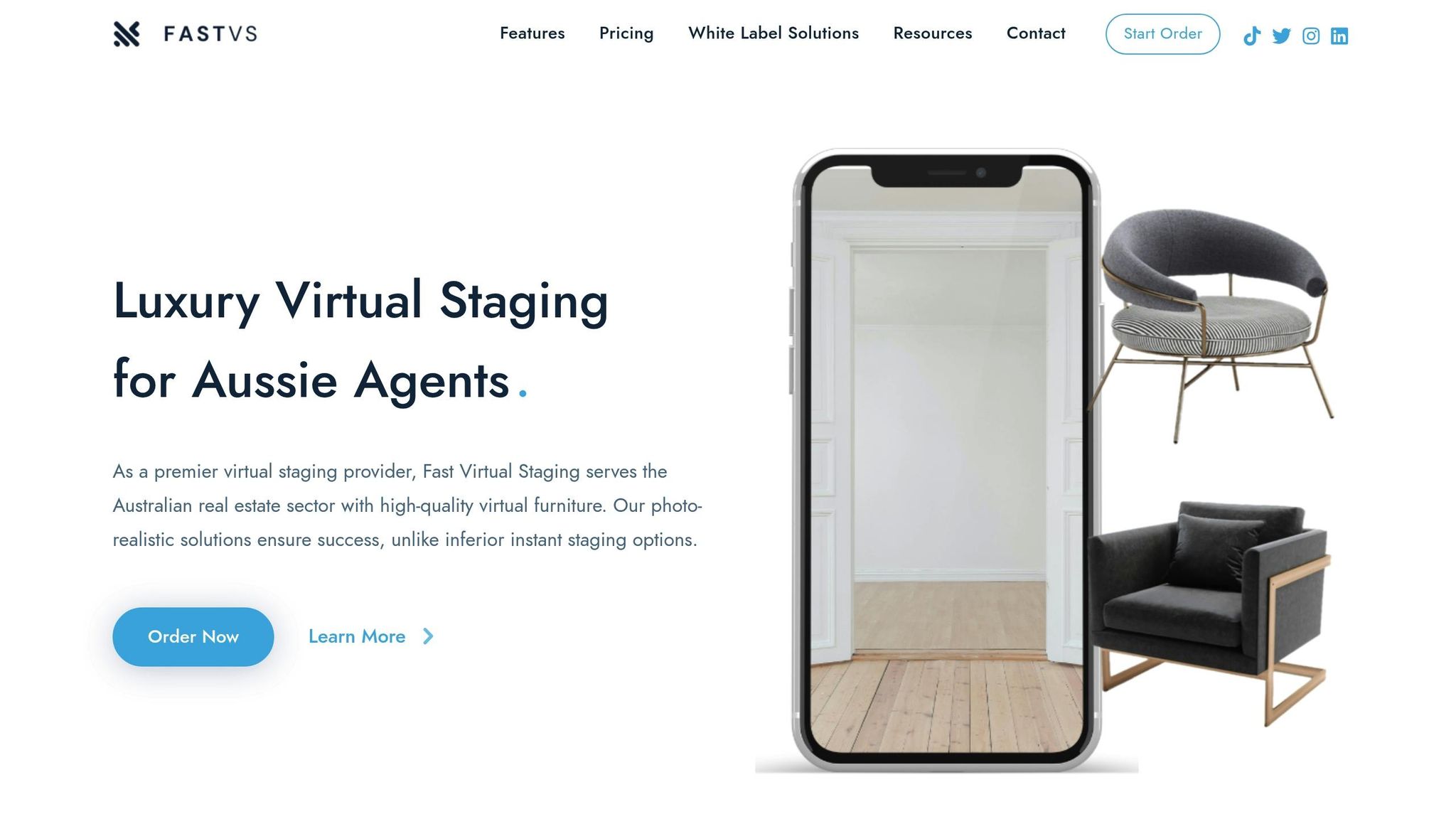
Fast Virtual Staging ticks all the boxes for affordability and efficiency. At just $30 AUD per image, it’s an accessible option for agents working within tight budgets. Their 24-hour guaranteed delivery for residential orders ensures properties can go live quickly without compromising on quality.
The service offers a range of customisable design styles that resonate with Australian buyers, including Scandinavian and modern aesthetics. This flexibility is invaluable, especially since 40% of buyers’ agents report that staged homes seen online are more likely to lead to walkthroughs.
Fast Virtual Staging includes two complimentary revisions with every order, ensuring you get the exact look you’re after without additional costs. Plus, an assigned account manager provides personalised support, making the process seamless.
Real estate professionals have spoken highly of the service. Jack Dangerfield from Ray White shares:
"Adding virtual furniture to my property photographs always generates increased interest in my listings. I can choose my own style of furniture and turn‐around times are super‐fast for the quality".
Connor Pocock, also from Ray White, echoes this sentiment:
"Fast Virtual Staging provides consistently fast‐turnaround and great quality virtual furniture for real estate listings. I’ve recommended to my industry colleagues and will continue to use their services in the future".
The service is versatile, catering to both residential and commercial properties. It also offers white-label solutions, making it an excellent choice for real estate photographers looking to expand their offerings.
With virtual staging costing 97% less than traditional methods and staged homes selling for an average of 25% more, Fast Virtual Staging is an economical and effective option for agents aiming to maximise their marketing efforts and return on investment.
Step-by-Step Guide to Virtual Staging on a Budget
Virtual staging is a game-changer for presenting empty properties, turning them into inviting spaces that help buyers imagine themselves living there. By following a clear and organised process, you can make the most of your resources while maintaining a polished and professional look.
Take High-Quality Photos
Great photos are the cornerstone of successful virtual staging. As Ray White Forster Tuncurry puts it:
"Excellent photos are a critical part of quality marketing and will strongly influence their decision about which properties to view in person – after all, first impressions are key".
Start by maximising natural light – open the blinds, replace any burnt-out bulbs, and ensure the space is clean and clutter-free. This creates a bright, welcoming atmosphere.
Using the right equipment is equally important. A digital SLR camera with a tripod ensures steady, sharp images, while a wide-angle lens helps capture the true size of each room. Aim to photograph at head or shoulder height, keeping the sun behind you to avoid unwanted shadows. Once you’ve got your photos, you’re ready to think about the design style that will best suit the property and its potential buyers.
Choose the Right Design Style
The design style you choose should resonate with the type of buyer you’re targeting. For example, sleek and modern designs often appeal to young professionals, while warm, family-friendly setups might attract buyers with children.
In Australia, popular design themes include modern, coastal, minimalist, and traditional styles. Scandinavian aesthetics, with their clean lines and contemporary feel, are also a great choice for many homes. If possible, consider showcasing a few different styles or layouts for key rooms to highlight the property’s versatility and help buyers imagine their own unique touches.
Send Photos to Your Virtual Staging Provider
Once your photos are ready, organise them by room and include notes about the intended function of each space. This helps the staging team choose furniture and layouts that make sense for the property.
Be specific about your preferences. For instance, if you envision a Scandinavian look in the living room or a coastal vibe in the bedroom, let the provider know. Mention any particular colours or furniture styles you’d like to see, and include details about the target market – whether it’s families, young professionals, or retirees. The more information you provide, the better the results will align with your vision.
Review and Approve Staged Images
When you receive the staged images, take a close look to ensure everything matches your brief. Check that the furniture placement, scale, and lighting look realistic. If anything feels off, don’t hesitate to request changes.
Many virtual staging companies, like Fast Virtual Staging, offer free revisions, so you can fine-tune the details without additional costs. Whether it’s adjusting a colour scheme or swapping out furniture, communicate your requests clearly to achieve the desired outcome. Only approve the final images when you’re completely happy, as these visuals will play a key role in your marketing efforts.
Add Staged Images to Property Listings
Once your images are ready, upload them to your property listings, making sure to label them as "virtually staged" for transparency.
Start with the most eye-catching rooms – living areas and master bedrooms are often the highlights – then move on to other spaces. Use high-resolution images to ensure they look sharp on all platforms. By leading with your best-staged photos, you’ll draw buyers in and showcase the property’s full potential.
sbb-itb-f3f2f9e
Tips for Getting the Most Value on a Budget
Virtual staging offers a cost-effective way to enhance property listings. By selecting key rooms, presenting images effectively, and giving clear instructions to your staging provider, you can achieve great results without breaking the bank. Start by focusing on staging the rooms that matter most.
Stage the Most Important Rooms First
If you’re working with a tight budget, prioritise the rooms that have the biggest impact on potential buyers. Research shows that buyers pay the most attention to living rooms (47%), primary bedrooms (43%), and kitchens (35%) when assessing a property. These areas set the tone and help buyers imagine living in the space.
Begin with the living room, as it’s often the first area buyers see. Then move on to the primary bedroom, where buyers picture themselves relaxing. If your budget allows, include the kitchen – it’s often seen as the heart of the home. Additionally, consider turning any undefined spaces into functional areas, like a home office. This can attract more interest, as staged homes tend to sell 33–50% faster and for up to 9% more.
Show Before-and-After Comparisons
Including both empty and staged versions of a room in your listings can be a game-changer. These side-by-side comparisons clearly demonstrate the difference staging makes, helping buyers visualise the full potential of the property.
Before-and-after images work especially well on social media and in email campaigns, grabbing attention and sparking interest. Start with the staged image to draw viewers in, then show the empty version to build trust and transparency. This approach not only highlights the benefits of staging but also strengthens buyer confidence.
Take Advantage of Bulk Pricing and Free Revisions
If you’re staging multiple properties or several rooms, look into bulk pricing options. Many virtual staging providers offer discounts when you order multiple images, making it more affordable to stage entire properties or multiple listings.
Some services also include free revisions, allowing you to tweak the staging to match your vision without extra costs. For ongoing projects, you might even secure better pricing and quicker turnaround times. These savings can make a big difference when working with a budget.
Think of virtual staging as an investment rather than a cost. With smart planning – like using bulk discounts and free revisions – you can increase buyer interest and speed up the sales process. These strategies not only help you save money but also make your listings stand out in a competitive market.
Virtual Staging for the Australian Market
When it comes to presenting properties to Australian buyers, attention to detail is everything. Staged images that align with local standards not only appeal visually but also meet legal requirements. By tailoring virtual staging to Australian norms, you can create an effective and budget-friendly marketing tool that resonates with buyers.
Use Australian Formats and Standards
Australian buyers are accustomed to specific formats, so presenting information in a way that feels familiar is key. For example, always display prices in Australian dollars (e.g., $30 per image). Measurements should follow the metric system, which has been the legal standard in Australia since 1988. This means room dimensions, property sizes, and distances should all be in metres, square metres (m²), and kilometres, respectively. For instance, room sizes might be listed as 4.5 m × 3.2 m, and total property areas as 180 m².
Dates should also follow Australian conventions, written as 14 July 2025 rather than using an American format. These details may seem small, but they make the property information more accessible and help buyers easily compare listings.
Follow Real Estate Marketing Rules
Virtual staging in Australia must adhere to strict guidelines to ensure transparency and compliance with the law. The Australian Consumer Law (ACL) prohibits misleading or deceptive advertising, which includes digitally altered property photos. To avoid any issues, all enhanced images must be clearly labelled.
| Best Practices | Practices to Avoid |
|---|---|
| Clearly label digitally enhanced photos | Hiding property flaws through edits |
| Show original images alongside staged versions | Changing structural features like room size |
| Use realistic virtual enhancements | Adding non-existent features, like pools or fireplaces |
| Comply with industry and legal standards | Failing to disclose digital alterations |
Transparency is crucial. Label all digitally enhanced images prominently in your listings. A good practice is to display the original, empty room image next to the staged version. This approach offers buyers an honest view of the property’s potential.
Digital enhancements should remain realistic. Adding furniture and décor is fine, but altering room sizes, hiding structural issues, or creating features that don’t exist (like a pool or fireplace) breaches advertising standards. Misleading marketing not only risks financial penalties but can also harm professional reputations.
State and territory laws require real estate agents to act professionally and honestly in all advertising. Virtual staging, when done correctly, helps buyers imagine themselves in a property while maintaining trust. By following these guidelines, you can use virtual staging as a powerful tool to attract buyers and close sales quickly, all while staying within the bounds of Australian regulations.
Conclusion
Virtual staging is a smart, budget-friendly solution for Australian agents and sellers looking to maximise property appeal without breaking the bank. The results speak for themselves: virtually staged listings receive 48% more inquiries, attract 87% more online views, and sell 28–73% faster than empty properties. Plus, with costs as low as $30 AUD per image, virtual staging can save up to 90% compared to traditional staging methods.
"Virtual staging shows people what the potential of the empty space is. This, in turn, will create a desire to want to live there or own it and ultimately increase the value and or competition on the property. It works much like a car that you wouldn’t sell without washing it and showing its full potential." – Stephen Mutton, National Head Of Network Development at LJ Hooker.
The advantages go beyond just saving money. Virtual staging offers quick turnaround times – typically 12–24 hours – and the flexibility to customise design styles to suit different properties and buyer preferences. Considering that over 90% of property searches now start online, high-quality staged images are a powerful way to grab attention and drive sales.
FAQs
What are the benefits of virtual staging compared to traditional staging for selling properties?
Virtual staging brings a host of benefits compared to traditional staging, especially for sellers seeking a more affordable and efficient approach. It’s much easier on the wallet, often costing just a fraction of what physical staging would, while still producing stunning visuals that grab the attention of potential buyers. Plus, it’s a quicker process, giving properties a chance to shine in the market and potentially sell faster.
Though virtual staging doesn’t provide the tangible feel of furniture in a room, it offers unmatched design flexibility and personalisation. This makes it a fantastic choice for crafting polished, market-ready properties without the hassle or expense tied to traditional methods. For many sellers and agents, it’s a smart, cost-effective way to highlight a home’s possibilities.
What legal and ethical guidelines should I follow when using virtually staged images in Australian property listings?
In Australia, sticking to legal and ethical standards when using virtually staged images is crucial to maintain transparency and avoid misleading buyers. Always make it clear that the images have been digitally enhanced by adding a caption like “Virtually Staged Image”. This simple step not only builds trust but also ensures you’re following consumer protection laws.
It’s equally important that virtual staging reflects the property as it truly is. Avoid altering structural elements or covering up flaws, as this could give buyers a false impression. Honesty in your marketing not only keeps you compliant with the law but also strengthens your credibility with potential buyers.
How can I make sure the virtual staging style suits my target buyers?
To make sure the virtual staging resonates with your target buyers, it’s crucial to understand their preferences, lifestyle, and what they expect in a home. For example, young professionals might lean towards modern, minimalist interiors, while families often gravitate towards spaces that are warm, practical, and welcoming.
Tap into market research and buyer personas to shape your decisions around furniture styles, colour schemes, and decor themes. When the staging reflects what matters most to your audience, it creates a connection that makes the property feel more relevant and inviting – ultimately drawing in potential buyers.