
Virtual staging is transforming how Australian developers market off-the-plan properties. By digitally furnishing spaces, it helps buyers visualise what unfinished homes will look like. This approach bridges the gap between blueprints and completed projects, making it easier for buyers to connect with properties before construction finishes. It’s cost-effective, eliminates the need for physical staging, and aligns with local design preferences like coastal or modern interiors.
Here’s how it works:
- Start with quality renders or photos: Use high-resolution images or CAD-based 3D renders to ensure accuracy and clarity.
- Choose a staging provider: Opt for services offering custom Australian styles and quick delivery (e.g., 24 hours).
- Review staged images: Ensure the visuals are realistic, consistent, and align with buyer expectations.
Developers must also disclose that staging is digital and maintain accuracy to meet Australian legal standards. Virtual staging can boost buyer interest, reduce costs, and speed up sales, making it a smart choice for marketing off-the-plan developments.
Best AI Virtual Staging Tool for REALTORS 2025
Step-by-Step Guide to Using Virtual Staging
Virtual staging for off-the-plan developments involves three main phases. Each phase plays a crucial role in creating visuals that captivate potential buyers.
Preparing High-Quality Base Images or Renders
The starting point for effective virtual staging is high-quality base materials. For off-the-plan projects, this usually means working with 3D renders derived from CAD files instead of photographs. These renders need to be high-resolution, with clear and evenly lit spaces. This ensures the final staged images look polished and realistic, while also accurately representing the room’s dimensions and layout without altering the original structure.
For instance, Visual Spaces has demonstrated how CAD files can be turned into professional marketing visuals, as seen in their project ‘Ocean Seven Palm Beach – From CAD to Stunning Marketing Floor Plans’. This process bridges the gap between technical drawings and buyer-ready imagery.
Using a neutral colour palette in your base renders is another key step. Walls in white or light neutral tones and simple, clearly defined flooring help the virtual furniture and décor pop, creating a harmonious final image. If you’re working with photos of an already furnished space, many virtual staging platforms now offer AI-powered tools to remove existing furniture, making it easier to start with a clean slate.
By laying this groundwork, you’re setting the stage for a seamless transition to the next phase: selecting the right virtual staging provider.
Selecting a Virtual Staging Provider
The success of your virtual staging project depends heavily on choosing the right provider. The staged images must look photorealistic – buyers need to feel as though they’re seeing the actual space, not a digital mock-up.
When evaluating providers, prioritise those who offer customisable Australian design styles. Buyers often gravitate toward features like indoor-outdoor living, natural textures, and contemporary coastal designs. Staging that reflects these preferences can make your development more appealing to local audiences.
Quick turnaround times are also critical. For example, Fast Virtual Staging delivers residential property staging within 12–24 hours, with a guaranteed 24-hour delivery. This keeps marketing campaigns on schedule. Look for providers that offer revision services as well; Fast Virtual Staging, for instance, includes two complimentary revisions to ensure the final images meet your expectations. Providers offering white-label services can also help maintain consistent branding across your marketing materials.
Once you’ve selected a provider, the focus shifts to a thorough review process to ensure the staged images align with your vision.
Reviewing and Approving Staged Images
After receiving the staged images, it’s time to review them with a critical eye. Start by evaluating the realism of the virtual furniture – are the shadows, lighting, and placement natural? Buyers should feel as though the furniture truly belongs in the space.
Next, consider whether the styling matches your target audience and aligns with the development’s overall aesthetic. Décor choices should complement the project’s context and appeal to the buyers you’re hoping to attract.
It’s also essential to verify that the staged images accurately reflect the property. Avoid staging that suggests features or amenities not included in the actual development, and double-check that the room dimensions and layouts are true to the specifications.
Consistency matters when staging multiple rooms or units. Using a cohesive design style, colour palette, and overall quality across all images helps create a unified brand experience for potential buyers.
During the approval process, provide clear and specific feedback to your staging provider. Instead of vague comments, give actionable instructions like, “Replace the traditional dining table with a modern glass one.” Once the images are finalised, organise them using clear file names and maintain an orderly record. This will make future marketing efforts smoother and more efficient.
Key Features and Advantages of Fast Virtual Staging
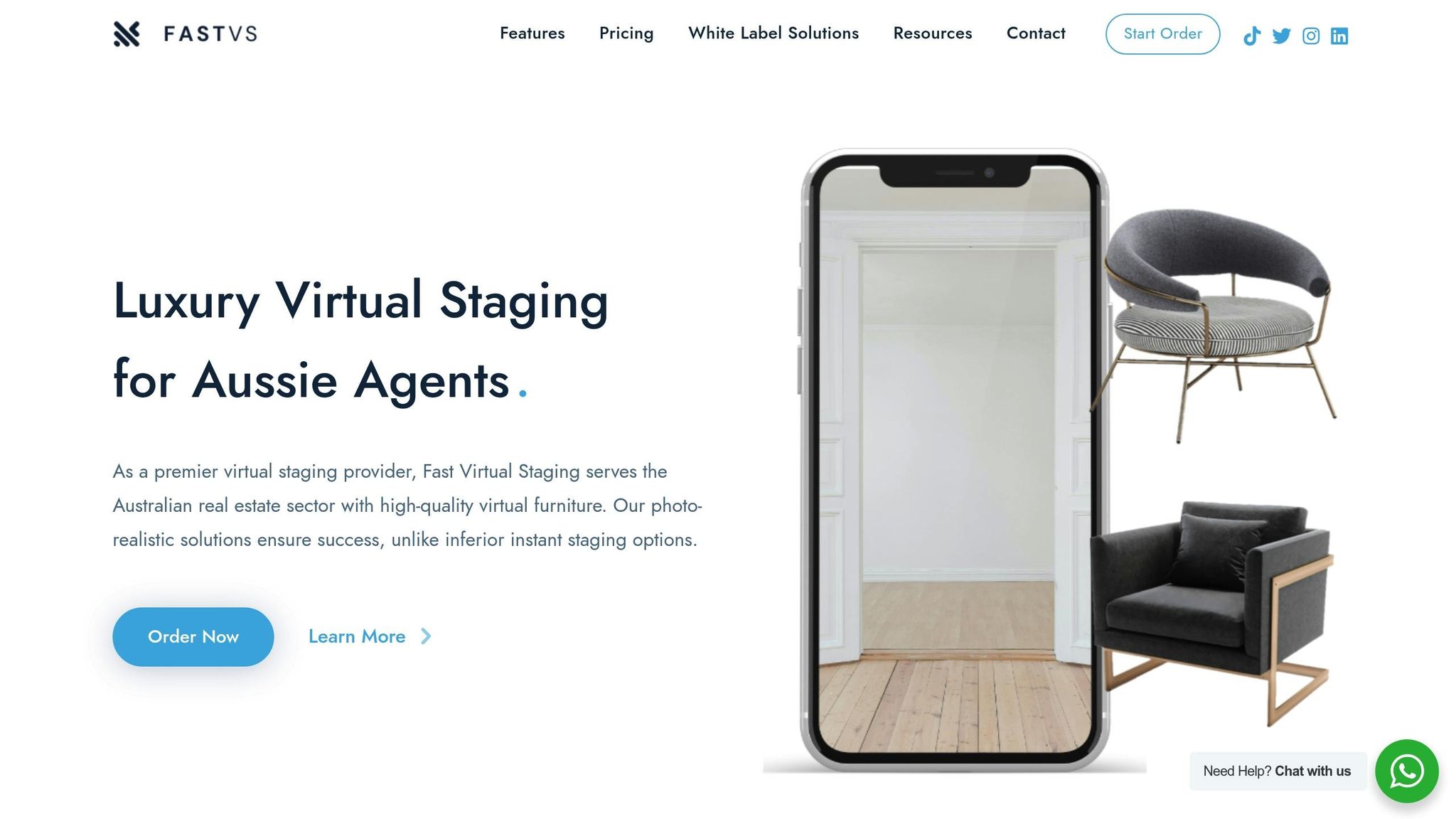
Fast Virtual Staging brings a modern twist to the property marketing game, offering features that cater specifically to the Australian real estate market.
This platform is designed for real estate professionals promoting off-the-plan developments. By combining advanced digital tools with insights into local buyer preferences, it delivers photorealistic staging that speaks directly to Australian audiences.
Interior Design Styles for Australian Buyers
The platform provides a range of interior design styles tailored to what Aussie buyers love. Whether it’s the clean lines of Scandinavian design or the sleek look of modern interiors, the staging is customised to fit a variety of property types. The design team works closely with developers to ensure the visuals align with local trends and reflect the distinct tastes of the market.
Quick Turnaround and Flexible Revisions
Speed matters in real estate marketing, and Fast Virtual Staging delivers. Residential projects come with a guaranteed 24-hour turnaround time, ensuring you can act fast to attract buyers. Plus, each order includes two free revisions, so you can tweak the visuals until they’re just right. For larger developments, a dedicated account manager ensures consistency across multiple units and room layouts. These features not only simplify the marketing process but also help developers connect with buyers more effectively.
sbb-itb-f3f2f9e
Legal and Ethical Requirements in Australian Real Estate Marketing
Once you’ve finalised staged images, it’s essential to follow legal and ethical guidelines to maintain the trust of potential buyers. When using virtual staging for off-the-plan developments, being upfront about the use of digital enhancements is non-negotiable. Buyers must clearly understand that the furniture and décor in these images are computer-generated and not physically present in the property.
Disclosure Requirements for Digitally Staged Images
Every digitally staged image should prominently display a clear notice indicating the use of virtual staging. Avoid burying this information in fine print or hidden disclaimers. Instead, consider using a visible watermark or overlay label, such as "Digitally Staged", to ensure transparency. This approach should be applied consistently across all marketing channels, including websites, social media, brochures, and advertisements.
Using straightforward terms like "Virtual Staging" or "Digital Furniture" helps eliminate confusion and ensures buyers are fully aware of the enhancements. Clear communication like this lays the foundation for ethical marketing practices.
Accuracy and Ethical Practices
After approving the staged images, double-check that all digital enhancements accurately represent the property. Virtual staging must stay true to the actual layout and dimensions of the space. Any added elements – such as furniture, décor, lighting, or colour adjustments – should align with the property’s real features.
Keep a record of both the original and staged images as evidence that the property’s physical dimensions have not been altered. This documentation can be crucial if questions arise.
Additionally, make sure your marketing team understands the importance of avoiding misrepresentation. Use compliance checklists to ensure all ethical and regulatory standards are met. These practices not only protect your reputation but also help build buyer confidence by presenting an honest and accurate depiction of the property.
Case Studies: Virtual Staging for Off-the-Plan Developments
Virtual staging is changing the way off-the-plan properties are marketed in Australia. It solves a common problem: helping buyers imagine what their future home will look like. Below are examples of how virtual staging has made a difference, improving buyer interest, design appeal, and cutting costs for developers.
Boosting Buyer Interest and Speeding Up Sales
One of the biggest challenges with off-the-plan properties is helping buyers picture an empty space or a flat render as a real, liveable home. Virtual staging bridges this gap by showing fully furnished, inviting interiors. When buyers see how a space could look and feel, they’re more likely to take the next step toward purchasing.
This approach is especially effective during property launches and marketing campaigns. Developers have reported higher website traffic, longer viewing times, and better conversion rates. Staged images also perform better on social media, drawing more attention than empty rooms or plain architectural renders. By reducing uncertainty, virtual staging makes it easier for buyers to commit to properties that don’t yet exist.
Designing for Australian Tastes
The most successful virtual staging projects reflect the unique preferences of Australian buyers. Whether it’s a coastal aesthetic, minimalist styling, or a contemporary design, tailoring interiors to suit local tastes has a noticeable impact. Designs that align with the region’s lifestyle and architectural context tend to attract more interest.
For example, a sleek, urban look might work well for a Melbourne apartment, but it could feel out of place in a Gold Coast resort-style development. Paying attention to these regional differences ensures that the virtual staging resonates with the target market. Factors like climate, local architecture, and lifestyle preferences all play a role in creating designs that connect with buyers.
Cutting Costs and Saving Resources
Virtual staging isn’t just about creating appealing designs – it’s also a cost-effective solution for developers. Compared to traditional physical staging, it’s far more affordable, especially when managing multiple properties or entire building releases.
Physical staging comes with hefty costs: hiring furniture, paying for styling services, transporting items, and maintaining show suites. Virtual staging eliminates these expenses while offering the flexibility to adjust designs based on buyer feedback. For instance, if market research shows that buyers prefer a different style, developers can easily update the visuals without the hassle of replacing actual furniture.
There’s also no need for storage or logistics. Developers don’t have to worry about warehousing furniture, arranging transport, or coordinating installations across multiple properties. This streamlined process is particularly helpful for large-scale developments or projects with staggered releases.
Another advantage is scalability. Staging dozens of apartments physically would require a massive budget and effort, but virtual staging keeps costs consistent. Developers pay a fixed price per image, regardless of how many units need staging. This predictability makes budgeting simpler and allows resources to be allocated more efficiently across marketing efforts.
Conclusion
Virtual staging has become a game-changer in real estate, offering a way to boost buyer engagement, shorten sales cycles, and cut marketing costs compared to traditional staging. By helping buyers emotionally connect with properties that are yet to be built, it solves one of the biggest challenges in pre-construction sales. This makes it an essential tool for marketing off-the-plan developments across Australia.
For developers handling multiple units or large-scale building releases, the scalability of virtual staging is a smart and efficient choice. When paired with clear disclosure practices – like labelling digitally staged images and ensuring accurate representations – it can be used confidently while meeting all legal requirements.
Adapting designs to appeal to local preferences is equally important. Australian buyers are drawn to designs that suit their regional tastes, climate, and lifestyle. For example, coastal-inspired interiors work well for Queensland properties, while sleek, modern designs resonate with urban buyers in Melbourne. Customising virtual staging to match the target market can significantly enhance buyer interest.
Key Takeaways
Here are some essential points for Australian real estate professionals marketing off-the-plan developments:
- Fast Virtual Staging offers photo-realistic images with a guaranteed 24-hour turnaround, perfect for tight marketing deadlines. The service includes two free revisions and customisable design options, ensuring the final product reflects both the developer’s vision and buyer preferences.
- Virtual staging is a flexible and cost-efficient solution, eliminating the logistical headaches of physical staging. It also allows developers to tweak designs based on feedback, making it adaptable to changing market demands.
The future of off-the-plan marketing lies in helping buyers imagine their future homes before they’re built. Virtual staging transforms empty spaces into inviting, aspirational homes, making properties more appealing and easier to sell.
FAQs
How can virtual staging help Australian developers comply with real estate marketing regulations?
Virtual staging plays a key role in helping Australian developers stick to legal and ethical standards by encouraging transparency and avoiding misleading advertising. When done responsibly, it ensures that any digitally enhanced images are clearly labelled, letting buyers know that these visuals are representations rather than exact replicas of the property.
In Australia, real estate laws demand honest advertising and strictly forbid deceptive practices. Virtual staging must present the property’s features accurately, without altering structural aspects or creating false expectations. By adhering to these principles, developers can market properties effectively while staying compliant with local regulations and ethical requirements.
What are the advantages of virtual staging compared to traditional physical staging for off-the-plan developments in Australia?
Virtual staging brings some clear advantages over traditional physical staging, especially for off-the-plan developments here in Australia. For starters, it’s much easier on the budget and incredibly quick to deliver, with digitally staged images often ready within just 24–48 hours. That kind of turnaround is perfect for showcasing properties still under construction.
Another standout perk is its versatility in design. With virtual staging, you can play around with different furniture styles, colour palettes, and layouts – without the hassle of dealing with actual furniture. This makes it a great choice for presenting vacant or unfinished spaces in the most appealing way possible.
Lastly, virtual staging gives properties a real edge in online listings. In Australia’s highly competitive real estate market, eye-catching, high-quality images can grab attention, spark interest, and even lead to quicker sales or better offers.
How can developers ensure virtual staging aligns with the property and resonates with Australian buyers?
To make virtual staging effective for Australian buyers, developers should focus on presenting room dimensions and layouts accurately, using metric measurements to meet local standards. Additionally, it’s crucial to clearly indicate that the staging is virtual while ensuring the visuals remain realistic and high-quality.
Designs should also reflect Australian preferences. Incorporating popular interior styles and neutral colour schemes can make the staging more attractive. By aligning with local tastes and creating relatable imagery, developers can build stronger connections and trust with potential buyers.