
Virtual staging is legal in Australia, but it must follow strict consumer protection laws and ethical standards. Misleading or deceptive practices, such as altering structural features or hiding defects, can result in fines, lawsuits, or loss of professional licences. Transparency is key – images must be clearly labelled as digitally staged, and the property’s actual condition must not be misrepresented.
Key points to remember:
- Legal compliance: Follow the Australian Consumer Law (ACL) and state-specific property regulations.
- Truthful representation: Do not alter structural elements, room sizes, or conceal defects.
- Privacy rules: Obtain consent for using property images and safeguard personal details.
- Clear labelling: Clearly indicate which images are virtually staged.
- Ethical boundaries: Only add realistic furniture and décor; avoid drastic alterations.
Failing to comply can damage trust, lead to financial penalties, or harm your reputation. Virtual staging is a powerful tool when used responsibly, but always prioritise transparency and accuracy.
Real Estate agents accused of misleading property images in advertising | 9 News Australia
Legal Requirements and Compliance
Navigating the legal framework around virtual staging in Australia is crucial for real estate professionals aiming to use this technology responsibly. Various laws regulate property marketing, including those specifically relevant to virtual staging.
Australian Laws That Apply
In Australia, virtual staging must adhere to several legal standards to ensure ethical marketing practices. The Australian Consumer Law (ACL) prohibits businesses from engaging in misleading or deceptive conduct. This means that virtually staged images must not misrepresent a property’s condition, size, or features. For example, altering structural elements or exaggerating room sizes could breach these laws.
State-specific regulations also play a role. New South Wales’ Property and Stock Agents Act 2002, Victoria’s Estate Agents Act 1980, and Queensland’s Property Occupations Act 2014 all require accurate property representations. These laws reinforce the importance of presenting properties truthfully in marketing materials.
The Privacy Act 1988 introduces another layer of compliance, particularly when handling client data and property images. Real estate professionals must ensure that any personal information collected during the virtual staging process is managed in line with the Australian Privacy Principles. This includes obtaining consent before using property images and safeguarding any personal details visible in the photographs.
Additionally, professional licensing standards vary by state, but all jurisdictions expect licensed agents to uphold high ethical standards. The Real Estate Institute of Australia (REIA) advises that virtual staging must not mislead buyers about a property’s true state.
Truth-in-Advertising Rules
Advertising regulations further shape how virtual staging can be used. The Australian Competition and Consumer Commission (ACCC) closely monitors property marketing and expects businesses to follow strict truth-in-advertising standards. Virtual staging can enhance a property’s appeal with digital furniture and décor, but it must not alter structural features, room dimensions, or architectural elements.
Honest representation is key. For example, adding a window that doesn’t exist or removing structural elements like columns would be considered misleading under the ACL. Similarly, exaggerating ceiling heights or creating unrealistic layouts is not permitted.
Clear labelling is another requirement. Virtual staging images must be explicitly identified as digitally altered. Labelling such images with vague or fine-print disclaimers may not be sufficient if they create a misleading overall impression.
Proportional enhancements are allowed, but they must remain realistic. For instance, adding furniture that physically fits within a space is acceptable, but using oversized items or extreme colour schemes that distort the room’s appearance could breach advertising rules.
The ACCC evaluates the overall impression of marketing materials, not just specific details. If virtual staging contributes to a misleading perception of a property’s value, condition, or potential, it could violate consumer protection laws, even if individual elements of the image are technically accurate.
Privacy and Data Security Rules
Privacy and data security are just as critical in virtual staging as in traditional property marketing. The Privacy Act 1988 requires businesses to implement robust measures to protect personal information, including property images.
When photographing properties for virtual staging, data collection and consent rules come into play. If images capture personal belongings, family photos, or other identifying details, explicit consent may be needed before processing these images. This is particularly important for occupied properties where personal items are visible.
Secure file handling is essential throughout the virtual staging process. Image files must be protected during transfer, storage, and processing, and securely deleted once they are no longer needed. Real estate professionals should ensure that any third-party virtual staging providers they work with also comply with Australian privacy standards.
Cross-border data transfers require extra caution if virtual staging services involve overseas storage or processing of images. The Privacy Act mandates that international data transfers must ensure the recipient provides adequate protection for Australian personal information.
To stay compliant, real estate professionals should establish clear policies for managing virtual staging files. This includes implementing access controls, backup protocols, and incident response plans. Regular security audits can help ensure ongoing adherence to privacy laws while safeguarding client trust.
Disclosure and Ethical Duties
Clear and honest disclosure is essential when it comes to virtual staging in Australia. Transparency isn’t just good practice – it’s a legal and ethical requirement. Real estate professionals have a duty to show a property’s potential without misrepresenting its current condition. This approach not only protects buyers and sellers but also ensures compliance with Australian consumer protection laws. Digital enhancements must always reflect the true state of the property.
Required Disclosure Practices
When showcasing digitally altered images, it’s crucial to label them clearly. Simple phrases like "Virtually Staged" or "Digitally Furnished" should be prominently displayed on every enhanced photo. To give buyers a full picture, include unedited images alongside the staged ones. For even greater clarity, consider presenting side-by-side comparisons of the original and virtually staged versions. This level of transparency helps buyers make informed decisions.
Ethical Limits in Virtual Staging
There are clear boundaries when it comes to virtual staging. The structural integrity of a property must never be altered digitally. Issues like cracks, damp spots, or worn-out fixtures should not be erased, as doing so misrepresents the property’s actual condition. Instead, focus on adding movable items like sofas, rugs, or lamps, ensuring they fit naturally within the room’s dimensions. Avoid layouts that wouldn’t work in real life. Additionally, maintain accurate colours and lighting to reflect the property’s genuine appearance. Over-the-top adjustments that could mislead buyers are off-limits. These ethical practices ensure that virtual staging remains a trustworthy tool for showcasing a property’s potential.
What Happens If You Don’t Comply
Failing to follow these disclosure and ethical guidelines can lead to serious consequences. Breaches of Australian consumer protection laws may result in legal action, compensation claims from misled buyers, and damage to your professional reputation. Trust and credibility in the market are hard to regain once lost, making adherence to these standards non-negotiable.
sbb-itb-f3f2f9e
Industry Standards and Best Practices
The virtual staging industry in Australia operates within a blend of regulations, including privacy laws, consumer protection measures, and anti-discrimination rules. Navigating this regulatory framework requires adherence to established best practices, which not only ensure compliance but also maximise the potential of virtual staging technology. These practices build on the legal and ethical considerations discussed earlier, offering clear guidelines for day-to-day operations.
Best Practice Guidelines for Virtual Staging
Accuracy and transparency are at the heart of professional virtual staging. The process starts with high-quality original photographs, as sharp and well-lit images are essential for creating convincing and legally sound AI renders. Without a solid photographic foundation, even advanced virtual staging can fall short, appearing either unrealistic or misleading.
Every AI-generated image must undergo human review. A qualified professional should verify that proportions, lighting, and furniture placement look realistic while ensuring no structural elements are altered or defects concealed. This step is crucial for maintaining both trust and compliance.
Focusing efforts on key spaces – like the living room, kitchen, and master bedroom – can yield the most impactful results while keeping costs manageable. Styling choices also play a critical role. Avoiding overly bold colours or mismatched items helps ensure the staging aligns with the property’s actual features and character.
Categorising AI applications by risk levels can help determine the level of oversight required. High-risk uses may need more rigorous review processes, while simpler residential projects might follow streamlined procedures.
Allowed vs. Prohibited Practices
Defining the boundaries of virtual staging is essential for maintaining ethical standards. The table below highlights what is permissible and what crosses the line:
| Allowed Practices | Prohibited Practices |
|---|---|
| Adding movable furniture and décor items | Digitally removing structural defects or damage |
| Enhancing lighting to highlight natural potential | Altering room dimensions or ceiling heights |
| Including realistic accessories and artwork | Changing architectural features like windows or doors |
| Staging outdoor areas with suitable furniture | Concealing damp, cracks, or maintenance issues |
| Using design styles that match the property type | Adding non-existent rooms or spaces |
| Adjusting colour balance for accurate representation | Dramatically altering the property’s actual condition |
To ensure these standards are consistently applied, agencies are encouraged to establish clear governance roles. This might include board oversight or appointing an ethics lead to monitor AI usage and compliance measures.
Working with Fast Virtual Staging
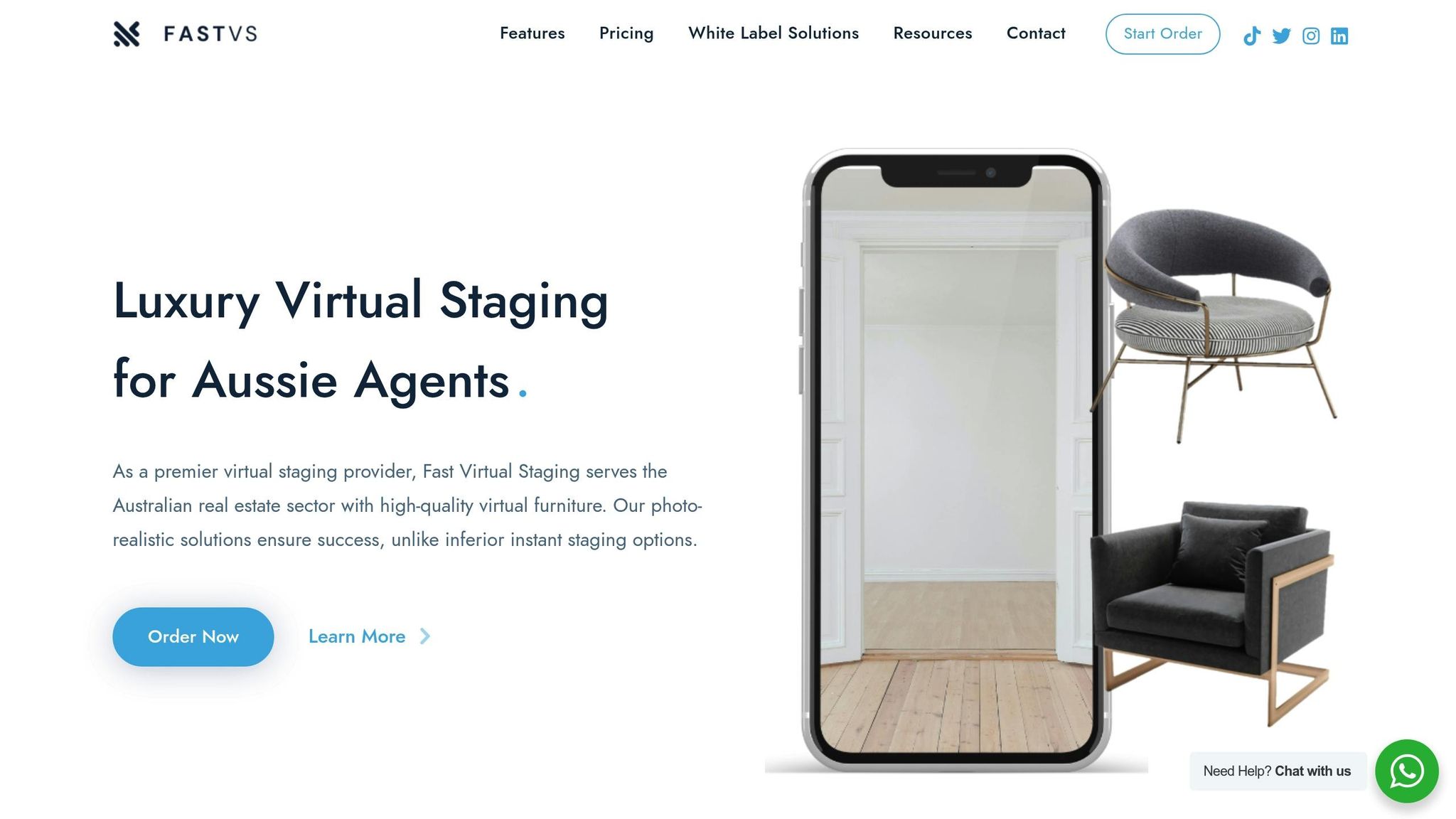
Fast Virtual Staging exemplifies how best practices can align with quick turnaround times. Their 12–24 hour delivery for residential orders enables real estate professionals to meet tight marketing deadlines while maintaining rigorous quality checks.
The service offers customisable design styles, such as Scandinavian and Modern, allowing professionals to tailor staging to suit a property’s unique features and appeal to specific buyer demographics. Two complimentary revisions are included, providing the flexibility to refine any staging elements that might not meet disclosure standards or appear unrealistic.
For real estate photographers, white-label solutions are available with competitive pricing – $30 AUD per image – and include an assigned account manager to ensure consistent quality and adherence to industry standards. Additionally, comprehensive staff training on approved AI workflows and ethical practices helps agencies avoid common compliance issues while achieving effective marketing results.
Common Legal Problems and How to Avoid Them
This section dives into some frequent legal challenges tied to virtual staging and offers practical ways to sidestep them. By understanding these risks and taking proactive steps, you can ensure your practices align with Australian law while protecting your business.
Common Legal Risks in Virtual Staging
Misleading or deceptive staging can land you in hot water under Australian Consumer Law. For example, staging that exaggerates room sizes, hides structural flaws, or implies features that don’t exist can result in hefty penalties. The law prohibits creating false impressions about a property’s condition or features.
Inadequate disclosure is another trap that often leads to disputes. Some professionals assume small disclaimers or fine print are enough, but courts have made it clear: disclosures must be obvious, easy to read, and understandable to the average person. A barely visible watermark doesn’t cut it.
Copyright infringement is a risk many overlook. If you use copyrighted designs for furniture, artwork, or decor in your staging without proper licensing, you could face intellectual property claims.
Privacy violations may occur if your staging reveals personal details. Avoid using images that expose sensitive information or suggest lifestyle choices that could raise privacy concerns.
Discrimination issues can arise if staging choices unintentionally exclude or stereotype certain groups. For instance, consistently staging homes with items that cater to specific cultural or economic preferences could raise questions about fair housing principles.
Steps to Reduce Legal Risks
- Use clear and prominent disclosures: Ensure every virtually staged image is labelled in a way that’s impossible to miss. Use high-contrast colours, large fonts, and place these labels where they’ll be immediately noticed.
- Set up quality control checks: Before publishing any marketing materials, have a designated team member review staged images to confirm they don’t misrepresent the property.
- Document everything: Keep records of original photos, staging instructions, and approval steps. These can serve as key evidence if disputes arise.
- Work with reliable providers: Choose staging professionals who prioritise legal compliance and have a track record of ethical practices.
- Train your team: Educate staff on the legal boundaries of virtual staging. They should know what’s acceptable, how to disclose staged elements, and when to seek legal advice.
- Create internal guidelines: Develop clear policies on staging practices, covering everything from furniture placement to lighting tweaks. Make sure these align with industry standards.
- Perform regular audits: Periodically review your marketing materials to ensure your disclosure practices remain effective and compliant.
If these steps don’t fully address your concerns, it’s time to consult a legal expert.
When to Get Legal Advice
- For complex commercial properties: These often involve higher stakes and sophisticated buyers, making legal input essential.
- Unusual staging requests: If a client asks for staging that drastically changes a property’s appearance or hides known issues, consult a lawyer first.
- In disputes: Whether concerns are raised by buyers, sellers, or competitors, seek legal advice to handle potential issues promptly.
- Regulatory updates: Changes to consumer protection laws, privacy rules, or industry standards should trigger a legal review of your processes.
- For multi-jurisdictional properties: Properties spanning state lines or involving interstate buyers may have varying legal requirements.
- High-value transactions: With expensive properties, the stakes are higher, and so is the risk. Legal advice can help you navigate these situations safely.
Building an ongoing relationship with a legal professional who understands both real estate and digital marketing is a smart move. They can provide timely advice and help you navigate the intricate balance between technology, marketing, and legal compliance in virtual staging.
Conclusion
In Australia, virtual staging is legally acceptable as long as it complies with established legal and ethical guidelines. To maintain transparency, ensure all digitally enhanced images are clearly labelled so buyers are aware of the alterations, while accurately representing the property’s true features.
The purpose of virtual staging is to highlight a property’s potential, not to mislead by distorting its actual characteristics. Implementing strong quality control measures is key to staying compliant. This includes documenting your processes, training your team on best practices, and regularly reviewing marketing materials to catch and resolve any issues early.
Fast Virtual Staging provides a practical solution, offering services at $30 AUD per image with a quick 12–24 hour turnaround and two free revisions, helping you create compliant and appealing visuals efficiently.
As the real estate market continues to evolve, it’s essential to stay informed about regulatory updates and seek legal advice when necessary. Used responsibly, virtual staging can be a powerful marketing tool, but misuse can lead to legal complications. Following these best practices ensures your marketing efforts remain trustworthy and within the law.
FAQs
What happens if you don’t follow virtual staging laws in Australia?
Failing to follow virtual staging regulations in Australia can result in severe legal repercussions. These might include substantial fines, the suspension or cancellation of a real estate agent’s licence, and even lawsuits for deceptive practices.
If a property is misrepresented through virtual staging, sellers and agents could face legal action from buyers who believe they were misled. To steer clear of these issues, it’s crucial to meet disclosure obligations, uphold ethical practices, and ensure that any virtual modifications genuinely represent the property’s actual condition.
How can real estate professionals in Australia use virtual staging ethically and legally?
To use virtual staging responsibly and within legal boundaries in Australia, real estate professionals must make sure that any digitally altered images are clearly labelled for potential buyers. This aligns with Australian Consumer Law, which strictly prohibits misleading or deceptive practices in property marketing.
It’s essential that virtual staging offers an honest representation of the property. This means avoiding edits that conceal flaws or mislead buyers about the property’s size, layout, or condition. Transparency is non-negotiable – buyers need to feel confident that the images they see showcase the property’s possibilities without creating false expectations.
For extra assurance, it’s a good idea to consult with legal or industry experts to ensure your approach meets regulatory requirements and follows best practices. By prioritising openness and accuracy, virtual staging can successfully highlight a property’s potential while maintaining trust and compliance.
How can I ensure privacy and data security when using virtual staging in Australia?
To safeguard your privacy and data when using virtual staging services in Australia, start by ensuring the provider has a transparent privacy policy. This document should clearly explain how your data is collected, used, and shared, while adhering to the Australian Privacy Act 1988.
Look for providers that prioritise secure storage methods, such as encryption and restricted access, to protect your personal information. Opt for services that give you the option to delete your data once it’s no longer needed, and avoid sharing more personal details than necessary. Taking the time to review privacy policies and choosing providers with robust security practices can help reduce the risk of data breaches or unauthorised access.