
Empty properties can feel cold and uninspiring to buyers. Virtual staging solves this by digitally adding furniture and decor to photos, helping buyers visualise the space as a home. This approach is cost-effective, with prices ranging from $30 to $120 per image, compared to $1,500 to $10,000 for physical staging. It also saves time, with turnaround in 48–72 hours. Staged properties sell 75% faster and often exceed the asking price by 5–10%. Virtual staging is a smart way to make Melbourne properties stand out in a competitive market.
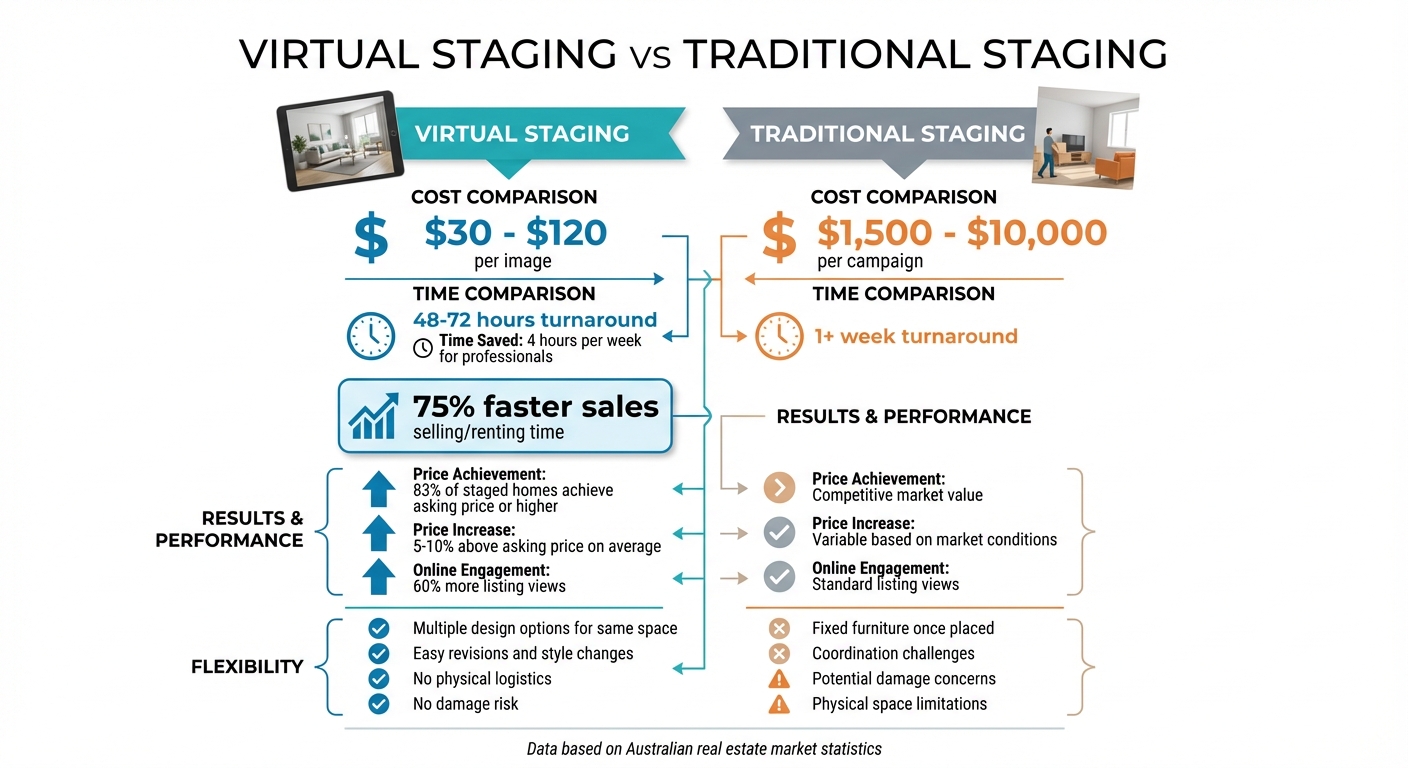
Virtual Staging vs Traditional Staging: Cost, Time and Results Comparison
What is Virtual Staging and How Does It Work?
Virtual Staging Basics
Virtual staging involves digitally adding furniture, décor, and accessories to high-quality photos of empty properties using advanced 3D rendering software and computer modelling tools. Instead of physically furnishing a space, specialists create lifelike images that demonstrate how a property could look when fully styled. The main goal is to help potential buyers imagine how they might use the space, as empty rooms can often feel smaller or lack clear purpose. With virtual staging, the hidden potential of a room becomes immediately apparent.
The process starts with high-resolution images in formats like JPG, PNG, or PDF. Real estate agents or property owners provide a detailed design brief, outlining preferred styles, colour schemes, and furniture types. They may also include sketches to indicate specific placements. Using this information, professionals digitally scale and position furnishings to fit the room’s dimensions while maintaining a natural appearance. Turnaround times are typically quick, with most services delivering final images in 48 to 72 hours. Many also offer revisions to ensure the final staging aligns with the desired marketing vision.
Now that the basics are clear, let’s see how virtual staging aligns with Melbourne’s unique property landscape.
Applying Virtual Staging to Melbourne Properties
Virtual staging is a flexible tool that caters to Melbourne’s diverse range of properties, from compact city apartments to sprawling suburban homes. For example, inner-city properties in areas like Fitzroy or Southbank might benefit from Urban or Industrial designs, while family homes in Brighton or Balwyn often lean towards Hamptons or Scandinavian styles, featuring light timbers, neutral tones, and cosy yet modern furniture.
Older properties, such as retro homes, can be styled with Mid-Century Modern elements, while heritage-listed homes might require a more Traditional approach to complement their character. Virtual staging also extends to commercial spaces by using techniques like design ‘neutralisation’, which can modernise outdated interiors without any physical changes. This adaptability makes virtual staging a valuable tool for showcasing Melbourne’s wide variety of property styles.
Easy low cost virtual staging for real estate photography
Benefits of Virtual Staging for Melbourne Real Estate
Virtual staging offers solutions tailored to the unique challenges of Melbourne’s real estate market. Here’s how it stands out:
Lower Costs and Faster Turnaround
Traditional staging can set you back anywhere from $1,500 to over $10,000 per campaign, while virtual staging costs a fraction of that – typically $30 to $120 per image. Stephen Mutton, National Head of Network Development at LJ Hooker, highlights this affordability:
"The cost of traditional staging means that it can fall out of people’s budgets and it simply doesn’t get done… the less expensive digital styling ability is a more affordable solution".
In addition to saving money, virtual staging sidesteps the logistical headaches of traditional methods. There’s no need to coordinate schedules or worry about potential damage to furniture. On top of that, it saves professionals about 4 hours each week, with most services delivering polished images in just 48 to 72 hours – a stark contrast to the week or more required for traditional staging.
Increased Buyer Engagement
Listings with high-quality visuals attract 60% more views, and virtually staged properties sell or rent 75% faster than their unstaged counterparts. Plus, around 83% of staged homes achieve their asking price or higher.
By transforming empty spaces into inviting, styled interiors, virtual staging helps buyers picture themselves in the home. This emotional pull can even boost a property’s final selling price by an average of 5% to 10%.
Flexible Design Options
One of the standout benefits of virtual staging is its adaptability. You can present the same room in multiple ways to appeal to different buyers. For instance, a spare room could be shown as a home office for professionals or a nursery for young families. This versatility is especially useful in Melbourne, where property styles vary widely. Inner-city apartments might shine with Urban or Industrial designs, while homes in family-oriented suburbs could benefit from Hamptons or Scandinavian aesthetics.
Digital staging also lets you experiment with layouts and colour schemes to match a property’s location and target market. If a particular look isn’t resonating with buyers, you can easily request revisions and try something new – something that’s impossible once physical furniture is in place. This flexibility makes virtual staging a powerful tool for elevating a property’s appeal in Melbourne’s competitive market.
How Virtual Staging Increases Interest in Vacant Melbourne Properties
Vacant properties often face an uphill battle when it comes to attracting buyer interest online. Since most property searches begin on digital platforms, empty spaces can fail to spark the emotional connection buyers need to imagine themselves living there. Virtual staging tackles this issue by turning bare rooms into inviting spaces that feel like home. Here’s how this approach reshapes buyer perceptions across Melbourne’s diverse property market.
Making Empty Spaces Feel Like Homes
Virtual staging helps buyers see the possibilities within a space. For example, it can transform a small, undecorated bedroom into a cosy nursery or a functional home office – perfectly aligning with the expectations of the target market. This adaptability is especially relevant in Melbourne, where properties range from sleek city apartments to spacious family homes. Stephen Mutton, National Head of Network Development at LJ Hooker, explains:
"Virtual staging shows people what the potential of the empty space is. This, in turn, will create a desire to want to live there or own it."
To bridge the gap between the visually appealing online images and the reality of an empty room during inspections, many Melbourne agents display the virtually staged photos on easels within the property. This clever technique helps potential buyers envision the space’s potential while physically touring the home.
Making Small Spaces Look Larger
Empty rooms can often feel smaller than they are, as buyers struggle to gauge dimensions without furniture for reference. Virtual staging solves this by adding appropriately scaled furniture to the digital images, showing how even compact Melbourne apartments can fit essential furnishings without feeling cramped.
For open-plan living spaces, common in areas like Docklands and Southbank, virtual staging demonstrates how a single large area can be divided into functional zones, such as a lounge, dining area, and workspace. Using light-coloured, minimalist furniture in styles like Scandinavian or Modern can further enhance the sense of space, making smaller rooms feel open and inviting. This approach not only highlights scale but also aligns with Melbourne’s diverse design preferences.
Matching Melbourne’s Varied Property Market
Melbourne’s property market is as varied as its neighbourhoods, with everything from heritage homes in Fitzroy to modern high-rises in Docklands and family residences in Toorak. Virtual staging amplifies a property’s appeal by tailoring the design to its unique features and the character of its location. For instance:
- Warehouse conversions in Collingwood benefit from Industrial designs featuring exposed brick and modern furniture.
- Waterfront homes in Brighton shine with Coastal or Hamptons-inspired interiors that reflect the bayside lifestyle.
This targeted approach is vital because each Melbourne suburb attracts distinct buyer demographics. A young professional might gravitate towards sleek, modern aesthetics that suit inner-city living, while families in established suburbs look for designs that emphasise comfort and space. Virtual staging allows agents to customise the presentation, ensuring it aligns with both the property’s architecture and the lifestyle aspirations of its likely buyers. This tailored strategy highlights the versatility and impact of virtual staging in Melbourne’s competitive real estate market.
sbb-itb-f3f2f9e
Fast Virtual Staging: Virtual Staging Services for Melbourne Properties
Fast Virtual Staging offers photo-realistic digital furniture renders tailored specifically for Australian real estate professionals. By using skilled 3D artists, the service ensures that every piece of digital furniture is proportioned accurately and adheres to interior design standards. This attention to detail provides Melbourne agents with high-quality images that showcase how a property could look when fully furnished, catering to the distinct demands of Melbourne’s property market.
Features for Melbourne Real Estate Professionals
Fast Virtual Staging provides a range of customisable design styles, including Scandinavian, Modern, and French Country. These options allow agents to align the furniture’s aesthetic with the vibe of specific Melbourne neighbourhoods. Jack Dangerfield, a Real Estate Agent at Ray White, shares:
"Adding virtual furniture to my property photographs always generates increased interest in my listings. I can choose my own style of furniture and turn‐around times are super‑fast for the quality."
Each order comes with a dedicated account manager and includes two complimentary revisions, ensuring the final product matches the property’s unique character. For real estate photographers, the platform offers white-label solutions, allowing them to provide virtual staging services under their own brand. Additionally, Real Estate Photographer Club members enjoy a 20% discount on these services. The ordering process is quick and efficient, taking just three minutes, and covers a wide range of property types, including residential (indoor and outdoor spaces) and commercial properties like offices and retail spaces.
Pricing and Delivery Times
Fast Virtual Staging charges $30 AUD per image, with a guaranteed delivery time of 12–24 hours for residential properties. If the 24-hour deadline is missed, the service is provided free of charge. Brad Minhinnick, Director at LINK Property Management, highlights the convenience:
"I found the platform easy to use for ordering my digital furniture for empty rooms to give my real estate listings a boost! The services were affordable and I really enjoyed working with my account manager."
This pricing model ensures accessibility for Melbourne agents, whether they’re working with entry-level apartments or high-end homes.
Why Use Fast Virtual Staging?
Fast Virtual Staging meets the diverse needs of Melbourne’s property market with its speed, quality, and customisation options. Connor Pocock, Sales Associate at Ray White, puts it simply:
"Fast Virtual Staging provides consistently fast-turnaround and great quality virtual furniture for real estate listings."
Agents can submit detailed design briefs to ensure the staged images reflect the unique characteristics of Melbourne’s suburbs – whether it’s an industrial look for inner-city warehouses or beach-inspired designs for coastal homes. With support available through WhatsApp and personalised account management, Melbourne agents receive hands-on assistance throughout the process. This service offers a fast and effective way to enhance property listings in Melbourne’s competitive real estate market.
Tips for Using Virtual Staging in Melbourne
Choosing the Right Photos to Stage
Start with high-quality JPG, JPEG, or PNG images that highlight the property’s best features. Most virtual staging services won’t accept RAW files like CR2 or RAF, so stick with standard formats. Focus on angles that emphasise architectural details, natural light, and spacious layouts. Did you know that professional photos can help sell or lease properties 50% faster and attract up to 118% more views on listings?.
For the best results, use images of empty rooms – they provide a blank slate for staging. If needed, consider virtual cleaning services (around $17 per image) to remove clutter and keep the focus on the property’s strengths. For homes with unique layouts, take photos that highlight versatility. For example, a small bedroom could be shown as both a nursery and a home office, appealing to different buyer demographics. However, Mark Kentwell, Principal at PRD Nationwide, cautions:
"If the property has been over-enhanced by virtual styling, potential buyers will notice the gap between appearance and reality at the inspection".
To maintain buyer trust, choose photos that accurately reflect the property’s actual structure. Once you’ve set the stage with the right visuals, the next step is selecting a design style that resonates with Melbourne buyers.
Selecting Designs That Appeal to Melbourne Buyers
Melbourne’s property market is incredibly diverse, ranging from Victorian-era homes to sleek modern apartments. Align your staging style with the property’s architecture and the preferences of your target demographic. For example, Urban/Industrial designs are a great match for trendy inner-city areas like Fitzroy or Brunswick, while Hamptons styles are perfect for family homes in bayside suburbs. For compact apartments, light colours and carefully placed furniture can create the illusion of more space.
Keep the design neutral and photo-realistic to appeal to Melbourne’s multicultural market. Avoid overly personal décor and instead focus on popular styles like Modern, Scandinavian, Mid-Century Modern, or Contemporary. Think about your target buyer’s lifestyle: young professionals might gravitate toward minimalist Scandinavian designs, while families may prefer cosy, traditional setups. Once you’ve nailed the design, it’s time to maximise the impact of these images through your marketing efforts.
Using Staged Images in Your Marketing
Make your best staged image the hero shot – it’s the first thing potential buyers will see. Research shows that professional staging can increase selling prices by 5% to 10%. Use these images across your property listings, social media, brochures, and virtual tours to maximise exposure.
To bridge the gap between virtual staging and in-person inspections, Stephen Mutton, National Head of Network Development at LJ Hooker, advises:
"Sellers can use easels in the empty rooms to showcase the printed virtually staged images. This will help remind prospective buyers of the potential of the property".
This clever approach ensures buyers see the property’s potential even if it’s vacant. On social media, try sharing "Before and After" comparisons to highlight the transformation. Since buyers spend 60% of their time viewing photos when browsing listings, focus on staging high-impact areas like the living room, kitchen, and master bedroom – these spaces tend to leave the strongest impression on Melbourne buyers. By showcasing these visuals across multiple platforms, you’ll create a cohesive and inviting image of the property.
Conclusion
Virtual staging has become a game-changer for Melbourne real estate professionals aiming to turn empty properties into irresistible buyer-ready homes. With over 90% of property searches beginning online, visually appealing, high-quality staged images are crucial for grabbing attention and driving interest. By using photo-realistic digital furniture, virtual staging helps buyers imagine how a space could look and fosters the emotional connection that turns casual browsing into inspection bookings. This powerful visual tool not only draws in potential buyers but also proves to be a smart financial decision.
The cost-effectiveness and convenience of virtual staging are hard to ignore. Priced between $30 and $120 per image, it’s a far more affordable option compared to traditional physical staging, with the added benefit of quick delivery. As Brad Filliponi, Co-Founder of Box Brownie, explains:
"It is the best way to bring a cold vacant home to life easily. It helps to show its full potential".
This makes virtual staging more than just a marketing tool – it’s a strategic investment that pays off.
Fast Virtual Staging stands out as a reliable partner for Melbourne agents, offering competitive pricing at $30 per image, fast 12–24 hour turnaround times, and customisable design styles that suit the local market. With free revisions and dedicated support, Fast Virtual Staging provides Melbourne real estate professionals with the tools needed to turn empty listings into properties that demand attention.
FAQs
How does virtual staging compare to traditional staging in terms of cost and time efficiency?
Virtual staging offers a quicker and more budget-friendly alternative to traditional staging. Prices for virtual staging typically range from $19 to $120 per image, and the process is completed within 12 to 48 hours. This makes it ideal for sellers who need fast, cost-effective solutions for online property listings.
On the other hand, traditional staging comes with a much higher price tag, costing anywhere from $1,500 to $12,000, depending on the property’s size. It also requires 1 to 3 weeks to organise and often involves ongoing monthly rental fees for furniture and decor.
For those aiming to save both time and money while showcasing their property effectively, virtual staging is a smart and efficient choice.
Can virtual staging be tailored to match different property styles in Melbourne?
Virtual staging offers an adaptable solution for showcasing Melbourne properties, no matter their style. Whether it’s a sleek city apartment or a charming heritage terrace, digital furnishings can be tailored to highlight the unique character of each space. Popular looks like Scandinavian, Hamptons, farmhouse, or classic designs can be customised to suit the property’s architecture and attract the ideal buyers.
This approach ensures every property is displayed at its best, making it easier for potential buyers to imagine themselves in the space. By aligning the staging style with the property’s design and the preferences of its target market, virtual staging helps leave a strong impression and sparks buyer interest.
How can virtual staging make empty properties more appealing to buyers?
Virtual staging breathes life into empty properties by digitally furnishing and decorating them. By adding furniture, décor, and design elements, it helps potential buyers see the possibilities of each space, making rooms feel more welcoming and practical.
A thoughtfully staged property can spark an emotional connection with buyers, showcasing a cohesive and appealing look that draws them in. This approach not only enhances the property’s appeal but can also speed up the sales process. Plus, it’s a budget-friendly alternative to physical staging or costly renovations, allowing sellers to highlight the home’s best features with ease.