
High-quality photos are the foundation of effective virtual staging. They help properties stand out online, attract more buyers, and sell faster. Listings with professional images receive 118% more views, sell 32% faster, and can increase perceived property value by up to 47% per square metre. However, poor-quality photos – like those with low resolution, bad lighting, or cluttered backgrounds – can ruin the staging, making it look artificial and unappealing.
To achieve the best results:
- Use high-resolution images (minimum 3,000 pixels on the longest side).
- Ensure proper lighting and colour consistency.
- Declutter and prepare spaces before shooting.
- Use professional equipment, such as a DSLR camera, wide-angle lens, and tripod.
Virtual staging transforms empty or outdated spaces quickly and affordably, but its success depends on starting with sharp, well-lit, and clean photos. For Australian real estate professionals, investing in professional photography and using services like Fast Virtual Staging can help listings perform better and sell faster in a competitive market.
Virtual Staging Using A Smartphone!
Common Photo Quality Problems in Virtual Staging
Even the most advanced virtual staging tools can’t compensate for poor-quality photos. Starting with substandard images often results in staging that looks artificial and unprofessional, which can turn potential buyers away. Here are some of the most common photo quality issues encountered in virtual staging across Australia.
Low Resolution and Pixelation Issues
Low-resolution photos are a major hurdle in creating realistic virtual staging. When photos lack detail, the digitally added furniture stands out awkwardly against blurry or pixelated backgrounds, making the staging look artificial. This problem becomes even more noticeable when images are enlarged for online listings or printed marketing materials. Properties presented with pixelated or unclear photos tend to attract fewer enquiries and lower engagement rates compared to those with crisp, high-resolution images.
To avoid this issue, real estate professionals should use images with at least 3,000 pixels on the longest side. High-resolution photos not only ensure that virtual furniture blends seamlessly but also improve the overall appeal of the listing. Clear, photorealistic staging has been shown to generate higher engagement and speed up sales cycles. Once resolution issues are addressed, lighting problems often become the next challenge.
Poor Lighting and Colour Problems
Lighting plays a critical role in the success of virtual staging. Poor lighting – whether it’s harsh shadows, overexposure, or uneven illumination – can make digital furniture appear out of place. Similarly, mismatched colour tones can break the illusion. For instance, if the original photo has warm, golden lighting but the virtual furniture is rendered with cooler tones, the difference is immediately noticeable. This disconnect can make the staging feel fake and distract buyers from the property’s true potential.
A survey by the National Association of Realtors found that 77% of agents believe staging helps buyers visualise living in a property. However, when lighting and colour inconsistencies undermine the staging, buyers may start to doubt the overall presentation. To create a convincing result, professional lighting setups and colour correction are essential. Photos taken during optimal daylight hours, with natural light enhancing the scene, provide the best foundation for virtual staging. Once lighting and colour are corrected, attention can shift to eliminating background distractions.
Cluttered or Distracting Backgrounds
Cluttered backgrounds are one of the biggest obstacles to effective virtual staging. Personal items, excessive décor, or general mess in the original photos can compete with the digitally added furniture, creating a chaotic and unappealing visual. Items like family photos or children’s toys make it harder for buyers to imagine themselves in the space, detracting from the property’s potential.
Clean, neutral backgrounds are key to drawing attention to the virtual staging elements. Properties that are properly prepared before photography – by removing personal items, decluttering, and clearing surfaces – create an ideal canvas for virtual staging. A tidy, neutral space not only enhances the virtual staging but also helps buyers focus on the property itself. This simple preparation step can make a big difference in attracting interest and speeding up the sale process.
How High-Quality Photos Improve Virtual Staging Results
Starting with professional photos can make a world of difference in virtual staging. These images do more than just enhance a property’s appearance – they shape how buyers perceive and connect with the listing. High-quality photos can shorten the time a property spends on the market by improving everything from realistic digital renders to buyer confidence.
Photo-Realistic Digital Renders
Professional-grade images lay the groundwork for creating lifelike digital renders. When the photos are sharp, well-lit, and detailed, virtual furniture and décor can be seamlessly integrated. Lighting, shadows, and textures align naturally with the room’s existing features, making the virtual additions look like they belong there. Materials like timber and fabric appear genuine, and the edges of furniture remain crisp and clear.
With lower-quality images, achieving this level of realism is simply not possible. Professional photos capture the subtle nuances – like the way natural light interacts with a space or the texture of surfaces – that allow digital artists to create renders that truly feel part of the room. High-resolution images also ensure accurate colour profiles and lighting conditions, preventing the staged furniture from looking out of place or poorly matched.
This attention to detail is what sets professional virtual staging apart from amateur attempts. When done right, the result is a seamless blend of real and virtual elements that enhances the overall appeal of the property.
Accurate Space Representation
Beyond visual appeal, professional photos ensure that spaces are represented accurately. Using the right equipment and techniques, professional photographers capture true-to-life dimensions and proportions of rooms. This is crucial for virtual staging, as it ensures that furniture is scaled appropriately to fit the space. Buyers won’t feel misled when they visit in person because the online images reflect the actual size and layout of the property.
Accurate representation builds trust. For example, a dining table staged in a professional photo looks as though it genuinely fits the room, and a lounge suite appears perfectly sized for the living area. This precision extends to other details, too – like the flow between rooms, ceiling heights, and how natural light fills the space. When buyers can visualise themselves living in the home without doubting the images, they’re more likely to engage with the listing.
Properties that feature accurate and realistic staging often see higher engagement because buyers feel confident in what they’re viewing. Instead of questioning the photos, they can focus on imagining how the space might suit their lifestyle.
Better Buyer Engagement and Confidence
Professional photos also play a key role in building buyer trust and encouraging engagement. Listings with high-quality visuals attract more views, generate faster sales, and often achieve better results. These aren’t just abstract benefits – they directly impact how quickly a property sells and at what price.
Virtual staging that’s done well creates an emotional connection with buyers, prompting them to spend more time exploring the listing and increasing the likelihood of booking an inspection. According to the National Association of Realtors, 77% of agents agree that staging helps buyers visualise living in a property. However, this effect only works when the staging appears realistic and credible.
Connor Pocock from Ray White highlights the advantages of professional virtual staging:
"Fast Virtual Staging provides consistently fast-turnaround and great quality virtual furniture for real estate listings."
sbb-itb-f3f2f9e
Best Practices for Taking Photos for Virtual Staging
When it comes to virtual staging, the quality of your photos can make or break the final result. High-quality images are essential to creating realistic and appealing staged photos. The better your original photos, the more convincing and effective the virtual staging will appear.
Using Professional Equipment
Investing in the right equipment is key. A DSLR or mirrorless camera with at least 18–24 megapixels ensures sharp, detailed images that hold up to professional standards. While phone cameras have improved, they still fall short of delivering the clarity needed for virtual staging.
A wide-angle lens (16–24mm on a full-frame camera) is ideal for capturing more of the room without introducing unnatural distortion. Avoid ultra-wide lenses, as they can warp the space and make it harder to place virtual furniture accurately.
Using a sturdy tripod is non-negotiable. It keeps your shots steady and ensures consistent framing. Position the camera at chest height (around 1.2–1.5 metres) to achieve a natural perspective.
Shooting in RAW format is another must. RAW files retain far more data than JPEGs, giving you greater control over adjustments like exposure, colours, and details during post-processing. This flexibility allows for polished images that enhance the virtual staging process.
Getting the Right Lighting and Angles
Lighting can make all the difference. Natural light is your best friend, so shoot during the day with curtains and blinds open to let in as much light as possible. Natural light creates even tones and realistic colours, helping virtual furniture blend seamlessly into the room.
When natural light isn’t enough, use soft, diffused artificial lighting to avoid harsh shadows or unnatural colour casts. Night shots should be avoided, as they rarely provide the balanced lighting needed for effective staging.
Balanced exposure is critical. Both bright windows and darker corners should be visible in the photo. Overexposed windows or overly dark areas can make it difficult to match lighting when adding virtual furniture.
Take multiple angles of each room to provide a complete view. Shooting from the doorway or a corner often works best, as it captures the room’s dimensions and layout. Aim for at least two to three angles per room to give potential buyers a clear sense of the space.
Keep the camera at chest height rather than eye level or unusual angles. This perspective feels most natural and mirrors how people typically see a space when walking through it.
Preparing the Space for Photography
Before you even pick up the camera, preparation is crucial. Start by decluttering and removing personal items. A clean, neutral space allows the virtual staging to take centre stage without distractions.
Thorough cleaning is essential. High-resolution photos will magnify smudges, dirt, or any imperfections on windows, floors, walls, and surfaces. These details can’t be easily fixed in the virtual staging process.
Check for reflections in mirrors, windows, and other glass surfaces. Make sure the photographer, equipment, or any unwanted objects aren’t visible, as these distractions will stand out in the final images.
For the best results, keep the decor neutral. Remove bold colours or busy patterns that might clash with the virtual furniture styles. A blank canvas gives virtual staging professionals the freedom to design a space that appeals to a wide audience.
Properties that follow these guidelines tend to perform much better in the market. According to a real estate marketing study, listings with professionally photographed and virtually staged images spent 73% less time on the market compared to unstaged or poorly photographed properties. High-quality photos paired with realistic virtual staging not only attract more buyer interest but also lead to higher sale prices.
Solutions: Using Professional Virtual Staging Services
Professional virtual staging takes standard property photos and transforms them into polished, market-ready images. By addressing common photo quality issues, these services ensure that properties are presented in the best possible light. They offer a seamless blend of quality, realism, and cost-effectiveness, making them an essential tool for real estate professionals.
Fast Virtual Staging‘s Commitment to Quality
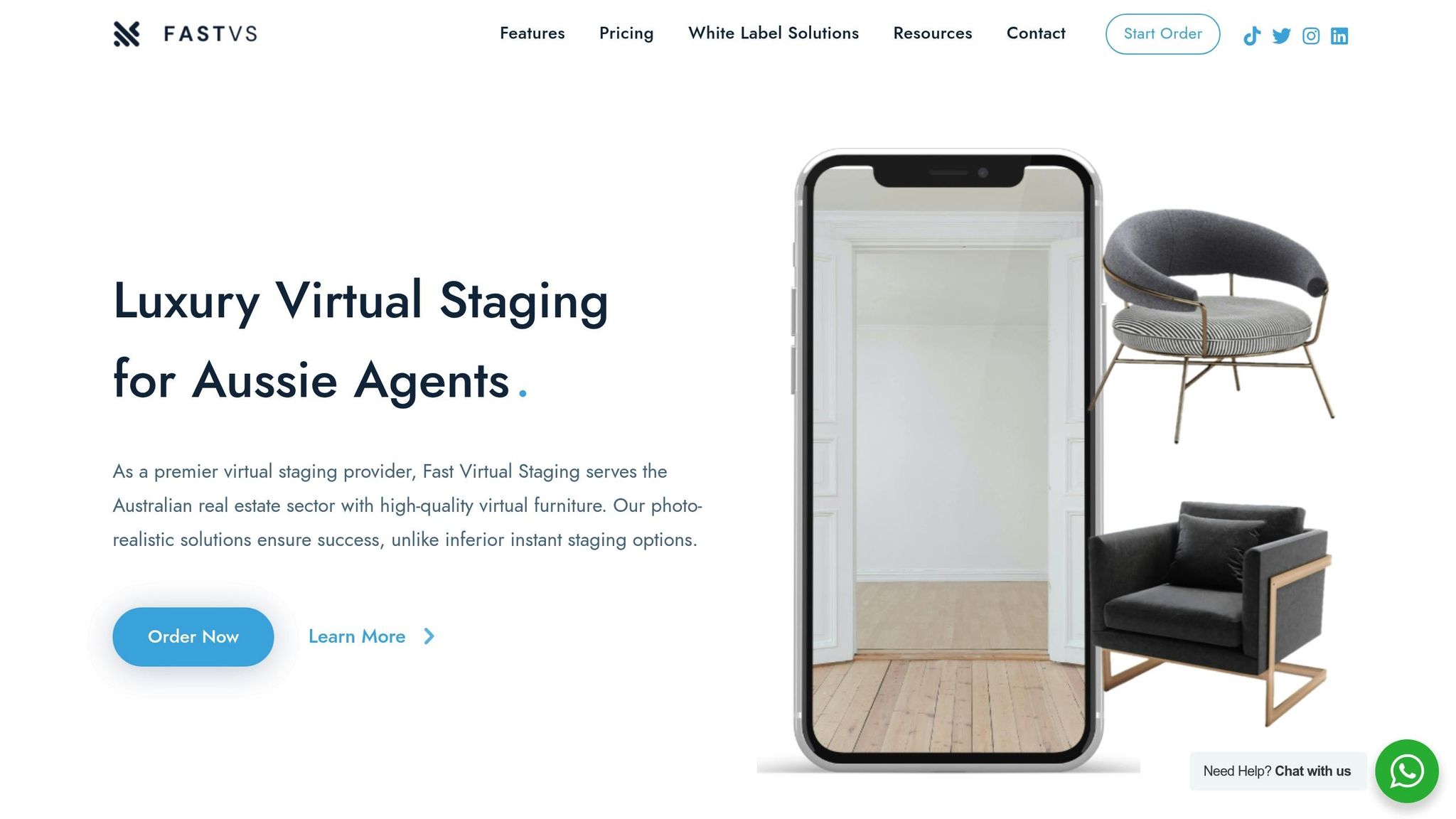
Fast Virtual Staging stands out by employing skilled 3D artists to create digital furniture that meets the highest standards of realism. Every piece of virtual furniture is carefully designed to match the lighting, shadows, and perspective of the original photo, ensuring a natural and cohesive look.
"Our 3D artists specialise in render-quality digital furniture, not subpar AI imitations, meeting the highest standards of realism and interior aesthetics." – Fast Virtual Staging
The service guarantees quick turnaround times, delivering results within 12–24 hours for residential orders. If they miss the deadline, the order is free. Plus, they include two complimentary revisions, ensuring clients get exactly what they need without delays.
Tailored Solutions for Australian Real Estate
Fast Virtual Staging offers a variety of interior design styles, such as Scandinavian, French Country, and Modern, catering to diverse architectural preferences. This flexibility is particularly beneficial for Australian real estate, where design trends often celebrate the indoor–outdoor lifestyle. By aligning with local tastes, these services help agents attract the right buyers.
For real estate photographers and agencies, the white-label option is a game-changer. It allows them to offer virtual staging under their own brand, expanding their service range without additional costs. Members of the Real Estate Photographer Club also enjoy a 20% discount on these services.
"Team up with us for customised white label services for real estate photographers. Expand your offerings with our virtual staging solutions branded as your own." – Fast Virtual Staging
Affordable Pricing in $AUD
Traditional staging can be expensive, often costing thousands of dollars per property. Fast Virtual Staging provides a budget-friendly alternative, charging just $30 AUD per image. This makes it possible to stage multiple rooms without overspending. For example, staging a three-bedroom home costs approximately $90 AUD – an accessible option for most agents.
Brad Minhinnick, Director at LINK Property Management, highlights the affordability and ease of use:
"I found the platform easy to use for ordering my digital furniture for empty rooms to give my real estate listings a boost! The services were affordable and I really enjoyed working with my account manager."
The benefits of professional visuals are clear. Homes with high-quality photos sell 32% faster and receive 118% more online views than those with lower-quality images. Enhanced visuals also lead to 94% more engagement, with staged properties spending an average of 89 days on the market compared to 123 days for non-staged listings.
Connor Pocock, Sales Associate at Ray White, praises the service:
"Fast Virtual Staging provides quick turnaround and great quality virtual furniture for real estate listings. I’ve recommended to my industry colleagues and will continue to use their services in the future."
Fast Virtual Staging also caters specifically to the Australian market by using metric measurements and adhering to local spelling conventions. This attention to detail ensures that marketing materials are not only visually appealing but also culturally aligned with the needs of Australian clients.
Conclusion: The Impact of High-Quality Photos on Virtual Staging Success
It’s clear that the foundation of successful virtual staging lies in the quality of the property photos. High-resolution images with proper lighting don’t just make a listing look better – they can significantly influence how quickly a property sells and how much interest it generates. Research backs this up, showing that professional photography can speed up sales and capture the attention of buyers more effectively. In the competitive Australian real estate market, this visual edge often translates into measurable results.
Professional photos aren’t just about aesthetics – they deliver real financial value. Listings with professional photography in Australia are known to fetch anywhere from $934 to $116,076 AUD more than those relying on amateur images. Considering that virtual staging services cost as little as $30 AUD per image, the return on investment is undeniably appealing.
The principle is simple: great virtual staging starts with great photos. No amount of digital magic can fix poorly captured images. High-quality photos provide the foundation for creating realistic and inviting spaces that resonate with buyers, helping them envision their future in the property. This emotional connection fosters buyer confidence and speeds up decision-making.
For Australian real estate professionals aiming to stand out, investing in professional photography and working with a trusted partner like Fast Virtual Staging can make all the difference. It’s a smart move to maximise a property’s potential and achieve outstanding results in today’s competitive market.
FAQs
Why is high-quality photography important for virtual staging in real estate listings?
High-quality photography plays a crucial role in virtual staging, serving as the backbone for seamlessly adding digital furniture and decor. Clear, sharp, and well-lit images make all the difference, ensuring the final staged result appears lifelike and polished. This helps potential buyers imagine the property’s possibilities and how it could work for them.
When real estate professionals use high-resolution photos, their listings become more eye-catching and engaging. In a crowded market, these standout visuals can draw more attention and boost the chances of securing a sale.
What equipment and techniques should I use to take high-quality photos for virtual staging?
Capturing top-notch photos for virtual staging begins with the right gear and techniques. Opt for a DSLR or mirrorless camera equipped with a wide-angle lens to create images that feel spacious and inviting. Pair this with a sturdy tripod to ensure your shots remain sharp and perfectly aligned.
When it comes to lighting, natural daylight is your best friend. Aim to shoot during the day, but steer clear of times when the sun is too harsh to avoid strong shadows. Make sure the property is spotless, free of clutter, and styled with minimal decor – this creates a neutral backdrop ideal for virtual staging. Always shoot at eye level and fine-tune your camera settings to achieve the right balance of exposure and clarity.
Starting with high-quality, professional photos sets the stage for impressive, lifelike virtual staging that can take your property marketing to the next level.
Why is it important to fix lighting and remove clutter before taking photos for virtual staging?
Proper lighting and a tidy space are key to taking high-quality photos that truly highlight a property’s appeal. Bright, well-lit images bring out the best features of a home, while a clutter-free environment ensures the space feels clean and welcoming. These elements play a crucial role in virtual staging, as clear and visually appealing photos set the stage for creating lifelike and attractive digital designs.
Sharp, professional photos make it easier for potential buyers to imagine the property’s possibilities, helping it catch attention in Australia’s competitive real estate market.