
Virtual staging is reshaping how Australian real estate is marketed in 2025. By digitally furnishing spaces, it offers cost-effective, fast, and visually appealing solutions that help properties sell faster and for higher prices. With 90% of buyers starting their property search online and 97% prioritising listing photos, virtual staging is now essential for standing out in a competitive market.
Key Takeaways:
- Faster Sales: Staged homes sell 73% faster and often within 28 days compared to 60–90 days for vacant listings.
- Higher Prices: Staged properties can achieve 5–20% higher sale prices.
- Cost Savings: Virtual staging costs $100–$300 per photo, cutting expenses by up to 97% compared to physical staging.
- Customisation: Tailored designs cater to diverse buyer preferences, from eco-conscious layouts to bold interiors.
- Market Growth: Australia’s virtual staging market is projected to grow from USD 1.5 billion in 2024 to USD 4.7 billion by 2033.
This digital-first approach is transforming property marketing, helping real estate professionals deliver engaging listings that appeal to modern buyers.
Revolutionize Your Real Estate Marketing with Virtual Staging | The Ultimate Solution
How Virtual Staging Works: Step-by-Step Process
Virtual staging takes empty or sparsely furnished rooms and transforms them into visually stunning, fully furnished spaces. This process blends advanced technology with design expertise, creating property presentations that resonate with Australian buyers. Here’s how it all comes together.
The Virtual Staging Process
The process begins with real estate agents uploading high-quality photos of empty or minimally furnished rooms to a virtual staging platform. These images form the foundation of the digital transformation, so clear lighting and well-composed angles are key to achieving the best results.
Next, clients choose from a range of design styles tailored to their target audience. Whether appealing to trendy young professionals or families seeking a more traditional look, the customisation options are extensive. For example, Fast Virtual Staging offers styles like Scandinavian and Modern, with an account manager available to assist in the selection process.
Once the design is chosen, digital designers get to work. Using advanced software, they furnish and style the spaces virtually. The process typically takes 12–24 hours, with companies like Fast Virtual Staging guaranteeing 24-hour delivery for residential properties. This quick turnaround lets agents stay ahead of market trends and respond to buyer feedback quickly.
After completion, clients receive photo-realistic images of the fully staged spaces. Most services, including Fast Virtual Staging, offer up to two free revisions, ensuring the final product aligns with client expectations or specific market needs.
Design Styles to Match Buyer Preferences
Virtual staging goes beyond simply adding furniture – it creates tailored designs that cater to diverse buyer tastes. This flexibility sets virtual staging apart from traditional methods. Popular styles like Transitional, Modern Organic, and Mid-Century Modern are particularly appealing in the Australian market.
For instance, Modern Organic blends clean lines with natural textures and sustainable materials, reflecting Australia’s growing focus on eco-conscious living. Transitional Luxury combines classic comfort with modern sophistication, while Mid-Century Modern brings the timeless charm of 1950s and 1960s design into contemporary homes.
One major advantage of virtual staging is the ability to create multiple versions of the same room. A single space can be styled in different ways to appeal to various buyer demographics – such as a family-friendly layout for one group and a sleek, minimalist design for another – all without the expense or hassle of physical staging.
"Some people walk in an empty house and that’s all they see – an empty house – and they can’t picture what it would look like staged, so this helps a lot." – Farrell Desselle, Listing Coordinator at Redfin Realty
This customisation extends to colour schemes and décor themes. For example, a coastal property might feature light, breezy designs with blue and white tones, while an inner-city apartment could showcase bold, urban-inspired décor with statement pieces.
Technology Behind Virtual Staging
The magic of virtual staging lies in its advanced technology. Combining artificial intelligence, 3D modelling, and sophisticated rendering tools, these platforms create images that look just as real as photos of physically staged spaces.
AI tools analyse room dimensions, lighting, and architectural features to ensure furniture placement looks natural and proportionate. This eliminates issues like awkward scaling or unrealistic shadows, which were common in earlier versions of virtual staging.
3D modelling adds another layer of precision, creating furniture and décor items with realistic textures and materials. Advanced rendering engines then bring everything together, factoring in natural light, room proportions, and perspective to produce seamless, life-like images.
Speed is another key factor. Cloud-based rendering technology processes these complex designs quickly, enabling the fast turnaround times essential for real estate marketing. Automated quality checks ensure consistency, whether the property is a compact city apartment or a sprawling suburban home.
Platforms like Fast Virtual Staging showcase these technological advancements, handling both residential and commercial spaces with ease. They adapt to various environments, maintaining realistic proportions and design choices for each setting. With guaranteed delivery timelines and revision options, virtual staging has become a reliable and efficient tool for Australia’s competitive real estate market.
Benefits of Virtual Staging for Australian Real Estate
Virtual staging has become a game-changer for Australian real estate, offering a modern way to showcase properties and deliver results that matter. It’s not just about making a property look good; it’s about achieving faster sales, higher prices, and better engagement – all while keeping costs in check. Here’s how virtual staging is making an impact in the Australian market.
Faster Sales and Rentals
Virtual staging helps properties move off the market much quicker. Homes with virtual staging sell up to 73% faster, often receiving offers within 23–28 days, compared to the 60–90 days typical for vacant listings. Empty rooms can leave buyers struggling to imagine how the space could work for them, but a well-staged virtual setup instantly paints a picture of the lifestyle they could enjoy.
Take, for example, an Australian property that was originally listed for six weeks with no success. After virtual staging, interest spiked, and the property sold in under a week – proving just how powerful this tool can be in influencing buyer decisions.
Higher Sale Prices and Better ROI
It’s not just about speed; virtual staging can also boost sale prices. Staged properties often sell for 6–20% more than their unstaged counterparts. Why? Because buyers are more likely to make competitive offers when they can clearly see themselves living in a beautifully styled space.
For instance, a property listed at $800,000 could potentially bring in an extra $48,000–$160,000 simply by using virtual staging. It’s a small investment that can lead to a big return.
Cost-Effective Compared to Physical Staging
One of the standout advantages of virtual staging is its cost efficiency. It eliminates the need for physical furniture, transportation, and labour, cutting staging expenses by as much as 97%. While traditional staging for a $300,000 AUD home might cost upwards of $3,000 AUD, virtual staging averages under $300 AUD per photo.
Here’s a quick comparison:
| Staging Method | Average Cost | Timeframe | Flexibility |
|---|---|---|---|
| Traditional Physical | $3,000+ AUD | 1–2 weeks setup | Limited style changes |
| Virtual Staging | $30–100 AUD/image | 12–24 hours | Unlimited style options |
With providers like Fast Virtual Staging offering competitive rates as low as $30 AUD per image, it’s an accessible option for properties across all price points.
Increased Buyer Engagement
In today’s digital-first market, virtual staging helps listings stand out. Staged photos can attract up to 87% more online views and generate 48% more enquiries compared to unstaged properties. Plus, 83% of buyers say that virtual staging positively influences their interest before they even visit the property.
Brad Filliponi, Co-Founder of Box Brownie, puts it simply:
"It is the best way to bring a cold vacant home to life easily. It helps to show its full potential."
Property Visualisation and Buyer Options
Virtual staging excels at helping buyers see a property’s potential. Instead of staring at empty rooms or uninspiring spaces, they can explore various design possibilities tailored to their preferences. This flexibility allows real estate professionals to present multiple styles and layouts without the added costs or delays of traditional staging.
This approach is especially useful for off-the-plan developments and renovation projects. By offering fully furnished images before construction or upgrades are completed, virtual staging allows buyers to visualise the finished product. It’s an essential tool for showcasing properties in line with Australia’s evolving design trends and buyer expectations.
sbb-itb-f3f2f9e
Australian Design Trends in Virtual Staging for 2025
Virtual staging in 2025 is set to redefine how properties are presented in the Australian market. It’s no longer just about filling empty rooms. Instead, it’s about creating spaces that resonate with the evolving tastes of Australian buyers. With a focus on sustainability, personalisation, and wellness, these trends highlight what buyers truly value, giving real estate professionals a clear edge.
Eco-Friendly Virtual Design
Sustainability has become a central focus in property marketing across Australia. Virtual staging offers a green alternative to traditional methods, significantly reducing environmental impact. Ecochain’s 2025 meta-study reports up to a 90% reduction in embodied carbon when transitioning from physical staging to virtual solutions. This approach not only eliminates the need to transport physical furnishings but also allows the use of sustainable designs like vintage pieces, locally crafted items, and eco-conscious furniture – all showcased digitally without the carbon footprint .
For developers and agents, virtual staging can even be included in environmental, social, and governance (ESG) disclosures. This adds credibility to marketing efforts while aligning with broader sustainability goals. By integrating eco-friendly elements, virtual staging can create tailored designs that reflect the lifestyles of modern buyers.
Targeted Staging for Specific Buyer Groups
In 2025, Australian buyers are increasingly segmented by lifestyle and demographic preferences. Virtual staging allows properties to be customised for these distinct groups, using data-driven insights to highlight features they value most.
Remote workers and home-based professionals are a growing audience. Laurie Cosentino from Domaine Homes notes that:
"nearly every home design now includes a study or workspace option".
Virtual staging can bring these spaces to life with modular furniture, hidden storage, and multi-functional layouts that balance work and home life seamlessly.
Wellness-focused buyers are drawn to natural elements like biophilic designs, which include living walls, indoor water features, and native plants such as eucalyptus and kangaroo paw. These features can be digitally incorporated to evoke a sense of calm and connection to nature, without the upkeep of physical installations.
Younger, design-conscious buyers are embracing bold interiors. Searches for boucle beds have surged by 286%, and swivel armchairs by 185%. Lucy Sutherland from Temple & Webster observes:
"We’re seeing Australians become more confident in their design choices, moving away from safe, matchy-matchy interiors and toward spaces that reflect their personality".
Virtual staging can highlight these trends, showcasing vibrant and daring pieces that appeal to buyers looking for individuality and character. This tailored approach ensures staging aligns with Australia’s unique style and standards.
Australian Design Preferences and Metric Measurements
To connect with buyers, virtual staging must reflect local design sensibilities. Australian buyers in 2025 are favouring warm, earthy tones inspired by the natural landscape – think terracotta reds, eucalyptus greens, and oceanic blues . These colours create a sense of place, evoking emotional ties to Australia’s environment.
Indoor-outdoor living remains a cornerstone of Australian design. Virtual staging can emphasise features like large sliding glass doors, retractable walls, and expansive patios that maximise sunlight and airflow. Outdoor areas should be presented with measurements in square metres, and pool dimensions should adhere to metric standards, ensuring the details are clear and relatable for local buyers.
The growing appreciation for handcrafted items and Indigenous art offers an opportunity to incorporate meaningful, locally inspired elements. Virtual staging can include these pieces to tell a story, deepening the emotional connection with potential buyers.
Smart home technology is also on the rise, with buyers seeking features like automated lighting, temperature control, and security systems. Virtual staging can subtly highlight these innovations, blending them into clean, open designs that suggest modern sophistication.
Fast Virtual Staging offers tailored solutions that cater to these preferences, from luxurious coastal styles to sleek, minimalist designs. By aligning virtual staging with Australia’s design trends and precise metric standards, real estate professionals can create compelling presentations that resonate with buyers in 2025, redefining property marketing in the process.
Fast Virtual Staging: Solutions for Australian Real Estate Professionals
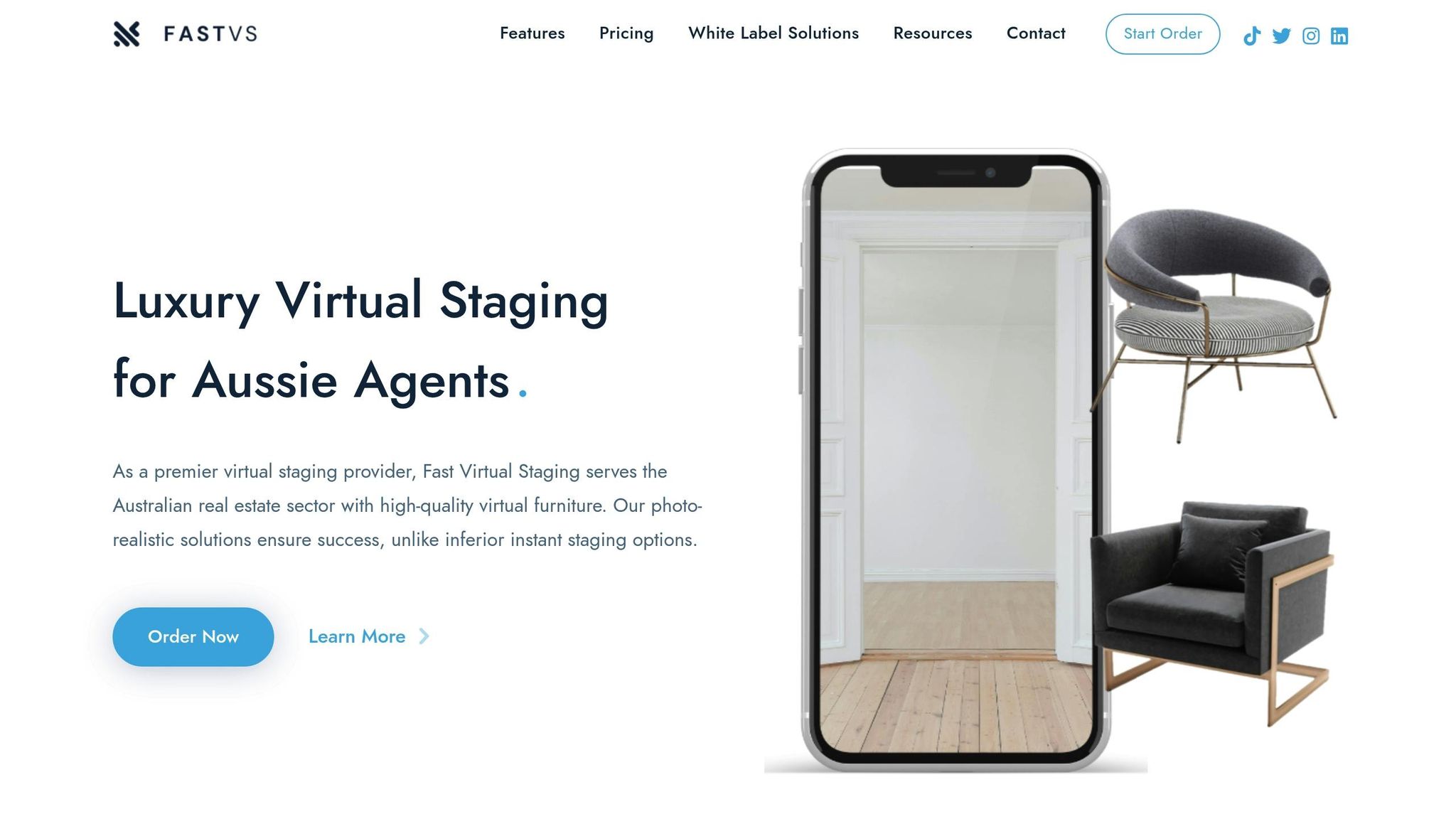
Fast Virtual Staging has emerged as a go-to service for Australian real estate professionals aiming to turn empty properties into inviting, market-ready homes. As competition in the Australian property market intensifies, the platform provides tailored solutions for local agents, photographers, and property managers. Here’s a closer look at its services, pricing, and why it’s a standout choice for professionals in the industry.
Services and Features
Fast Virtual Staging specialises in creating lifelike digital renders that transform both residential and commercial spaces. By customising furniture and décor to suit a variety of Australian buyer preferences, the service helps agents connect with their target audience. Whether it’s young professionals in Melbourne’s vibrant suburbs or families seeking coastal homes in Queensland, the designs are crafted to resonate with specific demographics.
Recognising the importance of Australia’s indoor-outdoor lifestyle, the service stages both interiors and exteriors. Designs highlight features like natural light, open-plan layouts, and seamless transitions to outdoor entertaining areas – key selling points for Australian buyers.
Clients can choose from popular design styles, including Scandinavian minimalism, Modern aesthetics, and French Country charm. These can be further tailored with warm, earthy tones and biophilic elements that align with 2025’s buyer trends. For added convenience, Fast Virtual Staging promises a 24-hour turnaround for residential orders, with delayed deliveries offered free of charge.
Pricing and Affordability
Fast Virtual Staging combines impressive features with accessible pricing. Each image is priced at $30 AUD, making it a cost-effective solution for real estate professionals across the country. The value becomes even clearer when considering the potential financial benefits. Research shows that staged properties can sell for 1% to 5% more than non-staged ones, with some virtually staged homes achieving premiums of up to 17%. For a property priced at $800,000, even a modest 2% increase translates to an extra $16,000 – well worth the investment in staging multiple rooms.
White-label partners, such as real estate photographers, enjoy additional discounts, making the service even more appealing. Plus, each order includes two free revisions, ensuring the final design perfectly aligns with the agent’s vision and the property’s market appeal.
Why Fast Virtual Staging Works for Australian Professionals
Fast Virtual Staging excels at showcasing a property’s potential, bridging the gap between an empty space and a buyer’s dream home. Its deep understanding of the Australian market, paired with high-quality, personalised staging, makes it a valuable tool in the competitive real estate landscape.
For real estate photographers, the platform’s white-label solutions are a game-changer. By incorporating virtual staging into their offerings, photographers can provide a complete property marketing package, increasing their average order value while simplifying the process for agents.
Every client is assigned a dedicated account manager to ensure smooth communication and a tailored experience. This personalised service is especially useful for staging properties across diverse Australian markets, from Sydney’s luxury waterfront apartments to Brisbane’s family-friendly suburban homes.
The service also includes a hassle-free revision process, allowing for precise adjustments without extra charges. Whether it’s repositioning furniture to better highlight room dimensions or tweaking designs to appeal to a different buyer segment, the flexibility ensures the final product meets the highest standards.
Fast Virtual Staging understands that buyers today aren’t just purchasing a property – they’re investing in a vision of their future lifestyle. By capturing this vision, the platform helps agents and photographers deliver results that stand out.
Conclusion: Virtual Staging Changes Australian Real Estate
Key Points
Virtual staging has reshaped the way Australian properties are marketed in 2025. It’s no longer just a nice-to-have; it’s a game-changer. Staged homes now sell 73% faster compared to those left unstaged. In Brisbane, staged properties can fetch 5–10% higher prices when done right. With over 90% of buyers starting their home search online and 97% placing top priority on listing photos, virtual staging has become a cornerstone of effective marketing.
The financial benefits are hard to ignore, too. Virtual staging slashes costs by up to 97% compared to traditional methods, making it possible to present homes beautifully without breaking the bank.
Another big win? Speed and flexibility. Unlike traditional staging, which can take weeks to organise, virtual staging delivers results fast. Agents can list properties sooner, host virtual tours seamlessly, and keep sales cycles moving without delays.
The market numbers tell the story as well. Australia’s virtual staging market, valued at USD 1.5 billion in 2024, is forecasted to hit USD 4.7 billion by 2033, growing at an annual rate of 13.8%.
With these advantages in mind, here’s how professionals can make the most of virtual staging to stay ahead.
Using Virtual Staging for Future Success
Leveraging virtual staging equips agents and sellers to thrive in a competitive market. It aligns perfectly with what modern buyers want. In fact, 81% of buyer’s agents say staging helps buyers imagine themselves living in a home.
To get started, review your current staging process and identify areas where virtual staging could save time or money. Test out a few top virtual staging platforms by requesting demos and applying the technology to a small selection of listings before rolling it out fully. This trial phase lets you measure results – like reduced costs, increased buyer engagement, and faster sales – and refine your approach.
Looking forward, the possibilities are even more exciting. AI-driven tools are making staging hyper-personalised by using buyer data, while virtual reality is creating immersive property tours. Listings enhanced with AI staging are already seeing impressive results: 72% more online traffic, 44% more qualified inquiries, and selling prices up to 22% higher.
Transparency is key to maintaining trust. Always disclose when images have been virtually staged, and consider offering both staged and unstaged photos to reassure buyers that they’re getting an honest view. This approach not only builds trust but also maximises the impact of your listings.
Virtual staging isn’t just a trend – it’s shaping the future of Australian real estate. Those who embrace it now will lead the way, delivering better outcomes for clients and creating more efficient, profitable businesses. By adopting these cutting-edge tools, professionals can stay ahead in a market where innovation and adaptability are the keys to success.
FAQs
What makes virtual staging a better option for the Australian real estate market compared to traditional staging?
Virtual staging has emerged as a game-changer for the Australian real estate market, offering a practical and budget-friendly alternative to traditional staging methods. Instead of physically furnishing a property – a process that can be both costly and time-consuming – virtual staging uses digital tools to style spaces in just a few hours, saving both time and money.
This approach is particularly effective for vacant properties or those needing a visual update. By showcasing digitally styled, lifelike images, virtual staging helps potential buyers imagine the property’s possibilities. The result? Online listings that stand out, draw more attention, and often lead to quicker sales. It’s a smart, modern solution for the fast-moving Australian property market.
What virtual staging design trends are Australian buyers loving in 2025?
In 2025, Australian homebuyers are gravitating towards virtual staging styles that prioritise earthy tones, nature-inspired designs, and eco-conscious aesthetics. Key trends include incorporating natural materials such as timber and stone, using multi-functional furniture to optimise smaller spaces, and adding bold colours alongside standout décor pieces to create cosy, welcoming interiors.
These preferences mirror Australia’s appreciation for combining modern practicality with natural elements, striking a balance between style and comfort. By integrating these trends into virtual staging, sellers can draw attention to a property’s charm and showcase its possibilities.
How does virtual staging create realistic and high-quality property images?
Virtual staging combines cutting-edge AI tools and 3D rendering software to craft realistic, eye-catching images of properties. These tools carefully assess the room’s layout and dimensions, then add furniture, decor, and design elements that perfectly suit the space.
The result? Stunning images that showcase a property’s true potential. Virtual staging not only grabs the attention of potential buyers but also helps them picture themselves living in the home. Every detail is designed to feel natural, making property listings more engaging and appealing.